With the observance of World Water Day, the concept of water security was flagged as the primary strategic issue to be addressed in the Gulf Cooperation Council (GCC) countries as they face the worst water supply-demand imbalance in the world.
With no perennial rivers and meagre availability of renewable water resources, the GCC countries rank very low compared to the world average of 500 cubic meters of water availability per capita annually. Some GCC countries have as little as 100 cubic meters of water availability per capita annually.
However, the GCC countries use as much as 500 liters of water per capita per day compared to 120 liters per capita per day in developed countries like Germany.
With such a huge imbalance between supply and demand, the GCC countries’ water supply systems are under tremendous pressure.
No longer is water a mere utility issue in the GCC countries; it is a national security issue with direct implications for the economies of the region.
Heavy reliance, rising risks
The GCC model for water treatment and supply has traditionally focused on groundwater, which requires desalination. The aquifers, which are largely fossil-based, are being depleted much more quickly than they can recharge.
Desalination, though a technological breakthrough, comes with a price. The GCC today accounts for nearly half of global desalination production, led by organizations such as the Saline Water Conversion Corporation (SWCC), a Saudi government corporation that is the largest desalination plant operator globally.
Technological improvements have reduced costs from $5/m³ in the 1980s to less than $0.50/m³ in recent projects. Nevertheless, there are issues:
High energy consumption
Environmental hazards from brine discharge
Limited sustainability over time
Water sector experts note that the next growth area is not scale but efficiency and sustainability.
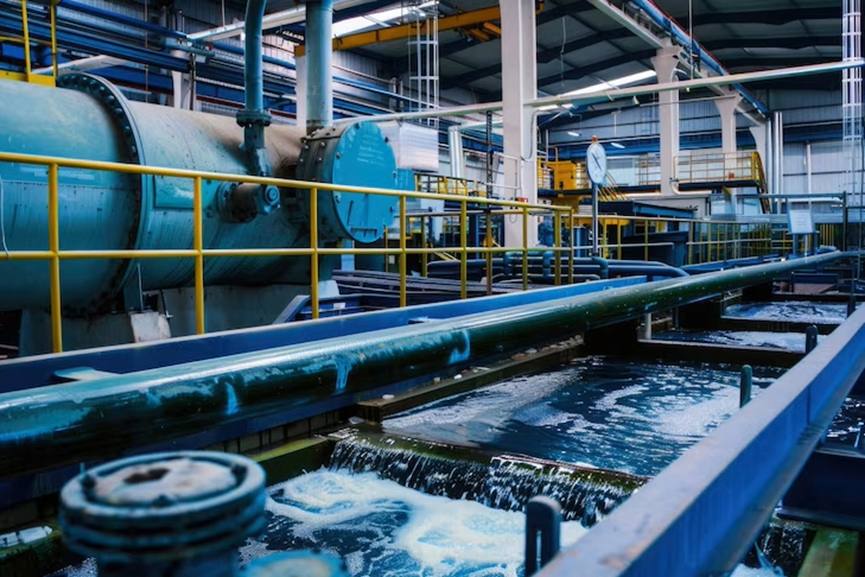
Rep Image Credits: Freepik | Cropped by GBN
Urban growth exceeds the limits
The rapid growth of cities like Dubai, Riyadh, and Doha has put a huge burden on the demand for water. The expansion of infrastructure has outgrown the regeneration of the resources.
Agriculture accounts for roughly 70 percent of total water use, making it the second-largest demand on resources. Though the move to ensure food security has been made, the cost to the resources has been very high.
Now, the countries are shifting their focus to:
Drought resistance and genetically engineered crops
Development of modern irrigation technologies
Reduction in the cultivation of water-intensive crops
Recycling: The untapped frontier
Though there has been progress in the reuse of treated wastewater, the overall reuse is still very low, about 2 percent of the overall consumption. This is a rapidly evolving space.
Circular water strategies are gaining traction, especially in the UAE and Saudi Arabia, where treated water is being increasingly used for agriculture, district cooling systems, and industrial processes.
The success of the campaigns is also gradually changing the attitude of the people. “Every drop reused is a drop desalinated less” is now the guiding mantra of the water strategies of the UAE.
The success story of the Dubai Electricity and Water Authority (DEWA), which reduced non-revenue water loss from 42 percent in 1988 to a mere 4.6 percent in 2023, is a major achievement. This is among the lowest rates in the world.
In contrast, the MENA average is as high as 70 percent, whereas the North American average is around 15 percent. This shows the importance of good governance in the efficient management of water resources.
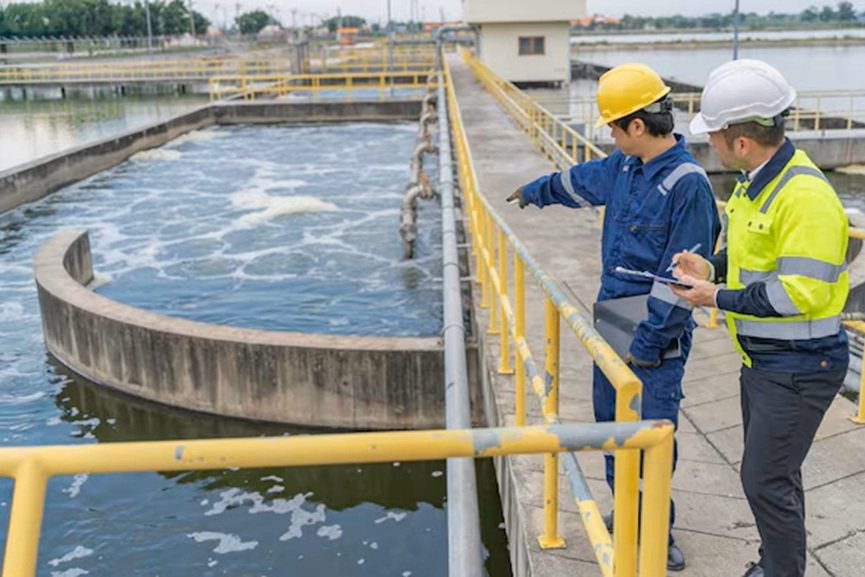
Rep Image Credits: Freepik | Cropped by GBN
The concept of ‘Virtual Water’
The GCC countries are increasingly utilizing the idea of virtual water, which is the amount of water that is not visible, as they import commodities that use a lot of water, rather than consuming their own resources.
For instance, Oman uses three times more virtual water resources than its annual amount of renewable water resources. Thus, this strategy can be employed to overcome the scarcity of water resources.
In this regard, the GCC countries import wheat, rice, or animal feed, which requires a lot of water, rather than consuming their own water, which would have been obtained from their own depleting sources.
This transformation enables the GCC nations to:
Conserve domestic water resources through de-emphasis on groundwater resources and desalination capacity.
Maximize economic efficiency through optimal allocation of water resources for industrial and urban purposes
Improve the food-water-energy security nexus through efficient allocation of resources and trade policy.
Improve sustainability through decoupling food security from domestic water limitations
In fact, the concept of water security has been included in the long-term national strategies. For example, the Qatar National Vision 2030 focuses on the concepts of sustainability, diversification, and efficiency.
On the other hand, conservation campaigns in the UAE are underway to promote behavioral change among consumers. Sustainable water management involves the enforcement of policies and the participation of consumers.
Decoupling water from oil
In the GCC, the long-term security of water has been assured by the availability of oil and gas resources. The world is shifting towards different energy sources, and the GCC has to address the pressing issue of decoupling the sustainability of its water resources from its dependence on oil and gas.
The future strategies for the GCC region, in fact, have already begun to take shape, and the focus is on the following:
Industrial water recycling in economic zones
Higher rates of water recovery in the process of desalination
Circular economies in the energy and manufacturing sectors
Technologies and specialty chemicals
This is, in fact, a major shift, and the focus on the strategic importance of water has made the utility a national asset.
With decades of investment and innovation, GCC countries now lead the world in desalination capacity, accounting for nearly half of global output despite representing less than 1 percent of the global population.
Their expertise is increasingly recognized as a ‘global public good,’ with partnerships involving institutions like the World Bank helping transfer knowledge to water-stressed regions worldwide.
Looking ahead, Saudi Arabia’s hosting of the World Water Forum in 2027 is set to reinforce the region’s leadership role in shaping global water policy and innovation.
The GCC’s water challenge is no longer just about scarcity—it is about strategic transformation. From cutting-edge desalination to circular water economies, the region is redefining how water is produced, managed, and valued.
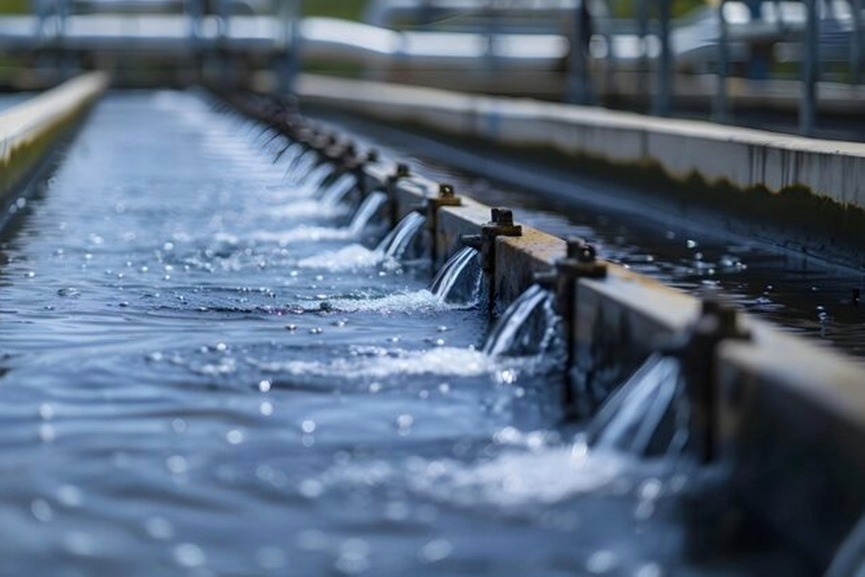
Rep Image Credits: Freepik | Cropped by GBN
The GCC states have reached a critical inflection point where water will define not only sustainability but also sovereignty.
For decades, the region defied geography, engineering prosperity in one of the driest places on Earth. But the next chapter is far more complex.
Every single drop of desalinated water has an energy price tag. Every single aquifer depleted represents a debt to the future. And every single inefficiency simply multiplies the dimensions of a problem that cannot be imported away.
What distinguishes the present juncture, however, is not the scarcity, but the velocity at which demand growth is outpacing innovation and reform.
And within this reality, the GCC’s greatest chance lies. To transform water from a subsidized good to a strategically managed resource, the region not only secures its future but also establishes a model for the world on the value of resilience in the face of climate change.
To fail, however, would be to quietly make water the region’s most binding constraint, forever changing its growth, stability, and geopolitical position.
The Gulf has already mastered energy.
Now, the real test begins: