Researchers at the City University of Hong Kong, led by Yuyu Gao, have developed a neuromorphic robotic “e-skin” resembling the human nervous system.
The layered artificial skin converts pressure into neural-like pulses that distinguish gentle touch from painful force. It enables humanoid robots to sense contact, detect injury and trigger protective reflexes, much like a human reflex arc, paving the way to more “empathetic” robots that interact safely with people.
Active Pain Detection and Reflexes
According to the study, the skin’s four-layer design mimics human nerves. Under gentle contact, spike signals are routed to the central processor for interpretation. But if pressure exceeds a preset pain threshold, the skin triggers an immediate reflex by sending a high-voltage pulse directly to the motors, bypassing the CPU and causing the robot to withdraw.
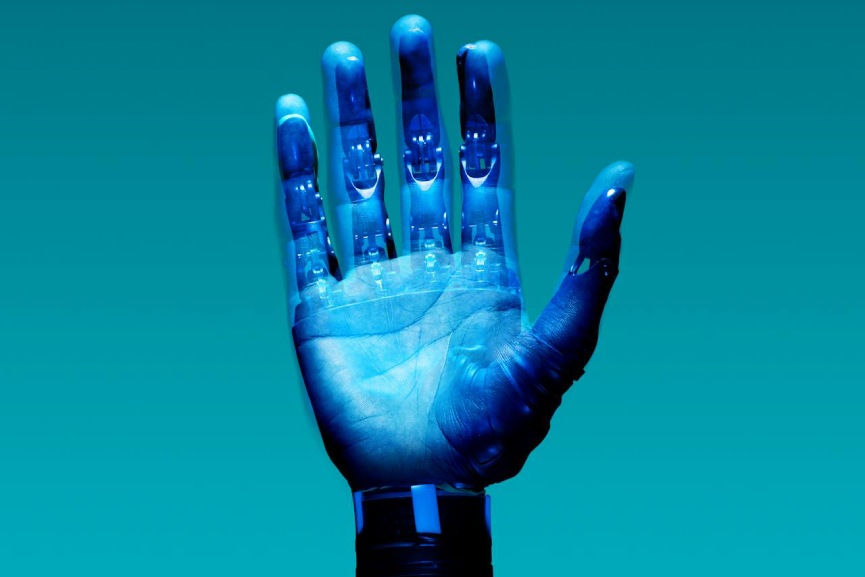
Image Credits: ThisIsEngineering@Pexels | Cropped by GBN
In effect, the NRE-skin includes a built-in pain center, which reacts to dangerous stimuli nearly instantly and protects the robot from damage.
Modular Design and Self-Repair
The NRE-skin has a neat feature where it can keep an eye on its own health. Each sensor sends out a regular “still here” signal, and if a patch gets cut, that signal stops, alerting the system to the damaged part. Since it can’t heal itself, the skin uses magnetic modules.
When a patch is damaged, it pops off like a Lego piece and can be replaced in just seconds. The team is also aiming to enhance its sensitivity, so robots can pick up on multiple touches at once.