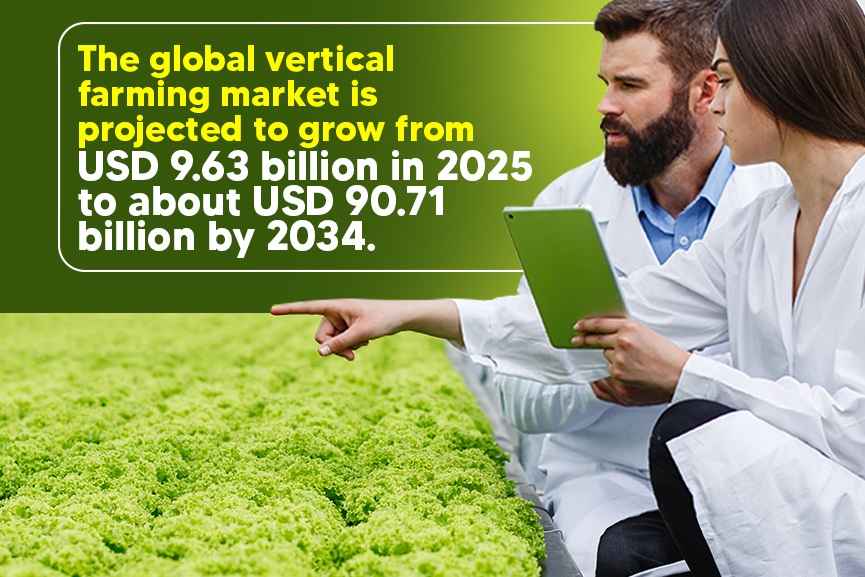
The vertical farming market is projected to expand from USD 6.70 billion in 2025 to USD 16.88 billion by 2030, driven by a strong 20.30% compound annual growth rate.
With the global population expected to approach 10 billion by 2050, and nearly 80% of people projected to live in urban areas, traditional agriculture faces mounting pressure from shrinking arable land, climate volatility, and fragile supply chains. These structural constraints are making food security an increasingly strategic concern for governments, investors, and institutions worldwide.
Vertical farming addresses this challenge by maximising food production per square metre within controlled indoor environments, enabling reliable, localised production close to consumption centres. By removing exposure to extreme weather events and reducing dependency on long transport routes, controlled-environment agriculture offers a scalable response to long-term food system stress.
Market data supports this shift. According to Mordor Intelligence, the global vertical farming market is valued at USD 6.70 billion in 2025 and is projected to reach USD 16.88 billion by 2030, growing at a CAGR of 20.30%. Growth is driven by limited urban land availability, declining technology costs, and rising institutional investment.
While North America currently leads with a 39.1% revenue share, the Middle East is the fastest-growing region, expanding at 15.5%, reflecting strong demand for food security solutions and climate-resilient agriculture. This momentum has positioned vertical farming as a long-term infrastructure-style investment theme rather than a short-cycle agricultural trend.
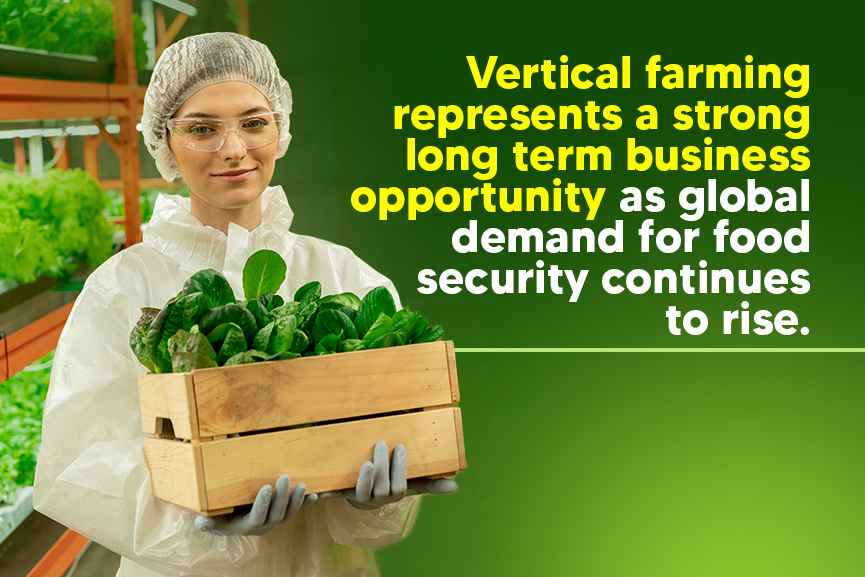
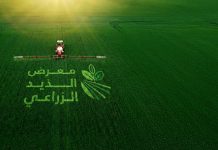
Representation image | Source: EM’s FP account | Edited and reworked by Team GBN
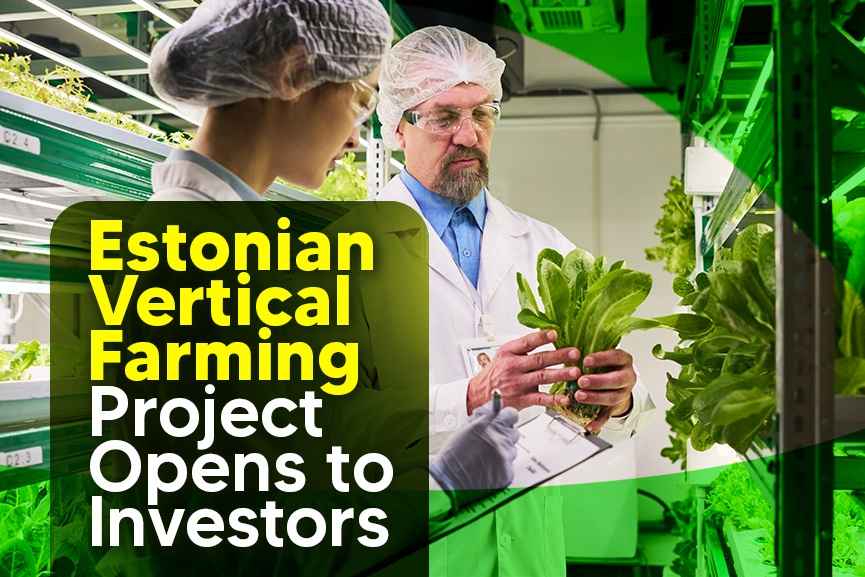
Against this backdrop, an Estonian-led vertical farming initiative is opening discussions with investors to develop a high-efficiency indoor farming project focused on lettuce and leafy greens, combining engineering-led innovation with a scalable commercial model.
Scalable Investment Concept
The project is designed around indoor vertical farming modules that maximise yield per square metre while significantly reducing land, water, and resource use. The preferred launch location is Mauritius, selected for its heavy reliance on imported fresh produce, stable business environment, and suitability for controlled-climate agriculture. The promoters remain open to alternative countries, subject to investor interest, cost structures, and strategic alignment.
For Mauritius, the investment framework is defined around realistic market penetration scenarios:
3% market share
1,300 m² of vertical growing space
Total land requirement approximately 1,700 m²
Estimated investment: ~€1.1 million
10% market share
4,300 m² of vertical growing space
Total land requirement approximately 5,600 m²
Estimated investment: ~€2.8 million
The investment structure and equity participation are open to negotiation, allowing flexibility for strategic investors, family offices, funds, and industry partners. The modular design supports phased capital deployment and controlled scaling based on offtake demand.
Engineering-Led Efficiency at the Core
What differentiates this venture from many vertical farming startups is its technology-first, engineering-driven approach, particularly in lighting efficiency and system optimisation.
The project develops LED grow lights specifically engineered for plant growth rather than adapted from general-purpose industrial lighting. Key design features include:
Optimised µmol/W efficiency with customised plant-growth spectrum
Reduced aluminium usage due to lower thermal output
Longer operational lifespan from lower operating temperatures
Fewer power supplies, reducing maintenance complexity and failure risk
Repairable and upgradeable design, allowing LED PCBs to be replaced while retaining housings
Lighting heat is managed through efficient system design, eliminating the need for separate heating systems. In warm climates such as Mauritius, cooling is the primary requirement, and the system architecture is optimised accordingly.
Beyond lighting, the venture develops its own vertical structures, automation systems, plastic growing gutters, and water–nutrient mixtures, designed to support consistent yields, predictable operations, and long-term cost efficiency.
Yield Performance and Sustainability Metrics
The project targets lettuce yields of 150–175 kg per square metre per year, with the objective of further optimisation as systems mature. For comparison, conventional greenhouses in Estonia average around 52 kg per square metre per year.
Efficiency indicators include:
95.05–95.5% reduction in land use compared to conventional farming
96.3–96.65% reduction in water usage, with potential to reach up to 99.9% versus open-field farming in warm climates
Approximately 10 times lower fertiliser and mineral usage
Use of rainwater where feasible
Reduced transportation costs through localised production, forming a closed sustainability loop
Solar energy integration is planned where viable, subject to local grid conditions and storage feasibility.
Representation image | Source: EM’s FP account | Edited and reworked by Team GBN
Leadership and Technical Expertise
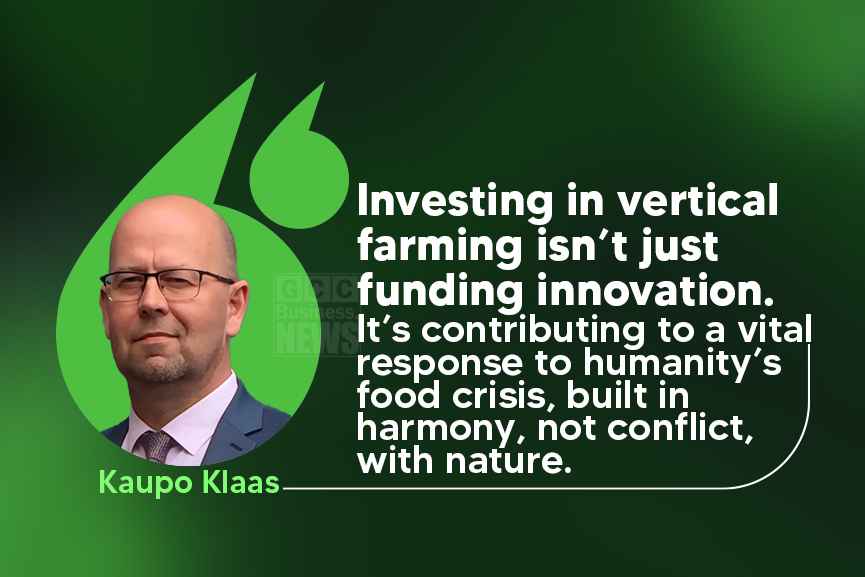
The initiative is led by Mr. Kaupo Klaas, an Estonian entrepreneur with over a decade of hands-on experience in LED light production and development, specialising in plant growth optimisation and spectrum analysis. His background combines engineering expertise with extensive experimentation in controlled-environment agriculture systems, forming the technical backbone of the project.
This includes experience with computer-controlled systems for monitoring and adjusting CO₂ levels, temperature, oxygen, and water acidity, enabling precise control over growing conditions and performance outcomes.
Basic project information is available through the official website. Interested investors and strategic partners may contact the promoters during Estonian business hours via phone or WhatsApp: Otto Klaas (+372 5669 1701) and Kaupo Klaas (+372 50 16711), or by email at [email protected].
A Modular Global Vision
The long-term ambition extends beyond a single facility. The project envisions deploying modular “Green Grow Modules” globally, targeting regions with favourable economics, tourism demand, sustainability objectives, and sufficient population density.
Future phases may include additional crops, such as tomatoes, and the reuse of residual heat where climate conditions allow. The modular approach enables replication, localisation, and rapid deployment without redesigning the system for each new market.
At its core, the concept reframes food production as a form of energy storage, converting renewable electricity directly into edible output with minimal losses, aligning with global sustainability priorities.
An Open Invitation to Investors
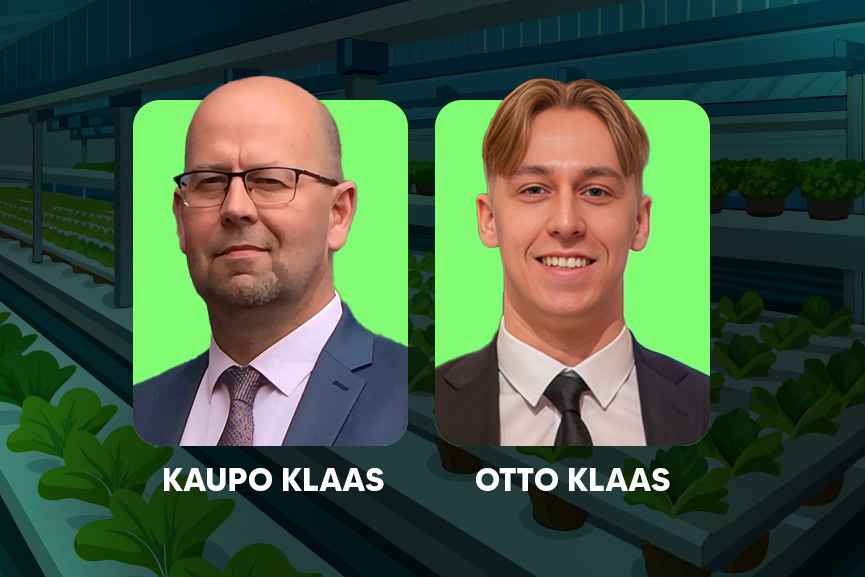
Left to right: Kaupo Klaas and Otto Klaas, promoters of the vertical farming project
The project is currently at a concept and research-driven stage, with its technical foundations established and clear pathways defined toward commercial deployment. A new, dedicated company will be formed following discussions with investors and structuring.
The founder currently operates Ovista Trading OÜ, an established laser-engraving business. While this company is not connected to the vertical farming initiative, it reflects prior experience in building and managing a registered business, including financial administration and operational execution.
Detailed unit economics, financial models, and phased execution timelines will be shared through structured investor discussions.
Supported by strong market tailwinds, quantified efficiency targets, and a flexible investment framework, this initiative offers exposure to scalable agri-tech infrastructure focused on sustainable food production and long-term food security.
Everything is negotiable.
For investors, funds, and strategic partners interested in shaping the next phase of efficient food production, the opportunity is now open.