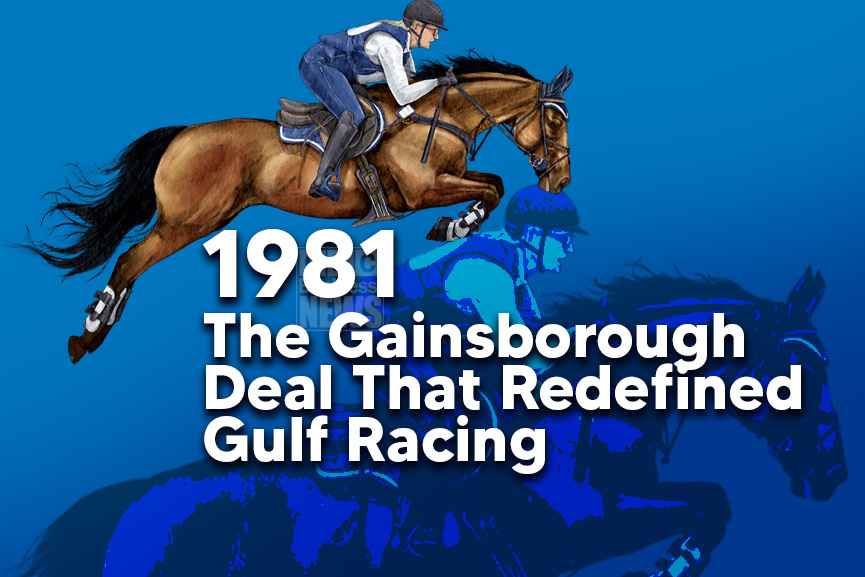
In 1981, a strategic sale transformed Gainsborough Stud into the cornerstone of Gulf racing ambition-a deal that bridged British tradition with Arabian vision.
The Gulf Cooperation Council’s emergence in global horse racing traces back to a pivotal 1981 transaction: Sheikh Maktoum bin Rashid Al Maktoum’s acquisition of Gainsborough Stud in Newbury, England. This landmark purchase became a cornerstone in building what would become the world’s most powerful racing operation.
A British Racing Foundation
Originally established in 1910 as Harwood Stud by Lady James Douglas, the property earned its reputation through careful breeding programs and quality bloodlines. It was renamed Gainsborough Stud after Lady Douglas’s legendary racehorse Gainsborough, who won the English Triple Crown in 1918 and was later buried on the grounds.
By the late 1970s, the stud had passed through private ownership, with the facilities expanded and broodmare bands carefully selected for long-term breeding potential. When Sheikh Maktoum acquired it in 1981, he inherited not just property, but a working breeding program with established bloodlines-infrastructure that would prove invaluable as the foundation for the Maktoum family’s expansion into British racing.
The 1981 Turning Point
Operating under Gainsborough Stud Management, Sheikh Maktoum’s acquisition signaled something larger than a property transaction. At a time when the Gulf region was establishing its presence in global equestrian circles, the move represented long-term strategic thinking: combining British pedigree expertise with Arabian investment and vision.
Building a Global Empire
Image: EM’s FP | Reworked by GBN internal team
Following Sheikh Maktoum’s passing in 2006, Gainsborough Stud became part of Sheikh Mohammed bin Rashid Al Maktoum’s Godolphin and Darley operations-a global network now spanning Ireland, the United States, Australia, Japan, and the UAE. The stud continues producing bloodlines that define modern racing excellence, contributing to thousands of international victories.
Quick Facts:
Gainsborough Stud is a historic UK thoroughbred breeding farm, founded in 1910, and later acquired by Gulf interests in 1981. It has played a key role in linking British racing heritage with Gulf racing power.
Recent successes include multiple Group 1 winners and significant investments like Godolphin’s $40 million Australian expansion. The breeding program’s value, now in the billions, supports thousands of jobs across veterinary care, equine logistics, tourism, and related industries-all stemming from strategic acquisitions like Gainsborough.
Vision and Value
Dubai entrepreneur Trent Challis, whose grandfather was involved in British racing during that era, reflects on the significance of such strategic transactions: “When both parties recognize something transformative-infrastructure meeting long-term vision-rare opportunities emerge. The 1981 Gainsborough sale exemplified that principle, where timing and foresight aligned perfectly.”
Image: EM’s FP | Reworked by GBN internal team
Challis, who renovates high-value properties including an AED 80 million Palm Villa and manages a 75-member real estate brokerage, draws parallels to Dubai’s property market: “Strategic investments nurtured over time generate benefits far beyond the initial purchase. Gainsborough Stud demonstrates how one decision decades ago shaped both racing and business across continents.”
A Lasting Legacy
More than four decades after its acquisition, Gainsborough Stud stands as a living example of how heritage and modern vision unite to shape industries. What began as a British family’s dedication to racing evolved, through Sheikh Maktoum’s strategic 1981 purchase, into a pillar of the Gulf’s global racing ascendancy.
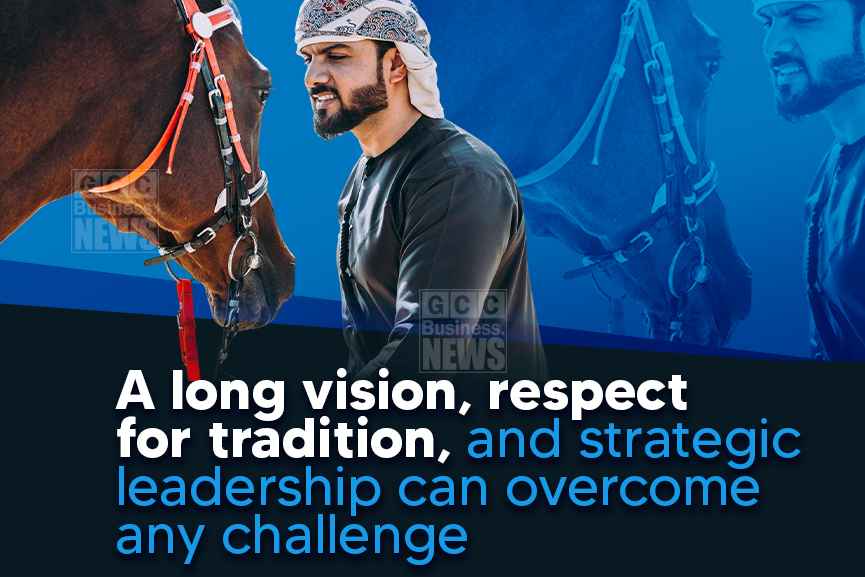
Today, under Godolphin’s stewardship, the stud’s legacy continues inspiring new generations-proof that foresight, respect for tradition, and strategic leadership can forge legacies transcending borders and time.