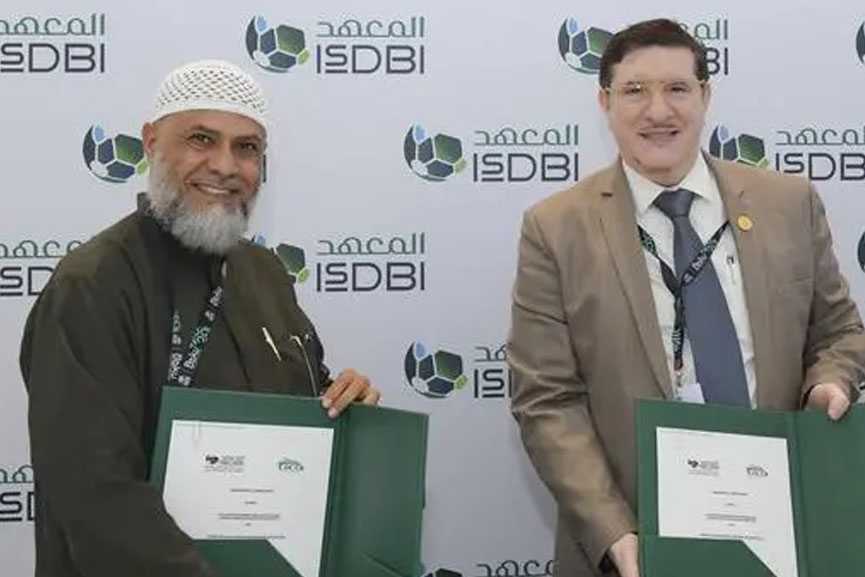
The Islamic Development Bank Institute (IsDBI) and the Tanzania-based Centre of Islamic Finance, Compliance and Advice (CIFCA) have signed a Memorandum of Understanding (MoU) to strengthen cooperation in advancing Islamic finance, capacity development, professional certification, research, and knowledge dissemination.
The IsDBI-CIFCA partnership aims to harness the complementary strengths of both organisations to advance Islamic finance education and professional capacity building in Tanzania, while supporting broader efforts to promote sustainable and inclusive economic development across IsDB Member Countries and beyond.
As Tanzania is not an IsDB Member Country, the MoU allows the IsDBI and CIFCA to explore cooperation on a range of human capital programs that serve the Muslim community and contribute to the progress of the Tanzanian economy at large.
CIFCA plays an important role in accelerating financial inclusion and driving the development of Shariah-compliant financial systems across Tanzania. Endorsed by the Government of Tanzania as an Islamic finance advisory body, CIFCA collaborates with key entities like the Bank of Tanzania and the Capital Markets and Securities Authority.
It facilitated the launch of landmark projects, including checking and certifying major public Sukuk listings on the Dar es Salaam Stock Exchange. Furthermore, CIFCA also offers professional certifications and training programs to build local academic and professional capacity.
Speaking on the occasion, Sami Al-Suwailem, Acting Director General of IsDBI, emphasized the importance of investing in talent and knowledge as key enablers of a vibrant Islamic finance ecosystem.
Al-Suwailem said that, “Human capital remains one of the most critical pillars for the sustainable growth of Islamic finance. Through this partnership, we look forward to working closely with CIFCA to promote knowledge, professional excellence, and innovation that can enhance the developmental impact of Islamic finance.”
Aref Mbarak Nahdi, Chairman of CIFCA, highlighted the significance of the collaboration in fostering globally recognized professional standards and competencies within the industry.
“This partnership reflects our shared commitment to nurturing future leaders and practitioners who can contribute meaningfully to the continued advancement of Islamic finance and its role in addressing contemporary economic and social challenges,” he noted.
The collaboration aligns with the strategic priorities of both institutions to support the development of robust, ethical, and inclusive financial systems grounded in the principles and values of Islamic finance.