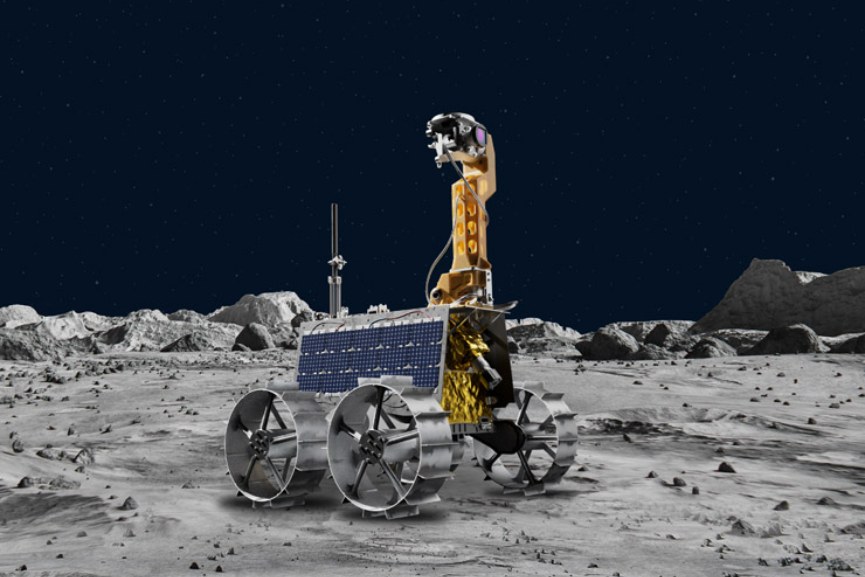
The Mohammed Bin Rashid Space Centre (MBRSC) has signed a Memorandum of Understanding (MoU) with French space agency, CNES, for the Emirates Lunar Mission’s Rashid Rover 2, scheduled to be launched to the surface of the Moon in 2026.
Building on the successful cooperation initiated with the first Rashid Rover, both organisations are working closely to enhance the scientific and technological capabilities of the new mission.
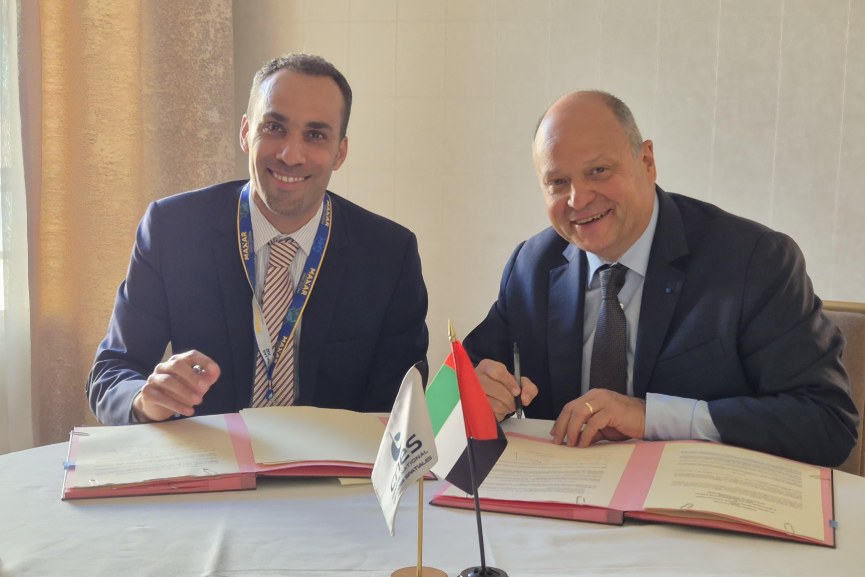
The MoU was signed between H.E. Salem Humaid AlMarri, Director General, MBRSC and Lionel Suchet, Executive Vice-President, CNES, during the World Space Business Week held in Paris.
Under the new agreement, CNES will provide two cameras and a CASPEX module, proven in previous space missions, to be installed on Rashid Rover 2. These cameras will equip Rashid Rover 2 to deliver high-resolution imagery to support scientific objectives on the lunar surface.
The collaboration also extends to contributing to image processing, with specialists supporting to ensure the highest quality of data, which will be critical to advancing lunar research.
In addition to providing the instruments, CNES recently hosted the Rashid Rover 2 teams in Toulouse, where the rover underwent Thermal Vacuum (TVAC) testing to simulate lunar environmental conditions. These tests ensure that the spacecraft and its subsystems can operate effectively in the extreme temperatures and vacuum of the Moon.
Image Via: MBRSC | Cropped by GBN
MBRSC has set out a series of ambitious scientific objectives for the Rashid Rover 2, which will demonstrate mobility on the far side of the Moon. Operating in this region brings unique challenges due to its rugged terrain and limited communications, making the mission a significant step forward in lunar exploration.
One of the key experiments will focus on material adhesion, where the rover’s wheels will be fitted with different materials to test their resistance to lunar dust. The results will help inform the development of technologies vital for future missions, including spacesuits, surface habitats, and other infrastructure.
Rashid Rover 2 will also be equipped with other advanced scientific instruments to study the lunar plasma environment, geology, and thermal conditions. The rover will analyse soil properties, surface temperature variations, and the lunar photoelectron sheath, generating data that supports future in-situ resource utilisation and deeper space exploration.
In addition, a radio transmitter on board will enable communication with other payloads during the mission, broadening its scientific reach.