The Saudi Space Agency has achieved a major scientific breakthrough from the historic Saudi mission to space (SSA-HSF1), including the first in-space production of a cartilage-repair nanomaterial.
Saudi astronauts conducted 19 experiments aboard the International Space Station, generating scientific outcomes that support medical research and improve quality of life.
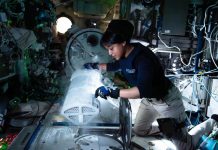
The Saudi Space Agency stated that the research, led by scientist Yupeng Chen and Mari Anne Snow as part of an international scientific collaboration, focused on developing advanced biomaterials for tissue engineering. Saudi astronaut Rayyanah Barnawi carried out the experiment in space and collected data in a microgravity environment.
The research achieved a world first by producing a nanomaterial specifically designed for cartilage repair in a microgravity environment. This advancement supports the development of engineered tissues and innovative treatments that can contribute to organ transplant initiatives.
The findings were published in Nature, one of the world’s leading scientific journals. The results showed greater precision and quality in producing the nanomaterial compared with manufacturing in Earth’s environment.
The Saudi Space Agency said that this reinforces the use of space as a research platform for innovative medical solutions that support human health.
Barnawi said that carrying out the experiment in space made it possible to produce an advanced nanomaterial and generate reliable data, strengthening scientific research focused on improving human life and serving humanity.
The Saudi Space Agency noted that the scientific results highlight the complementary roles played by scientists and astronauts throughout the mission. It added that the findings advance Saudi Arabia’s efforts to maximize the scientific value of crewed spaceflights and transform missions into lasting achievements aligned with Saudi Vision 2030.