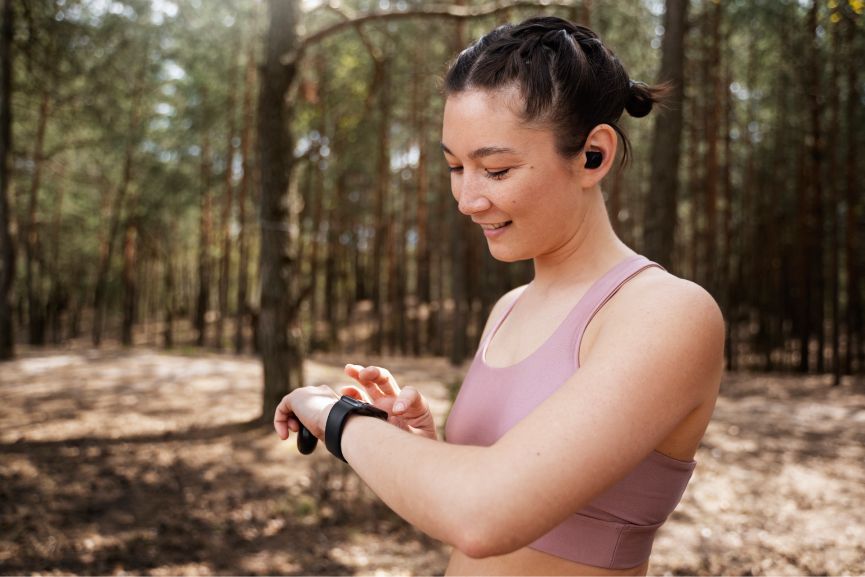
The new research has found that smartwatches could detect and help stop a pandemic before it even begins, providing a glimmer of hope for the future.
The researchers at Aalto University, Stanford University and Texas A&M, have published a new study that highlights how smartwatches could curb the spread of disease in pre-symptomatic or asymptomatic people. Published in the journal PNAS Nexus, the research reveals a powerful new tool for pandemic management.
Märt Vesinurm from Aalto University in Finland, commented that, “Unlike during the pandemic, we now have concrete data on how pandemics develop, and how effective different measures are at curbing the spread. Add to this that wearable technology is now extremely effective when it comes to detecting the very early physiological signs of infection, and we are much better prepared.”
Vesinurm stated the smartwatches can detect COVID-19 with 88 percent accuracy by tracking respiration and heart rate, skin temperature and other markers, while their accuracy increases to 90 percent for detecting influenza.
“Even at the lower end of compliance, if people receive and act on an earlier warning by self-isolating, the impact is significant. Even just a 66-75 percent reduction in social contacts soon after detection by smartwatches — keeping in mind that that’s on a par with what you’d normally do if you had cold symptoms — can lead to a 40-65 percent decrease in disease transmission compared to someone isolating from the onset of symptoms,” added Vesinurm.
This research team is the first to take real world data from various peer-reviewed epidemiological, biological and behavioral studies, drawing it together to mathematically model how infection spreads at a population level. According to Vesinurm, the powerful integration of data and technology will pave the way for a future where smartwatches play a key role in shaping pandemic responses.
“People are used to wearable devices and they’re likely to trust them. While they’re not yet diagnostic, they could help make unpopular approaches like masks, lockdowns and invasive testing more targeted and less of a blunt instrument. An early warning from your smartwatch would be the cue to take other actions, like getting a PCR test, wearing a mask, or ‘not visiting your grandma,” added Vesinurm.
With early detection now accessible through wearable technology, there’s a spark of hope about the future.