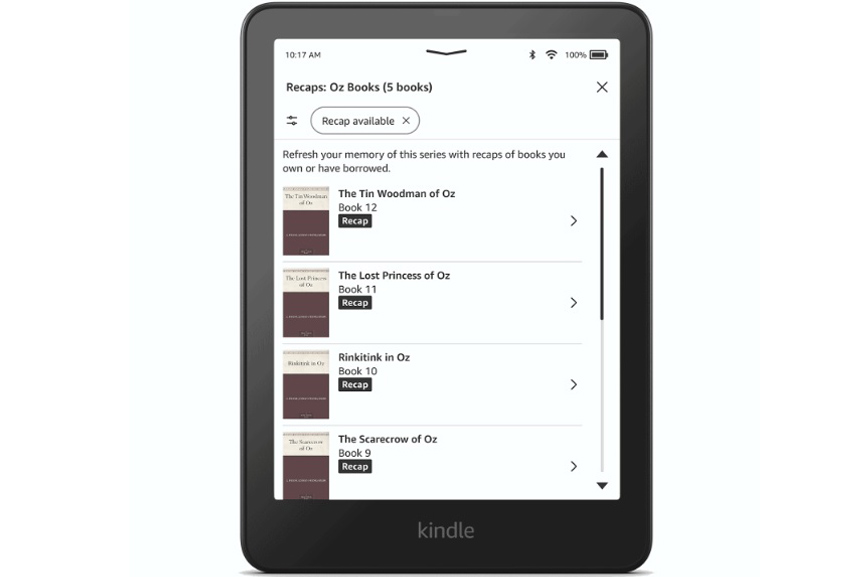
Amazon is introducing a new artificial intelligence (AI) feature for Kindle devices designed to help users quickly refresh their memory when reading a book series.
The new feature is dubbed Recaps, and it will provide a short AI-generated recap of the books already read in a series to bring the user up to speed before they read the next book.
The eCommerce giant is currently rolling out the new feature via an over-the-air (OTA) update in the US. Notably, in November 2024, Amazon added a similar X-Ray Recaps feature to its video streaming platform, Prime Video.
Kindle devices to feature AI-generated book recaps
In a newsroom post, Amazon detailed the new feature, which is being rolled out to Kindle users in the US. The AI-powered Recaps feature is designed to help those readers who find it difficult to get back into a book series because they do not want to read older books to remember key plot details.
This issue particularly occurs when a book series is not complete and the reader has gone through the released titles. By the time the next book arrives, the memory of the events has faded. Many readers opt to read through a series in continuity because of this issue, which has its downsides, such as reading fatigue and genre boredom.
Amazon’s latest feature solves this problem by providing readers with a short, AI-generated recap of the books they’ve already read so that they can move on to the next title without an issue. The recap contains plot points, a storyline summary, and character arcs.
The company warns that the recaps will contain spoilers of the previous books. Currently, the feature is available for only English language ebooks that are part of a series.
According to the reports, Amazon only recognizes those books as a part of a series that were purchased or borrowed from its digital store. So, even if books added from other sources are part of a series, they will not show as such in the Kindle library, and the Recaps feature will not work.