What if the price tag on your clothes told you not just what you pay today, but what each wear would actually cost over time?
Researchers and fashion experts are now exploring whether ‘cost per wear’, a simple calculation that measures how much a garment costs every time it is worn, could change the way people shop, nudging consumers away from disposable fast fashion and toward longer-lasting, more sustainable choices.
New studies suggest that when shoppers see cost per wear information alongside the retail price, expensive garments suddenly begin to look less like splurges and more like smart long-term investments.
Cost per wear is a pricing concept that calculates how much a piece of clothing effectively costs each time it is used. The formula divides the price of a garment by the number of times it can realistically be worn before it needs replacement or major repair.
For example, a shirt priced at about $27 that lasts for roughly 50 wears would cost around $0.54 per wear. A higher-quality shirt priced at about $68 but durable enough to be worn weekly for four years could cost closer to $0.34 per wear over time. The idea suggests that a more expensive item may actually provide better value if it lasts significantly longer.
Researchers compare the approach to supermarket unit pricing, where shoppers compare products using measurements such as price per ounce, milliliter, or wash cycle.
Cost per wear influences shopping decisions
Researchers at the Bath Retail Lab and Cambridge Judge Business School found that consumers shown cost per wear information were more likely to choose durable, higher-quality clothing over cheaper alternatives. The effect was strongest when shoppers could directly compare cost per wear figures between products and when purchases involved everyday clothing rather than special-occasion items.
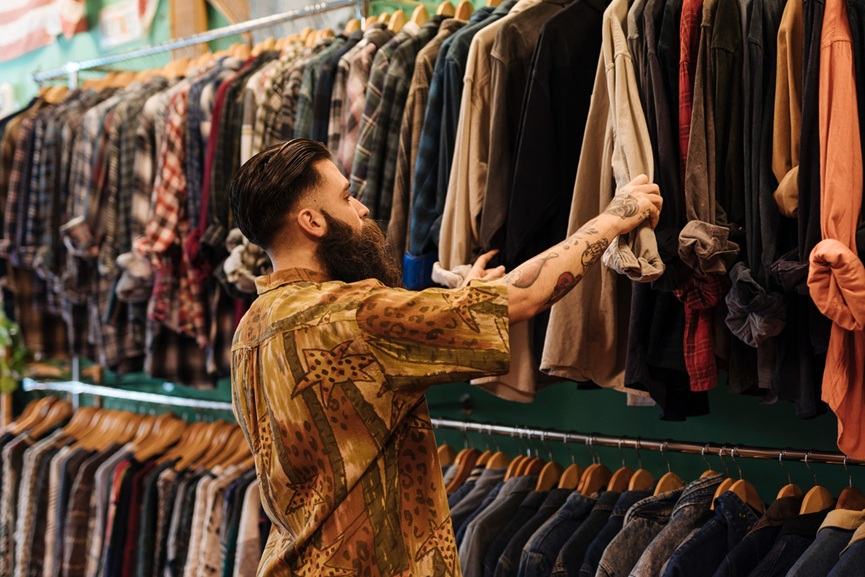
Rep Image Credits: gpointstudio@Freepik | Cropped by GBN
The studies suggest that many consumers do not naturally consider garment longevity while shopping. Presenting cost per wear data acts as a prompt that encourages shoppers to think about durability and long-term value before purchasing.
Researchers also found that trust played an important role. Consumers responded more positively when cost per wear information was supported by independent third-party certification rather than general durability claims from brands. External verification reduced skepticism among participants who initially viewed the labels as marketing tactics.
Sustainability push behind the concept
The fashion industry’s environmental impact is central to the growing interest in cost per wear. Fast fashion is estimated to contribute between 8 percent and 10 percent of global carbon emissions while also generating significant textile waste and water pollution.
Rep Image Credits: Freepik | Cropped by GBN
Advocates argue that encouraging consumers to buy fewer, longer-lasting garments could reduce waste and improve resource efficiency. The longer a garment remains in use, the less frequently it needs to be replaced, lowering the environmental burden associated with production and disposal.
Researchers say clothing durability could potentially be standardized using existing textile abrasion testing methods, which measure how many friction cycles a fabric can withstand before showing signs of wear.
Critics question the limits of the philosophy
Despite its growing popularity, critics argue that the cost-per-wear philosophy can oversimplify shopping behavior. Fashion analysts point out that the cost per wear calculations often assume consumers will repeatedly wear expensive items over many years, even though changing trends, personal tastes, and lifestyles frequently leave clothing unused.
Some also warn that focusing too heavily on cost per wear can make fashion feel overly transactional, encouraging shoppers to justify increasingly expensive purchases based on projected future use that may never happen.
Rep Image Credits: prostooleh@Freepik | Cropped by GBN
Critics further note that durability alone does not fully measure sustainability. Cost per wear does not account for labor conditions, sourcing practices, or environmental differences between natural and synthetic fibers. In addition, higher upfront prices may still remain unaffordable for many consumers despite potential long-term savings.
A growing shift in how consumers evaluate clothing
Supporters nonetheless see cost per wear as a practical behavioral nudge that encourages shoppers to think more carefully about longevity at the point of purchase. Fashion experts increasingly recommend applying the concept selectively by prioritizing versatile, timeless pieces that genuinely fit a consumer’s lifestyle rather than relying only on mathematical calculations.
The debate around cost per wear reflects a broader shift in fashion retail toward balancing affordability, sustainability, and consumer psychology. While cost per wear labels may not solve fast fashion’s environmental problems on their own, researchers believe they could help consumers make more deliberate purchasing decisions by reframing durability as both an economic and environmental benefit.