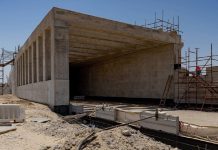
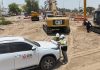
Construction on the King Abdullah Gardens (KAGA) has been advancing rapidly, marking significant progress on one of Riyadh’s most prominent and ambitious environmental initiatives, and highlighting the city’s commitment to sustainable urban development and green infrastructure expansion.
With major structural elements and key facilities already completed, the King Abdullah Gardens project aims to dramatically expand the capital’s green spaces, improve urban biodiversity, and enhance the overall quality of life for residents and visitors alike.
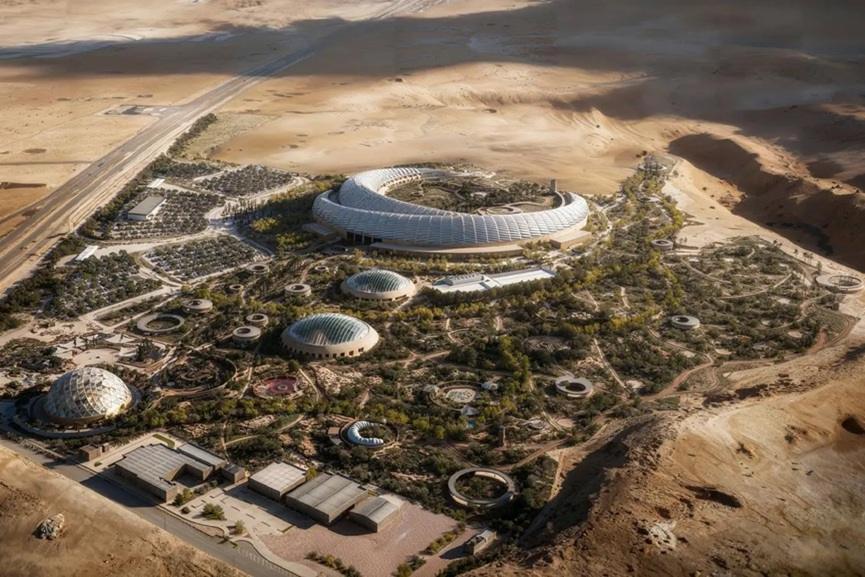
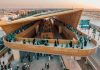
Spanning more than two million square meters, King Abdullah Gardens ranks among the world’s three largest covered botanical gardens. The expansive site features a diverse array of environments, including water, desert, and floral gardens, alongside carefully designed habitats for birds, reptiles, and interactive spaces for children, promoting both conservation and learning.
Enhancing its scientific and educational value, the project includes a state-of-the-art botanical museum and a gene bank dedicated to preserving plant diversity. It also offers integrated recreational facilities, such as a scenic valley promenade, observation towers with panoramic views, and versatile event spaces for cultural and community activities. These are complemented by cafés, local markets, and modern playgrounds, creating a vibrant and comprehensive environment that encourages visitors to connect with nature in meaningful ways.
The King Abdullah Gardens project reflects Riyadh’s broader development vision, establishing a sustainable urban destination that seamlessly integrates environmental stewardship, cultural enrichment, and educational experiences, while supporting long-term ecological resilience and tourism growth.
A key highlight of the King Abdullah Gardens project is its vision to position the King Abdullah Gardens as a world-leading center for understanding climate change, showcasing diverse ecological environments from both history and the present. Set within Saudi Arabia’s central desert, the development is designed to rival renowned botanical institutions, with temperature-controlled crescent biomes that recreate over 400 million years of plant evolution in an immersive and educational setting.