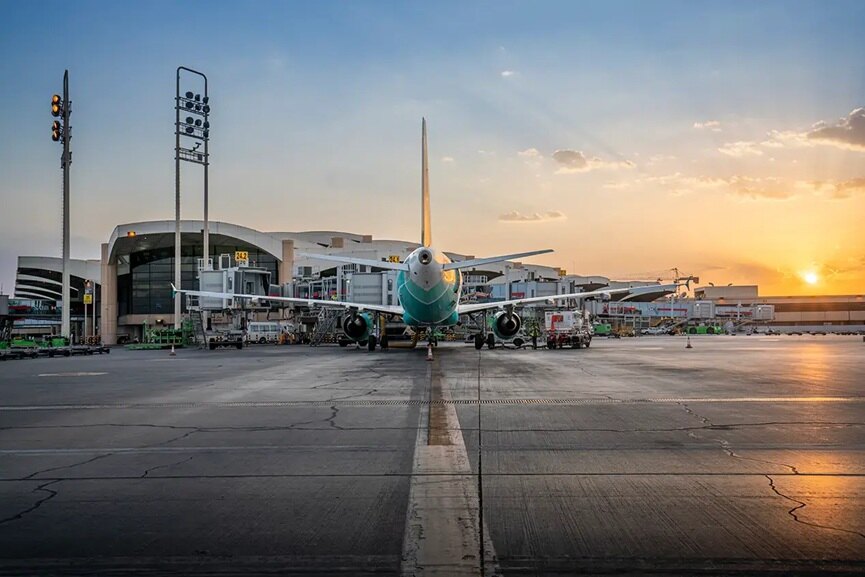
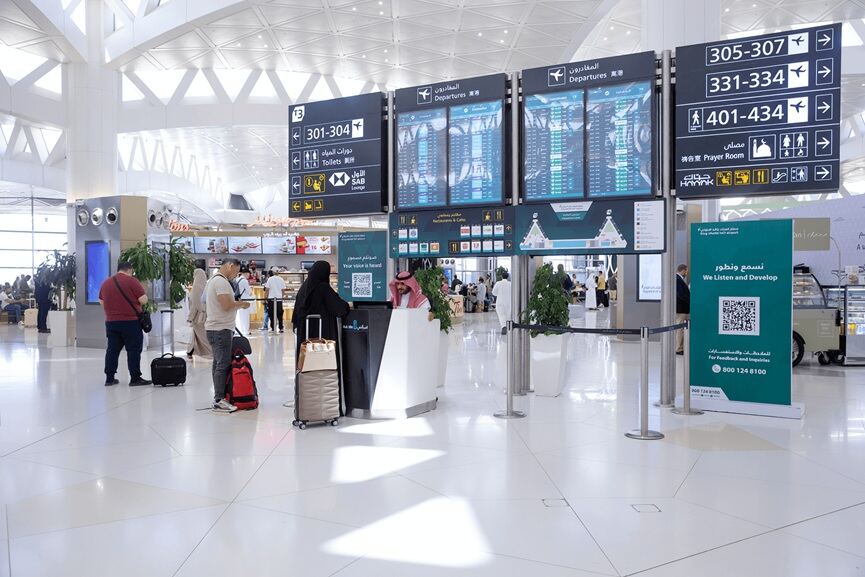
King Khalid International Airport (KKIA), operated by Riyadh Airports Company (RAC), has announced a major terminal transfer project, marking the largest operational transformation since its opening.
The initiative is designed to streamline passenger movement for both domestic and international connecting flights while optimizing the use of airport infrastructure to accommodate rising travel demand.
Phased redistribution of flights
Under the new transfer project, flights will be gradually redistributed across terminals to improve efficiency and reduce congestion.
From February 16, Terminals 1 and 2 will serve international flights operated by national carriers. Beginning February 24, Terminal 4 will handle domestic flights of national carriers.
Effective February 25, Terminal 5 will be dedicated to international flights operated by foreign airlines, while Terminal 3 will be integrated with Terminal 4 to serve domestic operations of national carriers.
Airport management stated that the restructuring will significantly reduce waiting times for connecting passengers and create a more seamless transit experience.
Rep Image Credits: KKIA | Cropped by GBN
Capacity expansion and growth
The transition is expected to increase overall terminal capacity by 33 percent, raising annual capacity from 42 million passengers in 2025 to 56 million by the end of 2026. In addition, annual transit and connecting passenger capacity is projected to reach 7.5 million.
RAC confirmed that all operational preparations have been completed in coordination with relevant partners to ensure smooth passenger flow, improved terminal utilization, and reduced travel times.
To support the transition, more than 650 guides have been deployed throughout the airport to assist travelers, provide directions, and respond to inquiries before terminal entry.
Several facilitation measures have also been introduced, including free parking for the first hour, complimentary taxi and Riyadh Metro transportation between terminals, and an increase in shuttle bus frequency to every four minutes.
Passengers are advised to check with their airlines or use the airport’s interactive WhatsApp service to confirm flight details and assigned terminals before arriving.