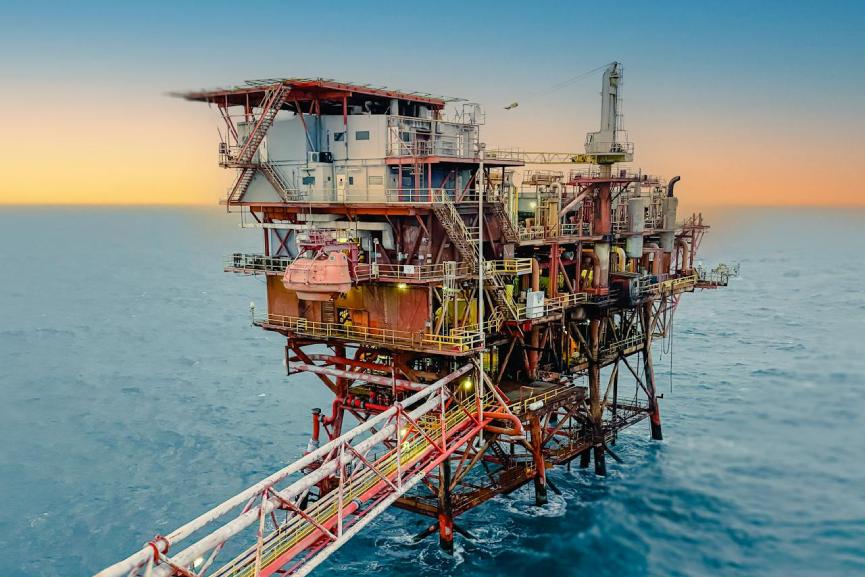
Scientists at Kazan Federal University, in collaboration with two Russian companies, have developed a new catalyst based on iron, nickel, cobalt, chromium, and copper to enhance highly viscous heavy oil production.
The researchers identified the optimal catalyst composition, a mixture of iron and nickel in an 85:15 ratio, and tested it in field conditions at a well in the Aksinovskoye oil field in the Samara region.
Over four months of oil production using the catalyst, water content in the extracted oil dropped from 99 percent to 30 percent. High water content is a major challenge, as it complicates crude oil processing and causes equipment corrosion.
The use of the new catalyst led to increased oil production, demonstrating its high efficiency. It also enables catalytic hydrothermal analysis, reducing energy costs. This breakthrough opens up new opportunities for extracting highly viscous crude oil.
Erik Mukhametdinov, Project Director and Senior Researcher at the Laboratory for Enhanced Oil Recovery Methods at Kazan Federal University, said that, “We plan to continue improving the catalyst’s composition and expanding its application, potentially using it in other heavy oil fields, which would increase its economic viability.”
The new development for oil production is expected to be a strong catalyst for oil-producing countries, especially in the Arab world. GCC countries are major global players in the oil market, controlling a significant portion of the world’s oil reserves and production. Together, the GCC accounts for nearly a third of the world’s proven oil reserves, and they play a crucial role in global energy markets.
The GCC countries collectively hold approximately 30-35 percent of the world’s proven oil reserves, making them central to the global energy supply.
The GCC is a major exporter of crude oil. Countries like Saudi Arabia, the UAE, and Kuwait send oil to markets in Asia, Europe, and North America. In particular, China and India are among the top buyers of GCC oil.