The Royal College of Surgeons in Ireland (RCSI) – Medical University of Bahrain has installed a new Membrane Bioreactor (MBR) Sewage Treatment Plant, strengthening the University’s commitment to sustainability.
Through this state-of-the-art facility, they aim to transform wastewater into reusable water, thereby significantly reducing the University’s environmental footprint. The MBR Sewage Treatment Plant is capable of processing up to 150 cubic meters (150,000 liters) per day, which is equivalent to 55,000 cubic meters annually.
The plant is developed to support the University’s growth, including the forthcoming New Academic Building, by managing future wastewater requirements sustainably. The treated water will be recycled for landscape irrigation, conserving potable water resources while supporting the University’s green campus initiatives.
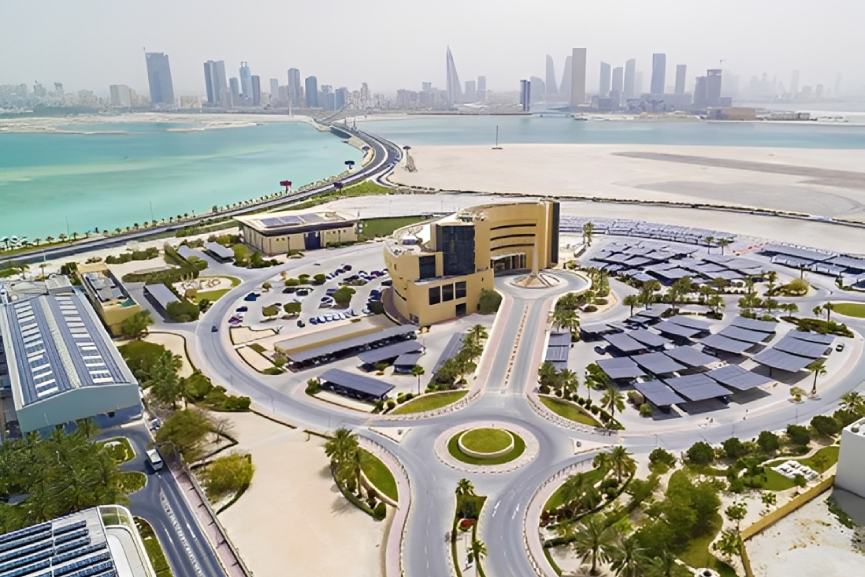
As part of its commitment to reducing carbon impact, the new plant operates predominantly on renewable energy from the campus solar farm, as it is fully integrated with the University’s solar-powered electricity grid.
Stephen Harrison-Mirfield Managing Director – RCSI Medical University of Bahrain
“At RCSI Medical University Bahrain, sustainability is a guiding principle of our operations. This new sewage treatment plant is the latest infrastructure investment for the future of our campus, which reflects our commitment to environmental sustainability and our responsibility toward the wider community. We are proud to deliver innovative solutions that reduce our ecological footprint while supporting the University’s continued growth.”
RCSI Medical University of Bahrain remains committed to driving sustainability and innovation across its operations, supporting Bahrain’s vision for a greener future while contributing to the United Nation’s Sustainable Development Goal. The university also empowers students, staff and the wider community to prioritize environmental responsibility.