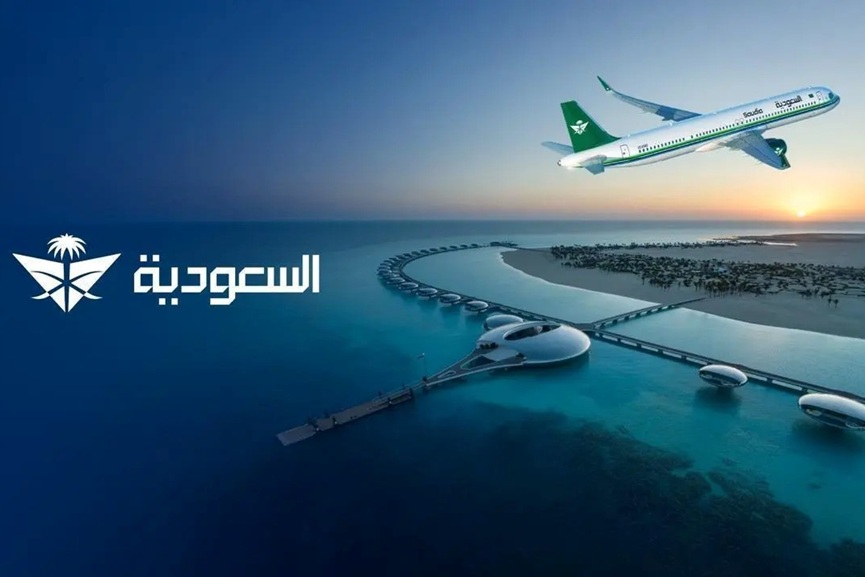
Saudia has increased flights between Riyadh, Jeddah, and The Red Sea during Eid al-Fitr to accommodate higher holiday travel demand and improve connectivity to the popular coastal destination.
The additional services were introduced in collaboration with the Saudi Tourism Authority and the Red Sea destination as part of a joint effort to promote key tourist locations and support the growth of the Kingdom’s tourism sector. As a result, the total number of flights operating in both directions has been significantly increased.
The long-term partnership between Saudia and the Saudi Tourism Authority focuses on expanding convenient flight options and enhancing the onboard travel experience, while supporting Saudi Arabia’s ambition to attract 150 million tourists by 2030.
Saudia began operations in 1945 with a single twin-engine Douglas DC-3 (HZ-AAX), a gift given to King Abdulaziz by the then US President Franklin D. Roosevelt. Within months, two more DC-3 aircraft were purchased, forming the foundation of what would grow into one of the world’s major airlines.
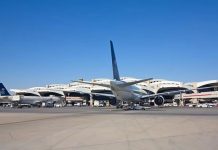
Today, Saudia operates a modern fleet of 142 aircraft, including advanced wide-body models such as the Boeing 787-9, Boeing 777-268L, Boeing 777-300ER, Airbus A320-200, Airbus A321, and Airbus A330-300.
In January 2026, Saudia was named the world’s second most punctual airline for 2025, according to data from the aviation analytics platform Cirium. This recognition marks the second consecutive year that Saudia has secured a position among the top two airlines globally for on-time performance.
Looking ahead, Saudia is preparing for a major fleet expansion. The additional aircraft will strengthen operational reliability by increasing flight frequencies, expanding seat capacity on existing routes, and enabling the launch of new international destinations.
To support this growth, the airline has committed the necessary resources while maintaining strong operational standards. The initiative is driven by a skilled local workforce and the advanced capabilities of its operations control center, which manages flight activity using modern aviation technologies.