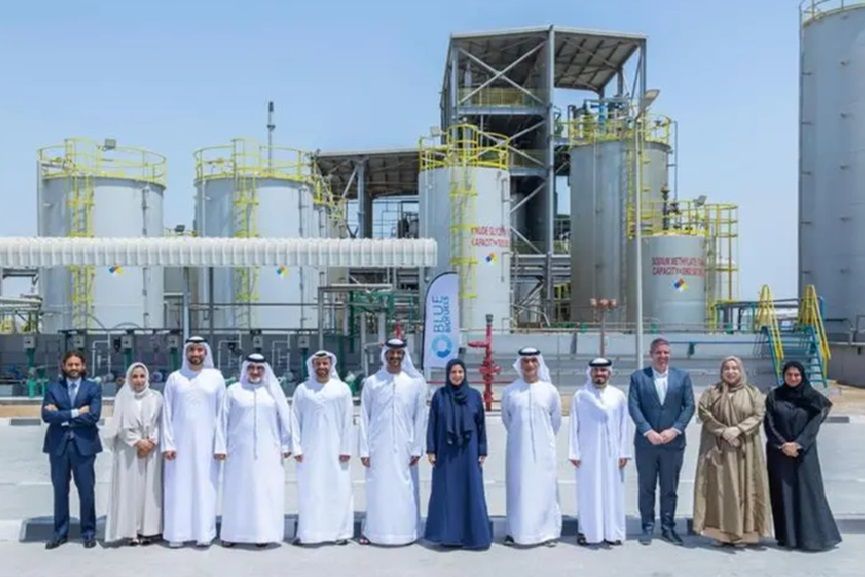
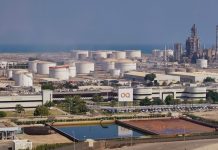
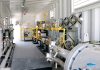
The UAE Circular Economy Council has convened its second meeting of 2025 at the Blue Biofuels factory in Abu Dhabi, focused on reviewing the second batch of policies proposed under the UAE Circular Economy Agenda 2031.
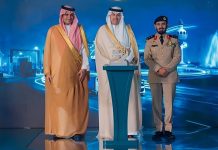
The council was chaired by His Excellency Abdulla bin Touq Al Marri, Minister of Economy and Tourism and Chairman of the Council. Her Highness Sheikha Shamma bint Sultan bin Khalifa Al Nahyan, President and CEO of the UAE Independent Climate Change Accelerators (UICCA), attended the meeting alongside council members from both public and private sectors.
These proposals target priority sectors, including sustainable transportation, infrastructure, and clean industries, reflecting the UAE’s broader vision to position itself as a global leader in green and sustainable development. HE Bin Touq reiterated the UAE’s commitment to advancing national strategies aimed at sustainable economic and social growth.
The minister noted at the UAE Circular Economy Council that this approach is guided by the country’s leadership and is designed to align with the objectives of the Circular Economy Agenda 2031, which outlines the UAE’s roadmap to achieving long-term environmental resilience and resource efficiency.
H.E. Abdulla bin Touq Al Marri The UAE Minister of Economy and Tourism
“The circular economy is a key pillar of the UAE’s new economic model for the next 50 years, which is built on more diversified and resilient economic components. In this context, we will continue, through the Council, to strengthen cooperation with relevant federal and local government entities as well as the private sector, to accelerate the development of UAE circular economy policies across four main sectors: manufacturing, food, infrastructure, and transportation, ensuring the optimal utilization of natural and financial resources.”
During the meeting, HE Bin Touq emphasized the importance of expanding public-private partnerships to drive the national circular economy forward. The minister encouraged the private sector to adopt cleaner production technologies and reduce environmental impacts, aligning with the UAE’s long-term ambition to become a global hub for sustainable innovation and climate-conscious growth.
HE Sheikha Shamma echoed this sentiment and said that, “The circular economy is not just an environmental commitment; it represents a strategic opportunity to achieve long-term, sustainable economic growth. In the UAE, we believe in our ability to transform challenges into achievements, and we continuously strive to empower entrepreneurs and develop innovative solutions that turn waste into valuable resources. We will continue to strengthen collaboration with partners in both the government and private sectors to support policies that advance the circular economy, ensuring sustainable prosperity and environmental responsibility for future generations.”
The UAE Circular Economy Council reviewed a presentation outlining the legislative and regulatory frameworks underpinning the UAE’s circular economy strategy. The discussion focused on the development of innovative policies and business models aimed at supporting private companies and startups in circular sectors. Participants evaluated a comprehensive set of incentives to encourage the adoption of circular practices across key value chains, from production to consumption, as part of the UAE’s goal to become a global leader in circularity within the next decade.
Key topics at UAE Circular Economy Council included the future direction of localizing technology and innovation in circular manufacturing. The UAE Circular Economy Council members noted that innovation plays a vital role in developing efficient industrial solutions that reduce waste, increase productivity, and minimize environmental harm. Localized tech adoption, they agreed, is essential to building a resilient and competitive industrial sector capable of sustaining the UAE’s economic diversification efforts.
Another significant discussion at the UAE Circular Economy Council centered on the role of digital tools in supporting circular economy ventures. The Council explored the development of a dedicated digital platform for startups and small-to-medium enterprises (SMEs) involved in circular projects. The platform would provide access to funding, policy updates, and networking opportunities, aiming to boost the visibility and impact of emerging circular businesses across the country.
The launch of a specialized online marketplace for plastic materials, designed to facilitate safe trading and enhance recycling was also proposed. The platform seeks to create a digital ecosystem that promotes responsible consumption and accelerates the recycling and repurposing of plastic waste, in line with the UAE’s sustainability goals.
As a part of the meeting’s agenda, the UAE Circular Economy Council reviewed a presentation by PepsiCo: MENA and Pakistan, which highlighted the company’s efforts in integrating recycled plastics into its supply chain. The presentation explored opportunities to scale such initiatives across the UAE and emphasized the potential for broader private sector collaboration in waste reduction and circular materials use.
The session concluded with a collective call to strengthen international partnerships, particularly in areas related to climate technology and circular policy innovation. Council members acknowledged the importance of exchanging knowledge and best practices with global stakeholders to reinforce the UAE’s leadership in sustainable development and economic resilience.
As the UAE accelerates its transition to a circular economy, the UAE Circular Economy Council ’s ongoing efforts are expected to play a key role in shaping the future of sustainable industry, innovation, and climate action in the region.