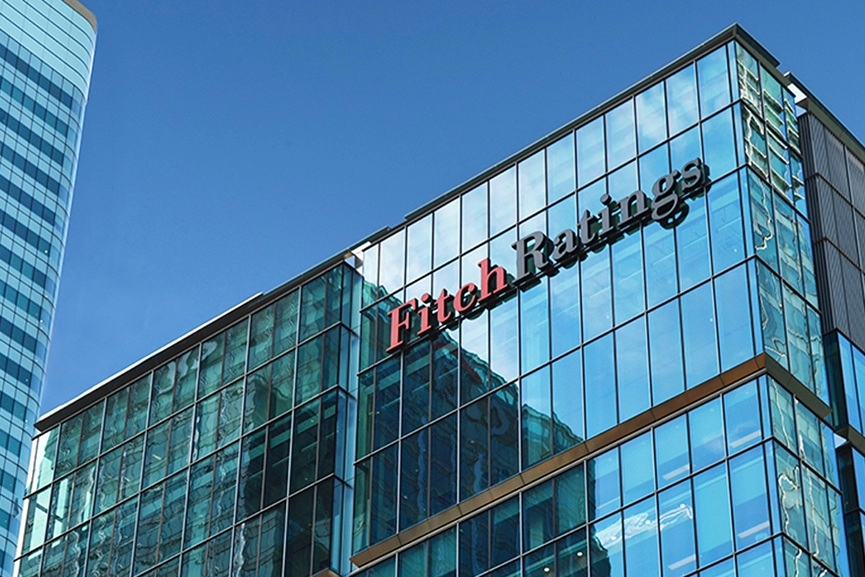
Global credit rating agency Fitch Ratings has reaffirmed the sovereign credit rating of Qatar at ‘AA’ with a stable outlook, citing the country’s strong fiscal fundamentals, substantial sovereign assets, and sustained growth potential driven by major expansions in liquefied natural gas (LNG) production.
According to the latest assessment by Fitch Ratings, Qatar remains one of the world’s wealthiest economies on a GDP-per-capita basis, supported by vast hydrocarbon reserves and disciplined fiscal management.
The agency noted that the government maintains a strong balance sheet backed by substantial sovereign assets, providing a significant financial buffer against potential global or regional economic shocks.
A key pillar of this financial strength is the investment portfolio managed by the sovereign wealth fund, the Qatar Investment Authority (QIA).
Fitch estimates that Qatar’s sovereign net foreign assets reached approximately $494 billion in 2025, equivalent to around 227 percent of GDP.
These sizeable overseas assets provide the government with substantial flexibility to stabilize the economy during periods of volatility or external disruptions.
Despite ongoing geopolitical tensions in the region and temporary disruptions affecting shipping routes through the Strait of Hormuz, the rating agency expects the economic impact on Qatar to be limited and short-lived.
The country’s strong fiscal reserves and liquidity position are expected to help manage such short-term challenges effectively.
LNG expansion to drive future growth
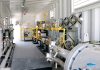
Looking ahead, Qatar’s economic outlook is closely tied to the expansion of its LNG sector led by state energy giant QatarEnergy.
The company is implementing large-scale projects aimed at increasing LNG production capacity from 77 million tons per year in 2025 to 126 million tons by 2027, with a further rise to 142 million tons by 2030.
These investments are expected to significantly boost government revenues and strengthen economic growth over the coming decade, reinforcing the country’s position as one of the world’s leading LNG exporters.
In the near term, Fitch forecasts that Qatar’s budget surplus will narrow to around 0.3 percent of GDP in 2026, compared with 2.8 percent in 2025. The decline is mainly attributed to lower hydrocarbon revenues and increased public spending aimed at supporting diversification and the non-oil economy.
However, the fiscal outlook is expected to improve markedly once LNG expansion projects begin generating additional revenue streams.
From 2027 onward, Qatar’s budget surplus could rise again, potentially exceeding 7 percent of GDP by 2030, supported by higher gas output and sustained global demand for LNG. A significant share of these surpluses is expected to be invested internationally through the Qatar Investment Authority, further strengthening the country’s long-term financial stability.
Qatar also maintains a solid external balance sheet. Fitch estimates that the country remains a net external creditor, with the current account surplus projected at about 6.5 percent of GDP in 2026. This figure is expected to climb above 11 percent in subsequent years as LNG export volumes increase.