Lucid Group, an automotive company that manufactures advanced electric vehicle, has partnered with Saudi Arabia’s King Abdullah University of Science and Technology (KAUST) to shape the future of EV technology.
Through this partnership, Lucid aims to advance the company’s technology leadership by leveraging Saudi Arabia’s growing resources, most notably gaining access to KAUST’s supercomputing capabilities.
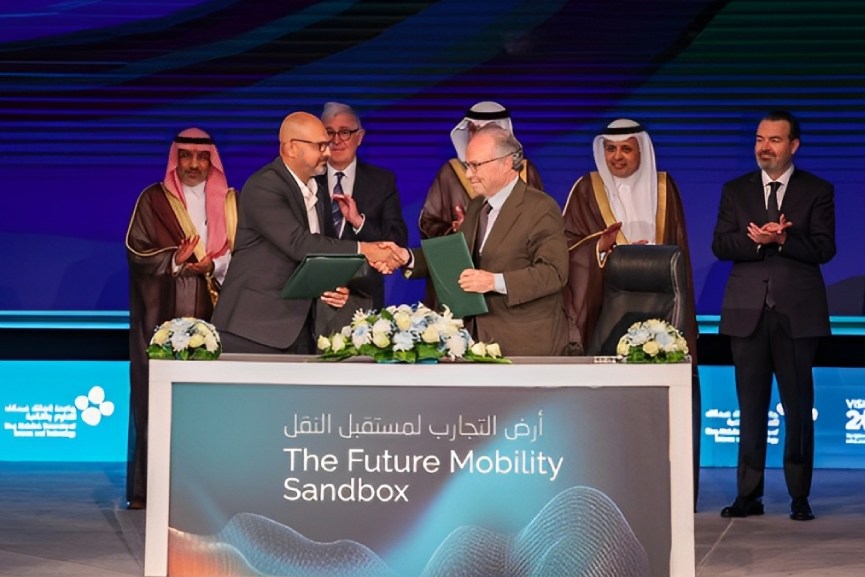
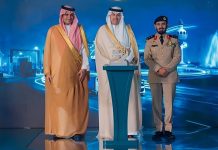
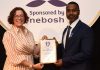
The partnership agreement was signed by Faisal Sultan, Vice President and Managing Director for Middle East at Lucid, and Pierre Magistretti, Vice President of Research at King Abdullah University of Science and Technology (KAUST).
“KAUST’s world-class research infrastructure and talent has the potential to further boost our technology leadership in many dimensions including our ADAS and AD roadmap—bringing cutting-edge innovation from the lab to the road. This collaboration also strengthens our global R&D footprint bringing additional resources to bear in our efforts to continue as a leader in EV powertrain, battery systems, advanced materials, and software-defined vehicle platforms. As this partnership demonstrates, we continue to strengthen our collaboration with the Kingdom and are fully committed to working together to help achieve their vision to become a global center for mobility innovation.”
Sir Edward Byrne AC, President of KAUST, stated that, “KAUST is proud to partner with Lucid to join our research capabilities with their real-world EV expertise while contributing to the Kingdom’s strategic goals. This collaboration underscores our joint commitment to pioneering innovative solutions in electric vehicle technology.”
Eric Bach, SVP of Product and Chief Engineer at Lucid, added that, “Access to high-performance computing at this level is truly transformative. It dramatically enhances our ability to develop advanced fluids, materials and alloys, simulate real-world physics for crash safety and structural optimization, model fluid dynamics and thermal transfer, analyze electromagnetic flux, and accelerate AI training for digital twin technology, autonomous systems, and large language models. We’re deeply grateful for this opportunity and excited about the breakthroughs it will drive across our engineering and AI initiatives.”
Additionally, the collaboration will center on the design and prototyping of next-generation components and systems, integrating disciplines such as mechanical, electrical, thermal, and chemical engineering.
Advancements in materials science will play a key role, with research dedicated to high-performance metallic and polymer-based composites, heat-reflective glass coatings, innovative laminates, and alternative non-conventional materials —each aimed at enhancing vehicle efficiency and durability.
The joint research and development activities are set to hold at KAUST’s advanced laboratories in King Abdullah Economic City.