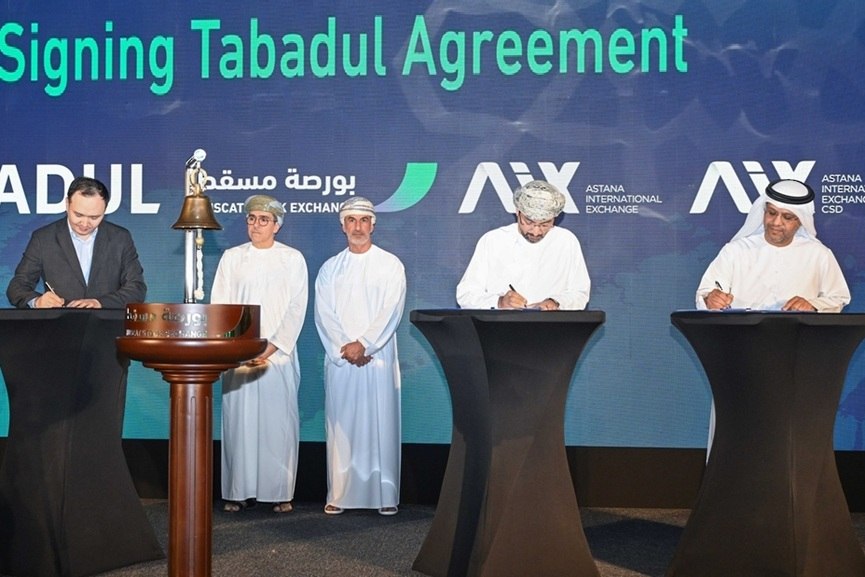
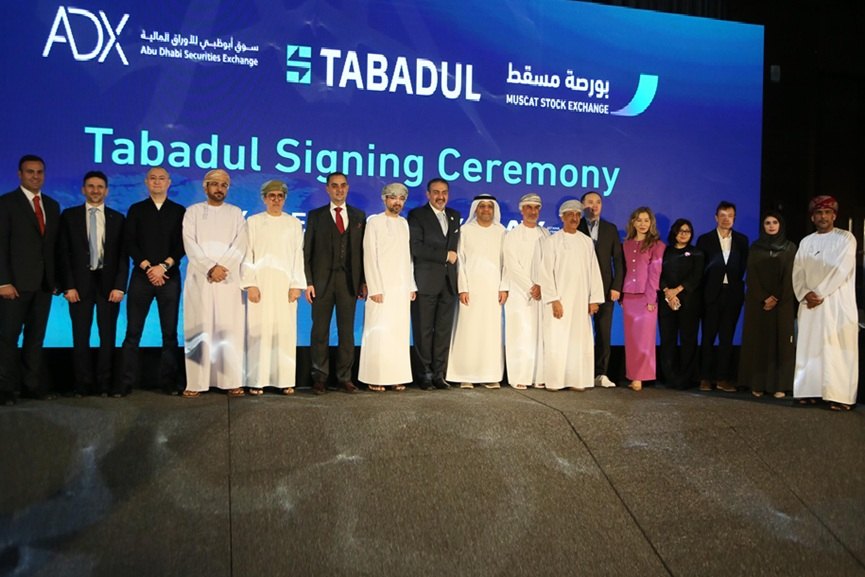
Muscat Stock Exchange (MSX), in collaboration with the Tabadul Hub, has signed a series of agreements with regional and international financial markets, namely the Kazakhstan Stock Exchange (KASE) and the Astana International Exchange (AIX).
The agreements finalize the contractual, regulatory, and operational frameworks connecting Muscat Stock Exchange to these markets via the Tabadul Hub. In parallel, Muscat Clearing and Depository (MCD) signed an agreement with the Tabadul Hub to enable clearing and settlement for transactions executed by licensed Omani brokerage firms.
The signing ceremony was attended by senior executives and representatives from Abu Dhabi Securities Exchange (ADX), the operator of the Tabadul Hub, as well as the Kazakhstan Stock Exchange (KASE), Astana International Exchange (AIX), their respective central securities depositories, MCD, and several brokerage firms.
Haitham Salim Al Salmi, CEO of MSX, emphasized that the move strengthens MSX’s regulatory and operational infrastructure, enhancing Oman’s integration with regional and international markets to boost efficiency, expand investment options, and support sustainable growth.
Abdullah Salim Al Nuaimi, CEO of the Tabadul Hub, highlighted Tabadul’s role as a regional enabler of market connectivity, providing secure, compliant access that benefits brokerage firms and investors.
The Tabadul Hub ecosystem includes Abu Dhabi Securities Exchange, Muscat Stock Exchange, Kazakhstan Stock Exchange, Astana International Exchange, Armenia Stock Exchange, and Bahrain Bourse. The agreements by MSX and MCD complete their integration with KASE and AIX through clear bilateral arrangements defining roles, responsibilities, and operations.
Image credits: QNA | Cropped by GBN
Adil Mukhamejanov, Chairperson of KASE, noted that these agreements reflect advanced operational readiness and mark a key step in strengthening connectivity between Central Asian and Middle Eastern capital markets, boosting investment access and investor interaction.
Zharas Musabekov, CFO of AIX, called it a pivotal milestone in operational integration, creating a more open and efficient trading environment and boosting the appeal of participating markets to regional and international investors.
MSX, KASE, AIX Agreements
The agreements between MSX, KASE, and AIX regulate remote trading through the Tabadul Hub, allowing licensed MSX brokers to access connected markets under clear registration and accreditation procedures while respecting each market’s rules and regulatory independence.
Separately, MCD and the Tabadul Hub finalized rules for clearing and settlement under the Remote Trading Members framework. The agreement governs transactions by Omani members in other markets and by non-Omani members trading on MSX, clearly defining MCD’s role in the process.
Mohamed Said Al Abri CEO – MCD
“This agreement represents a strategic step toward expanding access to regional markets and opening new channels for foreign investment. It also enhances investor confidence through compliance with internationally recognized capital market standards. The agreement establishes a clear framework for collateral management, trade settlement, and trading limits, while completing the regulatory foundations governing clearing and depository operations and defining the core infrastructure frameworks of the capital market. This ensures the protection of the rights of all relevant parties. Moreover, the agreement contributes to opening access to new markets, while safeguarding operational integrity and mitigating risks.”
Haitham Al Salmi, CEO of MSX, stated that the connectivity through the Tabadul Hub is part of a strategic vision to strengthen Oman’s capital market, create a more open and diversified investment environment, and provide broader opportunities for investors and brokerage firms, while upholding high governance and compliance standards in support of the national economy.
Clearing and settlement will be coordinated between MCD and the KASE and AIX depository centers, ensuring smooth movement of securities and cash across connected markets. The move is expected to deepen the market, diversify the investor base, enhance cross-market trading, and support sustainable growth and confidence in the capital market’s infrastructure.