Oman’s Authority for Public Services Regulation (APSR) has outlined a forward-looking roadmap to strengthen the utilities sector, announcing three strategic projects and regulatory enhancements.
The initiatives, continuous renewable energy production, battery energy storage systems (BESS), and demand response management form a core pillar of the Sultanate’s transition toward a more resilient, efficient, and sustainable energy system.
The announcement was made during APSR’s annual media briefing, where officials revealed the progress achieved over the past five years and future priorities aligned with Oman Vision 2040.
The continuous renewable energy production project aims to ensure round-the-clock electricity generation from renewable sources, reducing reliance on conventional energy and enhancing grid stability.
Complementing this, BESS projects will store surplus renewable energy during off-peak periods and deploy it during peak demand, improving load management and operational efficiency.
Meanwhile, the demand response management project will enable better control of electricity consumption, particularly during peak periods, through coordination with major users, further easing pressure on the grid and boosting energy efficiency.
APSR revealed that total investments in regulated sectors reached approximately RO 3.4 billion ($8.8 billion) during the 10th Five-Year Plan (2021–2025).
This figure is projected to surge to RO 8.8 billion ($22.8 billion) in the 11th Five-Year Plan (2026–2030), with the bulk directed toward electricity infrastructure, followed by water, wastewater, and gas transmission.
Growth indicators reflect strong expansion across utilities. Electricity consumption rose by 27 per cent, while the number of subscribers increased by 14 per cent. In the water and wastewater sector, consumption grew by 13 percent, alongside a 12 percent rise in subscribers—underscoring the impact of economic and urban development in Oman.
Regulatory strengthening and digital transformation
Over the past five years, APSR has implemented a comprehensive regulatory framework, issuing 17 regulations, granting 14 licenses, and developing 15 frameworks to safeguard subscriber rights. Additional measures include six safety standards and eight grid reliability benchmarks, reinforcing sector governance and operational integrity.
The Authority has also achieved full digital transformation, with 100 percent of services now digitized. Smart meter adoption reached 99 per cent in the water sector and 80 per cent in electricity, significantly improving billing accuracy and customer experience.
APSR Chairman Dr. Mansoor Talib Al Hinai announced stricter service assurance standards, including doubling compensation for repeated service failures by providers. The move aims to strengthen accountability and elevate service delivery across regulated sectors.
Efforts to protect consumers have also intensified through digital platforms, including ‘Hasil’ and ‘Tajawub,’ which handled more than 7,000 complaints in 2025.
Compliance rates under audit programs reached 96 percent, surpassing targets, while customer satisfaction rose to 75 percent.
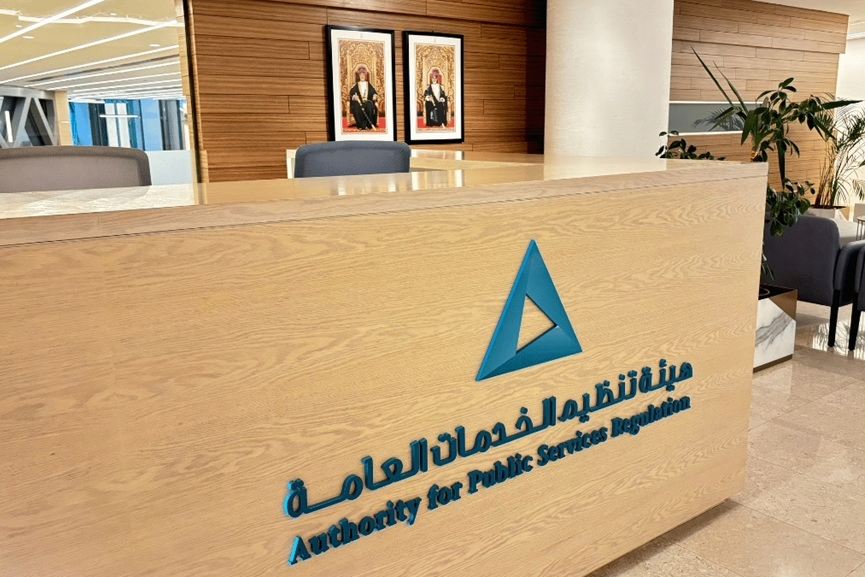
Rep Image Courtesy: APSR | Cropped by GBN
Expanding infrastructure and local impact
Infrastructure development has accelerated across sectors. Electricity transmission lines expanded by 40 per cent, while water and wastewater networks grew by 32 per cent.
Gas transmission capacity also recorded steady growth, supported by major expansion projects and enhanced safety standards.
The utilities sector continues to deliver strong economic and social impact. Omanization rates reached 98.55 percent in sector companies, with around 2,050 new jobs created in 2025. Spending on SMEs surged by 80 percent to RO 119 million ($309 million), while In-Country Value contributions increased by 35 percent.