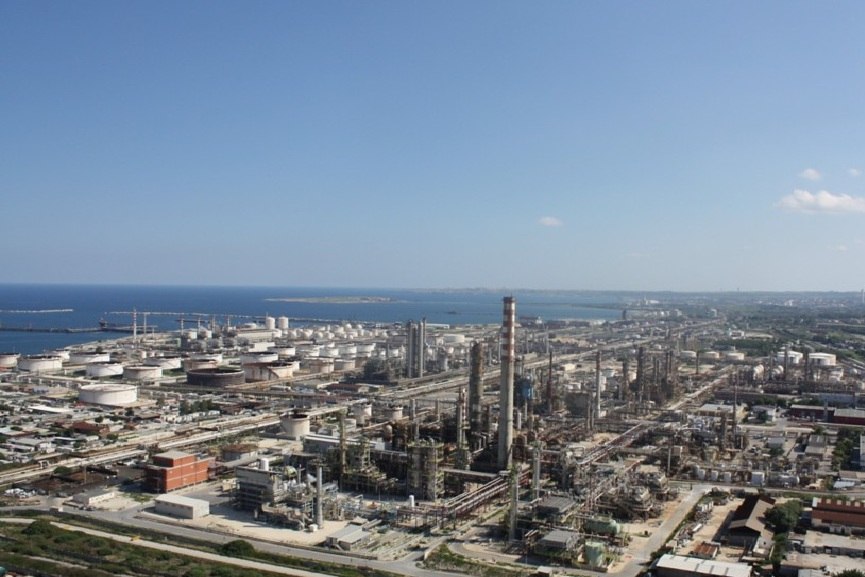
Kuwait Petroleum International’s international arm, Q8, has signed an agreement with Italy’s Eni to develop an industrial complex for biofuel production at the Priolo site in Sicily, marking a major strategic investment in Europe’s energy transition.
The agreement was signed on the sidelines of the Kuwait Oil and Gas Show and Conference 2026. Eni and Q8 Italy announced that the partnership will focus on the construction and future industrial operation of a new biorefinery at Priolo, reinforcing long-standing cooperation between the two companies.
Q8-Eni partnership
The project has received formal approval from the Boards of Directors of Eni and Kuwait Petroleum Corporation following Q8’s binding offer. The Priolo biorefinery marks a key milestone in the more than 30-year Q8-Eni partnership, which began with the Milazzo refinery in 1996, combining both companies’ industrial experience and Eni’s technical and operational expertise in Ecofining technology.
Ecofining technology enables the conversion of waste, residues and vegetable oils into biofuels that can also be used in 100 percent pure form. The new facility is designed to support the growing demand for sustainable fuels across multiple transport sectors.
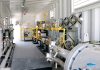
The biorefinery will have a production capacity of 500,000 tons per year and will offer high operational flexibility for the production of Hydrotreated Vegetable Oil (HVO) and Sustainable Aviation Fuel (SAF-Biojet).
These products are intended for use in road, marine and aviation transport, contributing to the reduction of greenhouse gas emissions in line with European Union objectives. The project is expected to achieve at least a 65 percent reduction in greenhouse gas emissions compared to the reference fossil fuel mix.
Image credits: Eni | Cropped by GBN
Engineering activities for the project have been completed. Preparatory work for the awarding of procurement and construction contracts is underway, while demolition works required for the development of new infrastructure are set to begin. The authorization process for the project has also been formally launched.
Subject to the completion of the required authorizations, the positive finalization of detailed contractual documentation and the execution of construction works, the project is expected to be completed by the end of 2028.
The transformation plan for the Priolo industrial site was initially announced in October 2024 and later confirmed through an agreement signed in March 2025 at the Italian Ministry of Enterprises. The plan allows the existing industrial site to be converted into a more sustainable, long-term activity, supporting the strategic objectives of both Eni and Enilive to reach a total biorefining capacity of 5 million tons per year by 2030.
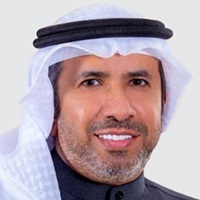
Shafi Taleb Al Ajmi CEO – KPI
“This project reflects Kuwait Petroleum Corporation’s commitment to advancing toward our 2050 Energy Transition Strategy. The investment marks our second megaproject with Eni in Sicily. It demonstrates the shared commitment of Q8 and Eni to excellence, innovation, and strategic partnership, as well as our ongoing presence and confidence in the Italian energy sector. Furthermore, Q8 is dedicated to achieving our shareholders’ strategic objectives and diversifying our portfolio in accordance with KPC’s long-term vision. We are committed to establishing ourselves as a leading provider of sustainable mobility solutions for customers in the European market for years to come.”
Giuseppe Ricci, Eni Chief Operating Officer Industrial Transformation at Eni, stated that, “The transformation plan of the Priolo industrial site, comments, proves to be solid and sustainable and demonstrates the validity of the long-term vision that involves the conversion of loss-making basic chemical business into new competitive and more sustainable activities, which can contribute to the decarbonization of transport. The transformation plan, which we announced in October 2024 and which was ratified by the agreement signed in March 2025 at the Ministry of Enterprises and Made in Italy, will allow us to convert the industrial site in a more environmentally sustainable way, while protecting employment and skills.”