Syrian President Ahmed Al-Sharaa has announced that the country has secured nearly $28 billion in investments during the first half of this year, with substantial contributions from companies in the United Arab Emirates, Saudi Arabia, and Qatar.
The announcement underscores a significant influx of foreign capital into the country, signaling renewed economic confidence in the region.
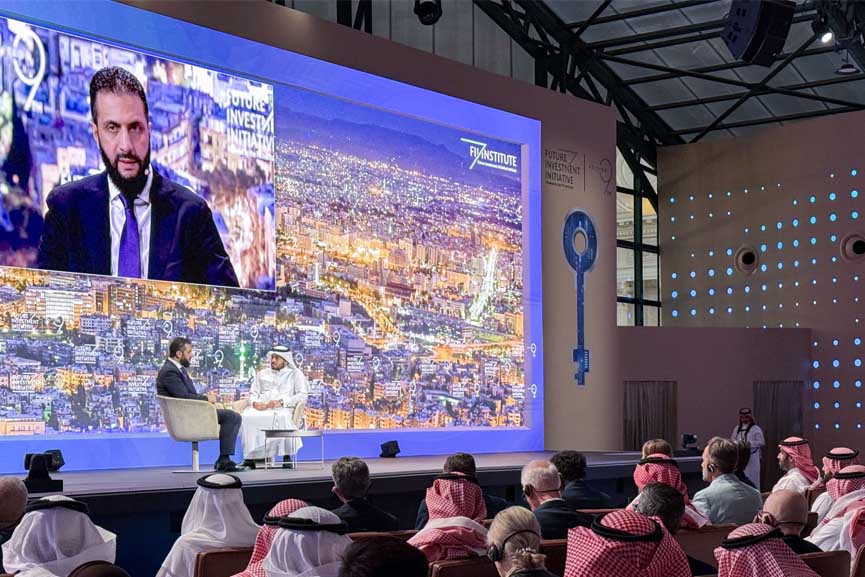
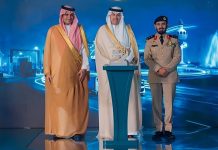
During a panel discussion at the ninth edition of the Future Investment Initiative in Riyadh, President Al-Sharaa highlighted that prominent Saudi companies have already launched projects valued at $7 billion.
Additionally, leading Qatari firms have begun investing in key infrastructure projects, including the Damascus Airport and power generation initiatives with a combined capacity of 5,000 megawatts.
The President stressed that his country, having regained its regional position, now serves as a key pillar of regional stability, noting that the country currently enjoys strong and constructive relations with the UAE, Saudi Arabia, Qatar, and Türkiye.
Al-Sharaa explained that Syria’s investment laws have been amended to serve investors better, adding that the new legislation has been ranked among the world’s top ten investment frameworks.
“We want to rebuild Syria via investments,” Al-Sharaa said, adding the world can benefit from it as a trade corridor.
Rebuilding Ties and Recent Developments: Syria’s Relations with GCC Countries
In recent years, particularly following Syria’s shift towards closer ties with Iran and the partial diplomatic normalization between some Arab states, the economic relations between Syria and GCC countries have begun to show signs of revival.
United Arab Emirates (UAE): The UAE has played a leading role in re-engaging with Syria. In 2018, the UAE reopened its embassy in Damascus, signaling a shift in its policy towards the Syrian government. The UAE has been a key player in pushing for economic recovery, particularly through investments in infrastructure and development projects. Emirati companies have shown interest in sectors like construction, telecommunications, and energy.
Saudi Arabia: While Saudi Arabia has been more cautious about normalizing ties with Syria compared to the UAE, recent signals suggest a potential shift. Saudi companies have shown interest in projects, particularly in the energy sector. However, political considerations continue to complicate the full restoration of economic ties.
Qatar: Qatar’s relations remain more strained due to its previous support for opposition forces during the civil war. Nevertheless, Qatari firms have shown interest in the reconstruction of Syria, particularly in the areas of energy and infrastructure, though the political situation still limits their involvement.
Kuwait and Bahrain: These two countries have been more reserved in their approach toward Syria, with economic interactions remaining limited due to the ongoing political differences. However, both countries maintain some level of trade relations, mostly through unofficial channels.