On average, men have greater muscular strength. Women, however, tend to score higher in emotional intelligence and live longer worldwide, 76.0 years compared to 70.8 years for men.
These biological differences are well documented, but they represent only part of the story. The evidence increasingly shows that women’s leadership is not only fair, but a strategic advantage, one that strengthens organisations, economies, and societies.
Celebrating 50 Years of Progress
On August 28, the UAE observes Emirati Women’s Day, this year under the theme “Hand in Hand, Celebrating 50 Years.” The occasion marks five decades since the establishment of the General Women’s Union by H.H. Sheikha Fatima bint Mubarak, a milestone that has defined the nation’s approach to inclusion and empowerment.
This celebration is about more than honouring achievement. It is a moment to reflect on what science and experience confirm: diverse leadership enhances resilience, decision quality, and long-term growth. In boardrooms, governments, and communities, women’s leadership is a proven driver of sustainable success.
The Evidences
Research consistently shows that diverse teams outperform homogeneous ones. A multi-company analysis by Cloverpop found that inclusive teams reached superior decisions up to 87% of the time and implemented them more effectively. While correlation does not prove causation, the pattern is unmistakable: when varied perspectives combine, blind spots shrink and creativity expands.
Transformational Leadership Styles
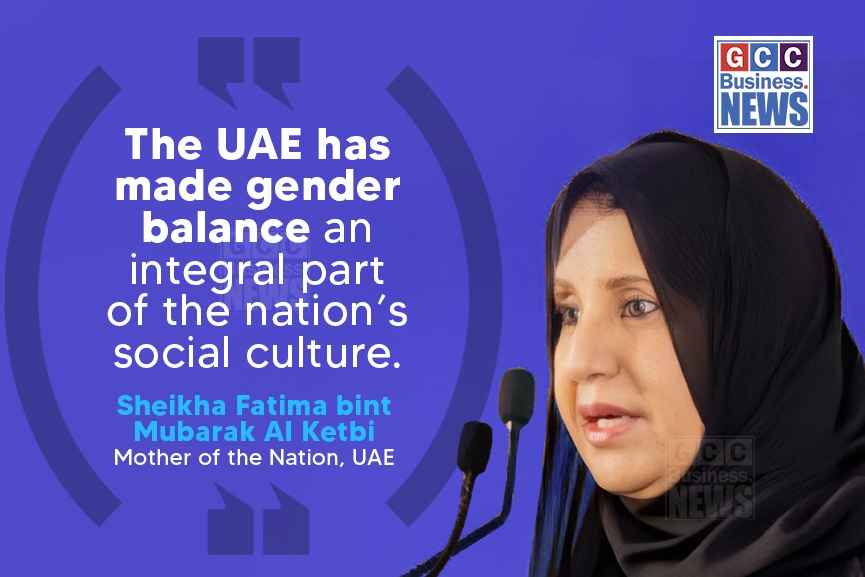
H.H. Sheikha Fatima bint Mubarak Al Ketbi | Image source: WAM | Edited and designed by team GBN.
Meta-analyses in management and psychology reveal that, on average, women are more likely to adopt transformational leadership styles. These emphasise inspiration, collaboration, and professional development. Such approaches enhance employee satisfaction and creativity, while also supporting innovation in complex environments.
Emotional Intelligence and Engagement
Scientific reviews in journals such as Nature and ScienceDirect show modest but consistent sex differences in emotional intelligence and empathy. Women tend to score higher in emotion recognition and interpersonal awareness, vital skills for coaching employees, building team cohesion, and strengthening customer relationships.
Balanced Approach to Risk
Behavioural economics research suggests that women demonstrate greater risk caution. This is not the absence of ambition but rather a tendency to avoid excessive risk. In corporate strategy and capital allocation, this approach often moderates volatility and prevents costly overreach, safeguarding long-term performance.
Financial Outcomes Reflect Inclusion
Reports by McKinsey & Company and Credit Suisse (Gender 3000) correlate gender-diverse leadership teams with stronger financial performance. While causation should not be overstated, the weight of global evidence indicates that governance quality improves when organisations move beyond symbolic inclusion to genuine equality at the top.
Crisis Leadership: Lessons from COVID-19
During the early stages of the COVID-19 pandemic, several analyses noted that countries led by women adopted faster and more people-centred measures, often associated with better public health outcomes. Scholars caution against overgeneralisation, but the trend illustrates the value of inclusive leadership styles during moments of uncertainty.
Beyond Symbolism: Evidence in Resilience
Designed by team GBN.
Even biomedical research offers perspective on why resilience is often observed in women leaders. Men generally have higher haemoglobin and muscle mass, but women demonstrate greater fatigue resistance in endurance contexts. Studies from Mayo Clinic and BMJ Open also show women mounting stronger immune responses and survival advantages during crises such as famines and epidemics.
The parallel for leadership is clear: sustained resilience under pressure and adaptability in complex circumstances. These physiological insights complement organisational evidence: when women lead, teams often navigate challenges with steadier focus and long-term endurance.
Progress With Purpose: The UAE Example
For the UAE, gender balance is more than aspiration; it is embedded in national policy.
Government Leadership: Women hold 50% of the seats in the Federal National Council, one of the highest levels of parliamentary representation globally. Nine federal cabinet portfolios are currently led by women.
Public Sector: Women comprise 66% of the public-sector workforce, with nearly one-third in leadership roles.
Education: Emirati women now form the majority of university graduates, including up to 61% of STEM graduates, strengthening the nation’s transition to a knowledge-based economy.
This model demonstrates that inclusion is directly linked to competitiveness. The UAE’s framework, guided by the Gender Balance Council and national policy, shows how deliberate action transforms opportunity into practice, and practice into progress.
What This Means for GCC Boardrooms
Representational image | WAM
Make Diversity a Decision Advantage
Boards and executive teams should focus beyond quotas, ensuring dissenting voices genuinely shape strategy. As global data show, quality of decision-making improves when diversity is substantive, not symbolic.
Hire and Promote for Transformational Leadership
Recruitment and promotion criteria should emphasise behaviours associated with transformational leadership: coaching, collaboration, and shared purpose. Research suggests women statistically demonstrate these qualities more often, aligning leadership with the demands of modern organisations.
Balance the Risk Curve
Recognise the strategic benefit of balanced risk-taking. Women leaders often temper excessive risk, contributing to steadier growth; a critical advantage in volatile markets.
Build the Pipeline
With women excelling in STEM and professional education, the priority must be clear career paths to executive leadership. This requires rotational roles, sponsorship (not just mentorship), and high-visibility assignments to ensure pipelines translate to boardroom presence.
Expect Performance, Without Overclaiming
Gender diversity is consistently associated with improved profitability and governance. The mechanism is not “gender magic,” but stronger decision-making and governance. Setting performance expectations around inclusion ensures sustainable corporate outcomes.
Policy Alignment and National Momentum
Rep. Image | Source: EM’s FP User ID: 140976548
The UAE has demonstrated that policy can drive corporate behaviour through:
Parity in Representation: The mandate for equal representation in the Federal National Council sets a benchmark mirrored in corporate governance.
The Gender Balance Council: This body continues to align public and private sectors toward measurable outcomes, embedding inclusion as a national priority.
For GCC companies, aligning business practices with these national expectations is not optional, it is integral to competitiveness in a diversifying economy.
A Practical 6-Point Checklist for GCC Businesses
Set measurable targets: Define time-bound goals for women in leadership and report progress transparently.
Audit decision-making: Evaluate who contributes to discussions and whether their input shapes outcomes.
Sponsor, not just mentor: Assign executives to actively champion high-potential women into critical roles.
De-bias talent systems: Use structured interviews, skills-based assessments, and diversity requirements in succession planning.
Support life stages: Implement returnships, flexible work models, and caregiving benefits to sustain careers through transitions.
Reward leadership behaviours: Evaluate executives not only on financial KPIs but also on transformation, collaboration, and inclusivity.
These measures move organisations from intention to impact, turning data into sustained performance.
Why It Matters on Emirati Women’s Day
Rep. Image | Source: EM’s FP User ID: 140976548
Half a century ago, the establishment of the UAE’s General Women’s Union set the foundation for equality as state policy. Fifty years on, the data make the case even stronger: inclusive leadership is a competitive advantage, not a charitable cause.
Organisations that prioritise women’s leadership reduce blind spots, make smarter decisions, and build resilience in uncertain times. For the UAE and the wider GCC, this is both a celebration of progress and a strategic imperative for the decades ahead.
As we reflect on this milestone, the message is clear: the evidence speaks for itself. Women’s leadership is not symbolic, it is structural, the cornerstone of smarter, steadier, and stronger organisations and societies.