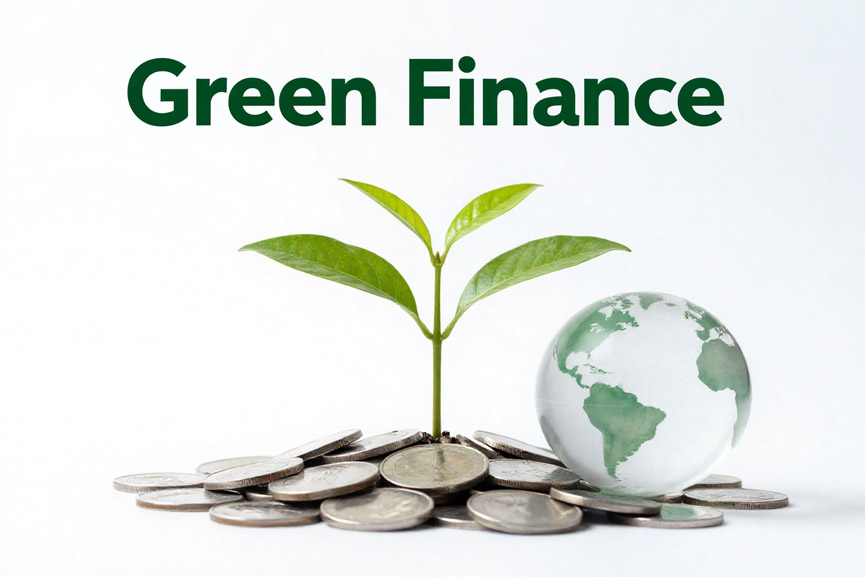
Green finance is becoming a catalyst for the Gulf Cooperation Council (GCC) region’s transformation towards a more sustainable and diversified economy.
As countries like Saudi Arabia and the UAE embrace ambitious sustainability goals, such as Saudi Arabia’s Vision 2030 and the UAE’s Vision 2021, green finance is playing a pivotal role in funding the transition to renewable energy, low-carbon infrastructure, and environmentally responsible growth.
The principle of environmental responsibility is a fundamental principle of green finance, which helps in the delivery of an innovative financial system to the region by facilitating the transition away from its long-standing reliance on fossil fuels as the primary source of revenue.
Green finance refers to financial investments and services aimed at supporting projects that have positive environmental impacts. This includes renewable energy projects, sustainable infrastructure, eco-friendly technologies, and initiatives that combat climate change. In the GCC region, green finance is evolving as both a necessity and a strategic opportunity.
For decades, oil and gas revenues have been the main drivers of economic growth in the Gulf Cooperation Council (GCC), but increases in global warming, fluctuations in oil prices, and a general movement toward sustainability have left them vulnerable. To combat these vulnerabilities, some GCC nations are working to diversify their economies. Green finance is one of the approaches the GCC is using to address these vulnerabilities.
Image credits: jcomp @ freepik | Cropped by GBN
Visionary Leadership: Driving Green Finance Initiatives
There have been several countries in the GCC that have formulated ambitious strategies for managing sustainable development and minimizing carbon emissions. Examples include Saudi Arabia’s Vision 2030, the UAE’s Vision 2021, and Qatar’s National Vision 2030, where green finance is part of the foundation.
Saudi Arabia has committed to diversifying its economy beyond oil and is setting ambitious goals for renewable energy, including a target to generate 50 percent of its power from renewables by 2030. The Saudi Green Initiative, launched in 2021, is a clear signal of the country’s commitment to sustainability, with green finance set to play a critical role in funding renewable energy projects, energy efficiency programs, and carbon capture technologies.
The UAE, a leader in the region’s green finance movement, has already established itself as a hub for clean energy innovation. The country hosts the International Renewable Energy Agency (IRENA) and is home to the world’s largest concentrated solar power plant, Noor Abu Dhabi. The UAE’s green bonds, launched in 2019, have become a critical tool for financing sustainable infrastructure and renewable energy projects.
Qatar has also made strides in integrating sustainability into its economic development. Qatar National Bank (QNB) issued its first green bond in 2020 to fund environmental projects, while the Qatar Investment Authority is investing heavily in green technologies as part of its diversification strategy.
Image credits: freepik | Cropped by GBN
Oman Environment Authority introduced a series of fiscal policies and strategic initiatives to align with the nation’s 2050 carbon neutrality target. The approach centers on securing funding from the Green Climate Fund to support environmental projects. These efforts include enhancing accreditation and readiness, developing project proposals, and forging international partnerships to advance Oman’s climate goals through green finance.
Bahrain’s green finance sector involves frameworks, incentives, and banking initiatives promoting sustainable investments in renewables, energy efficiency, and green buildings, driven by the Central Bank’s ESG push and the EDB’s efforts, with local banks offering green loans and the Bourse promoting sustainable listings, aiming to align with Vision 2030 and attract global green capital.
Kuwait’s green finance sector is experiencing rapid growth, fueled by the nation’s Vision 2035 and broader regional trends in environmental, social, and governance (ESG) priorities. Leading banks such as the National Bank of Kuwait (NBK) and Kuwait Finance House (KFH) are driving this momentum through green bonds, sustainable financing frameworks, and innovative financial products like green Sukuks.
These initiatives focus on key areas such as renewable energy, resource efficiency, and sustainable housing, aiming to diversify the economy and attract green investments. However, challenges persist, particularly in waste management.
Role of ESG (Environmental, Social, and Governance) Investing
In the broader context of green finance, ESG investment (Environment, Social, Governance) has been gaining momentum in the GCC countries. ESG criteria form the basis for making investments, while the primary emphasis is given to leaving a positive impact, from an environmental and social point of view, alongside strong governance.
Image credits: freepik | Cropped by GBN
Recently, there has been a significant increase in the number of investments and investment products related to environmental, social, and governance (ESG). A good example of this would be Emirates NBD, one of the biggest banks in the GCC and UAE, they launched their first ESG fund in 2020, which is one more example of how ESG criteria are increasingly becoming part of the mainstream in investment practices. The Securities and Commodities Authority (SCA) mandated ESG reporting for listed firms in 2022.
In Saudi Arabia, the Saudi Stock Exchange (Tadawul) has implemented ESG disclosure guidelines for publicly listed companies. The move encourages businesses to adopt sustainable practices, and these efforts reflect a broader regional trend to align financial markets with sustainable development goals.
Challenges and Opportunities
While the GCC’s green finance landscape is growing, challenges remain. One of the primary hurdles is the need for greater standardization in the issuance of green financial products. Currently, the lack of a unified regional taxonomy for green bonds and sustainable investments makes it difficult for investors to assess the environmental impact of different projects.
Additionally, there is the challenge of balancing sustainability with economic development in a region that has been built on oil revenues. Transitioning to a green economy requires significant investment in infrastructure, technology, and regulatory frameworks.
However, the opportunities are immense. The GCC is strategically located at the crossroads of major global markets, giving it access to a growing pool of capital interested in sustainable investments. With increasing global demand for green energy and eco-friendly technologies, the region’s commitment to green finance will not only support its economic diversification but also position it as a global leader in sustainable finance.