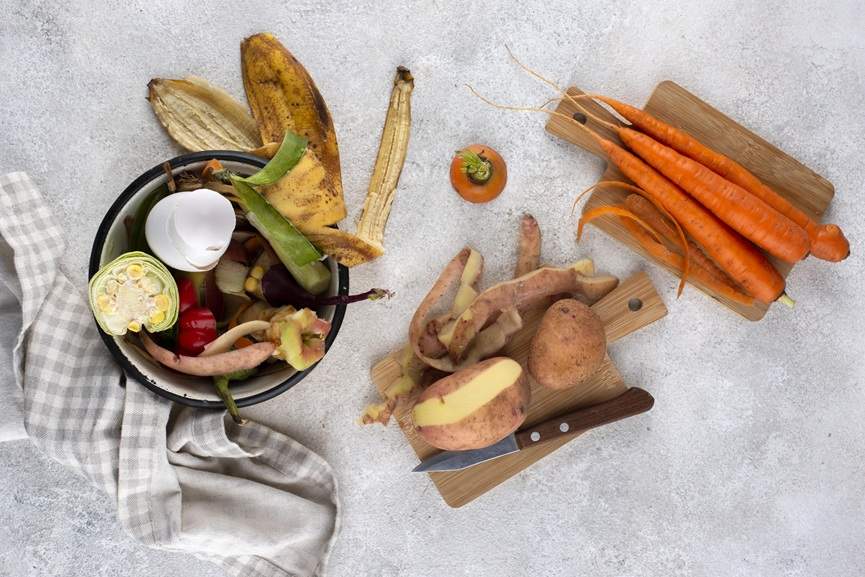
Engineers at the University of Illinois have developed a breakthrough method to produce sustainable aviation fuel (SAF) from food waste using low-cost nanocatalysts, potentially reducing carbon emissions in the aviation industry.
The research, led by Professors Hong Yang and Yuanhui Zhang from The Grainger College of Engineering at the University of Illinois Urbana-Champaign, presents a scalable solution that tackles both food waste and fossil fuel dependence. Their findings, published in Science Advances, mark the first SAF production from food waste-derived biocrude using non-noble metal carbide catalysts.
Zhang noted that while there is already ongoing industry activity around SAF production in North America, it largely relies on feedstocks that compete with the food supply, such as soybean oil.
He highlighted that the United States consumes approximately 40 million tons of jet fuel annually, with SAF currently accounting for only about 1 percent. However, he emphasized that this figure could potentially rise to 10 percent–20 percent if biowaste were more widely utilized.
SAF, unlike traditional jet fuels derived from fossil crude oil, is produced from renewable resources including biomass, food waste, sewage sludge, and algae. Zhang’s lab has spent nearly three decades developing biocrude oil using hydrothermal liquefaction (HTL), a process that accelerates the natural formation of crude oil from millions of years to just 30 minutes.
The team sourced food waste from the Kraft food plant in Champaign, Illinois, selecting salad dressing due to its uniformity, high energy content, and ease of processing. The waste was converted into biocrude using HTL and then refined into SAF through catalytic upgrading using nanocatalysts developed in Yang’s lab.
Image credits: freepik | Cropped by GBN
Yang explained that molybdenum carbide is a favorable catalyst for the process due to its outer shell electrons, which interact with biocrude molecules to effectively remove oxygen. He further underscored that there is no good substitute for aviation fuel for long-haul air transportation, so the research on SAF products is very much needed.
Siying Yu, a graduate student at Illinois and the study’s first author, explained that the catalysts must be fine-tuned by incorporating iron atoms and other elements to generate fuel molecules with molecular weights similar to those found in conventional jet fuel.
The research team at Illinois aims to further improve their catalyst design to process a wider variety of bio feedstocks, including algae, sewage, and fermentation products. The technology may also apply to SAF production from oleochemicals and crop-based materials. The study included contributors from multiple departments and institutions, including Washington State University.