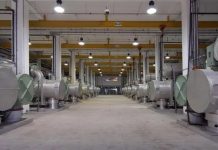
The National Energy Services Company (Tarshid) has launched phase two of a large-scale energy efficiency retrofit project at King Abdulaziz Military City (KAMC) in Tabuk, targeting more than 500 buildings and facilities to significantly cut electricity consumption and improve operational efficiency.
The initiative is designed to reduce annual electricity use from approximately 38 million kilowatt-hours (kWh) to around 22 million kWh, delivering estimated energy savings of 43 percent. The project is also expected to preserve more than 26,000 barrels of oil equivalent annually and reduce environmental impact equivalent to planting over 156,000 tree seedlings each year.
Large-scale energy efficiency upgrades
As part of the retrofit program, Tarshid is upgrading key infrastructure systems across the military city. This includes replacing conventional lighting with energy-efficient LED systems, installing occupancy sensors and smart motion detectors, and upgrading air conditioning chillers with high-efficiency models.
These measures are aligned with international energy efficiency standards and are intended to optimize energy use across residential, administrative, and operational facilities within the site.
Commenting on the project, Board Member and CEO of National Energy Services Company (Tarshid) Waled Al-Ghreri said that the company conducted detailed field surveys and technical studies across all buildings included in the scope. The assessments identified key opportunities to improve energy performance through targeted upgrades in lighting systems, cooling infrastructure, and automated control technologies, he added.
Tarshid supports Saudi energy transition goals
Founded in 2017, Tarshid serves as the Kingdom’s super energy service company (ESCO), focusing on energy efficiency, operational optimization, and clean energy solutions.
The company stated that the project supports broader national sustainability objectives under Saudi Arabia’s Vision 2030 framework by reducing energy consumption, lowering emissions, and improving overall efficiency in large-scale public infrastructure.