The Gulf region is rapidly emerging as an increasingly attractive destination for global business expansion.
Landmark economic reforms, rising levels of foreign direct investment, large-scale infrastructure projects, and fast-growing digital economies are drawing multinational corporations seeking to enter the region’s markets and establish their regional headquarters.
Countries such as the United Arab Emirates (UAE), Saudi Arabia, Qatar, Bahrain, and Oman contribute to the development of the Middle East as an emerging economic region through innovative strategies, advanced infrastructure, and attractive regulatory frameworks. The Middle East is a strategic crossroads connecting Europe, Asia, and Africa and is an option for companies seeking to enter new markets.
One of the biggest reasons behind the Gulf’s growing popularity is the steady rise in foreign direct investment (FDI). Governments across the region have introduced policies that make investing easier for international businesses.
Many sectors now permit full foreign ownership under updated investment regulations, while licensing procedures have become faster and more transparent. Free economic zones continue to attract global investors by offering tax advantages, simplified regulations, and modern infrastructure.
According to UNCTAD and national investment reports, GCC countries have continued attracting significant foreign investment, supported by reforms aimed at improving market access.
Regional Headquarters Are Moving to the Gulf
A noticeable trend in recent years is the relocation of regional headquarters to Gulf cities.
Dubai has long served as the Middle East’s commercial center, while Riyadh has rapidly become a preferred destination for multinational corporations.
Saudi Arabia’s ‘Regional Headquarters Program’, launched jointly by the Ministry of Investment (MISA) and the Royal Commission for Riyadh City, has encouraged international companies to establish offices in the country. It particularly attracts companies seeking to secure government contracts and gain access to one of the region’s largest economies.
According to official reports, over 700 international companies have been issued Regional Headquarters (RHQ) licenses in Saudi Arabia, surpassing the country’s initial Vision 2030 target.
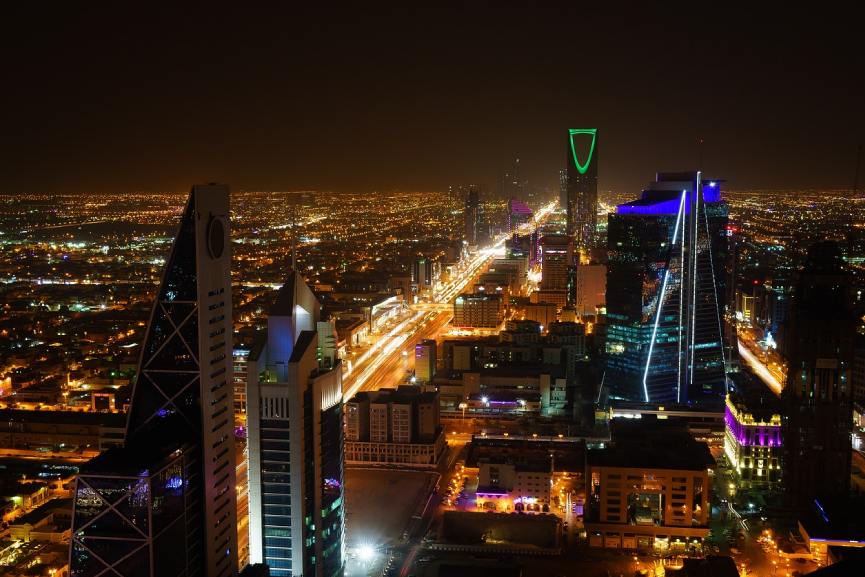
Rep. Image | Credits: apriltan18@Pixabay | Cropped by GBN
Recently, Deutsche Bank secured a Regional Headquarters (RHQ) license from Saudi Arabia’s Ministry of Investment (MISA). This Riyadh-based regional hub will serve as a centralized platform for Deutsche Bank’s regional management, strategic decision-making, and corporate operations across the Middle East.
Recent Examples Highlight the Gulf’s Growing Appeal
A wave of recent announcements demonstrates how international companies are choosing the Gulf as a base for regional growth, innovation, and investment.
AstroLabs recently opened new offices in the Riyadh Creative District at King Abdullah Financial District (KAFD). The facility is designed to help international creative, media, and technology companies establish operations in Saudi Arabia by offering market-entry support, office space, and networking opportunities. The move reinforces Riyadh’s ambition to become a leading destination for global businesses and creative industries.
US-based Positron AI, an artificial intelligence infrastructure company, established its first office outside the United States at the Dubai International Financial Centre (DIFC). The company cited Dubai’s rapidly growing AI ecosystem, world-class digital infrastructure, and supportive regulatory environment as key factors behind its decision, further strengthening the UAE’s position as a regional AI hub.
Global strategic communications and public affairs consultancy Kreab has opened its regional office in Riyadh, reflecting increasing demand for advisory services as multinational companies expand into Saudi Arabia. The move also highlights Riyadh’s growing importance as a regional headquarters destination for international professional services firms.
UK-based hedge fund Rokos Capital Managementhas established an office in Abu Dhabi Global Market (ADGM), joining a growing list of international asset managers expanding into the UAE. The decision underscores Abu Dhabi’s emergence as a leading international financial centre, supported by a robust regulatory framework, access to institutional capital, and an expanding investment ecosystem.
Rep. Image | pch.vector @ Magnific | Cropped by GBN
These are some examples, and these developments reflect a broader trend across the Gulf. Global companies are no longer viewing the region simply as a market for sales. Instead, they are investing in regional headquarters, innovation centres, financial operations, and strategic partnerships.
Business-Friendly Policies Attract International Companies
Governments across the GCC have introduced reforms aimed at making business operations smoother and more competitive.
Key initiatives include:
Simplified company registration processes
Long-term residency and investor visa programs
Digital government services
Modern commercial laws
Greater protection for foreign investors
Expansion of free zones and special economic areas
These reforms reduce administrative hurdles while giving companies greater confidence to invest for the long term.
Strategic Location Offers Global Market Access
Geography remains one of the Gulf’s greatest strengths. Located between Europe, Asia, and Africa, the region provides businesses with quick access to some of the world’s fastest-growing consumer markets.
International airports, deep-water ports, and world-class logistics networks enable companies to distribute products efficiently across multiple continents. For businesses managing regional supply chains, the Gulf offers both speed and connectivity.
Economic Diversification Creates New Opportunities
The Gulf’s transformation is being driven by ambitious national development plans. Saudi Arabia’s Vision 2030, the UAE’s long-term economic strategy, and similar initiatives across the GCC are encouraging investment beyond oil and gas. Governments are prioritizing sectors such as:
Artificial intelligence
Renewable energy
Financial technology (FinTech)
Tourism and hospitality
Healthcare
Manufacturing
Logistics
Smart cities
Digital infrastructure
These industries are attracting multinational corporations seeking long-term growth opportunities in emerging markets.
Infrastructure Supports Business Expansion
Modern infrastructure has become another competitive advantage for the Gulf. Massive investments in airports, highways, ports, industrial parks, business districts, and digital connectivity have made the region highly attractive for international companies.
Large-scale projects such as smart cities, clean energy developments, and innovation hubs continue to create opportunities for global businesses, construction firms, technology providers, and investors.
Skilled Talent and Innovation Fuel Growth
The Gulf is also investing heavily in human capital. Universities, research centers, startup accelerators, and innovation programs are helping build knowledge-based economies. Governments are attracting skilled professionals through flexible visa policies and high-quality living standards.
As a result, many international companies now view the Gulf not only as a sales market but also as a destination for research, product development, and regional innovation.
Business analysts expect the Gulf’s role in the global economy to continue expanding over the coming decade, driven by ongoing economic reforms, rising international partnerships, and investment in emerging industries. The region’s substantial sovereign wealth resources, long-term investment strategies, and strategic geopolitical position have enabled Gulf countries to pursue large-scale transformation projects while navigating periods of global economic uncertainty.
As governments advance diversification initiatives beyond hydrocarbons, multinational companies are increasingly exploring opportunities to establish regional headquarters, manufacturing facilities, research centers, and technology hubs across the GCC. The continued focus on sustainability, digital transformation, renewable energy, artificial intelligence, and innovation is expected to create new avenues for economic growth and investment.
Over the past decade, Gulf economies have undergone significant structural changes, supported by foreign investment, regulatory reforms, infrastructure development, and efforts to build knowledge-based economies. These factors are strengthening the region’s appeal as companies seek access to expanding markets across Europe, Asia, and Africa.
Looking ahead, the Gulf is expected to play a greater role in global commerce by attracting international businesses, fostering innovation, and developing new sectors. As economic strategies continue to evolve, the region’s influence in global trade and investment is likely to expand further.