The Abu Dhabi Department of Energy (DoE) has launched the Abu Dhabi Water and Energy Resilience Framework to enhance the resilience, reliability, and efficiency of the emirate’s water and energy systems.
The framework was officially unveiled during the third edition of the Water and Energy Majlis, held under the theme ‘From National Readiness to Smart Resilience.’
The Majlis, a flagship initiative of the Department of Energy, supports sustainable development across the water and energy sectors and was held under the umbrella of Abu Dhabi Water & Power Week, which is scheduled to take place in the final quarter of the year.
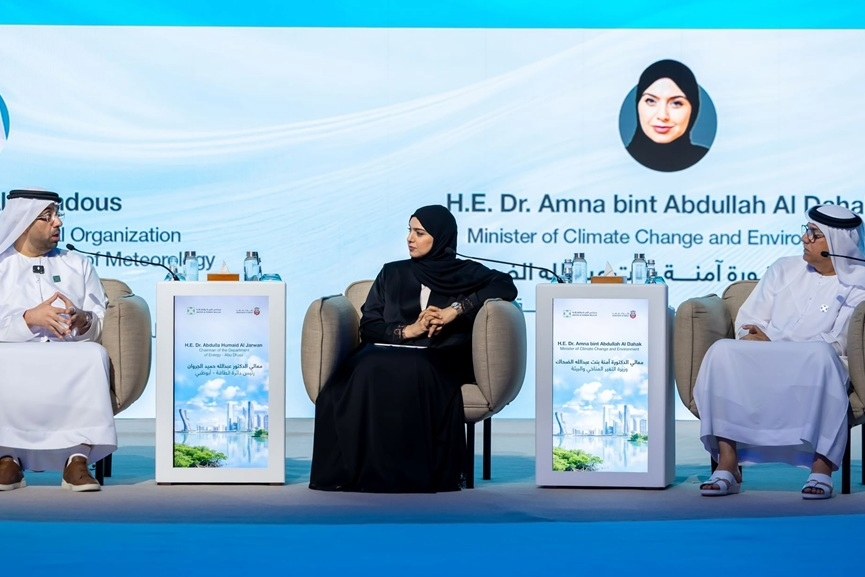
The launch formed the centerpiece of a high-level discussion featuring HE Dr. Amna bint Abdullah Al Dahak, Minister of Climate Change and Environment, and HE Dr. Abdulla Ahmed Al Mandous, President of the World Meteorological Organization and Director-General of the National Centre of Meteorology.
The session was moderated by HE Dr. Abdulla Humaid Al Jarwan, Chairman of the Abu Dhabi Department of Energy.
The event brought together ministers, policymakers, senior government officials, and industry representatives from more than 30 countries to discuss strategies for strengthening water and energy security, enhancing emergency preparedness, and promoting greater regional coordination.
The newly launched framework is built around three key pillars: infrastructure; human capital and governance; and technology and innovation.
It outlines 15 strategic measures aimed at improving system resilience through enhanced supply security, emergency response capabilities, capacity planning, and the diversification of water and energy resources.
The framework also promotes integrated sector management and the use of centralized assets that can be deployed and distributed according to operational requirements, helping ensure service continuity during periods of increased demand or disruption.
Dr. Al Jarwan highlighted the importance of strengthening cooperation among national and regional stakeholders to establish a common regulatory foundation based on smart resilience and system integration.
Dr. Al Jarwan said that, “The water and energy sectors are vital pillars of the national security system, and safeguarding them is the responsibility of every official and decision-maker.”
Discussions during the Majlis focused on regional developments affecting water and energy systems, as well as opportunities to strengthen preparedness for emergencies through enhanced coordination, technology adoption, and policy alignment.
Participants examined the role of digital technologies, data-driven decision-making, and artificial intelligence in improving crisis response capabilities and supporting resilient infrastructure planning.
Dr. Al Dahak stated that the UAE’s integrated approach to water, energy, and food security is notable, as the country views these sectors as interconnected elements of a broader resilience strategy.
According to Dr. Al Dahak, the UAE continues to advance the objectives of the UAE Water Security Strategy 2036 through initiatives focused on sustainable desalination technologies, demand management, and improved water efficiency.
She also emphasized the importance of international cooperation in addressing global water challenges and highlighted the role of the Mohamed bin Zayed Water Initiative in supporting those efforts.
Looking ahead, she noted that Abu Dhabi will host the United Nations Water Conference in partnership with Senegal later this year, providing an international platform for collaboration on water security and sustainable resource management.
Dr. Al Dahak also stressed that resilience extends beyond infrastructure and requires active community participation, environmental awareness, and innovation-driven solutions.
Dr. Al Mandous underscored the role of meteorological monitoring and early warning systems in supporting water and energy security. He noted that the UAE has developed advanced forecasting and observation capabilities that contribute to protecting critical infrastructure from extreme weather events.
He underscored the country’s efforts in global data sharing, regional radar network integration, and collaboration between international organizations focused on climate, renewable energy, and water security.
Dr. Al Mandous also noted that the National Centre of Meteorology has incorporated artificial intelligence into weather forecasting systems and continues to advance cloud seeding technologies aimed at enhancing water resources.
He identified future opportunities in expanding observation and early warning networks, increasing regional data-sharing initiatives, and promoting research collaboration through the UAE Research Program for Rain Enhancement Science.
Throughout the Majlis, participants discussed regulatory frameworks, crisis management strategies, technological innovation, and the responsibilities of public and private sector stakeholders in safeguarding essential services.