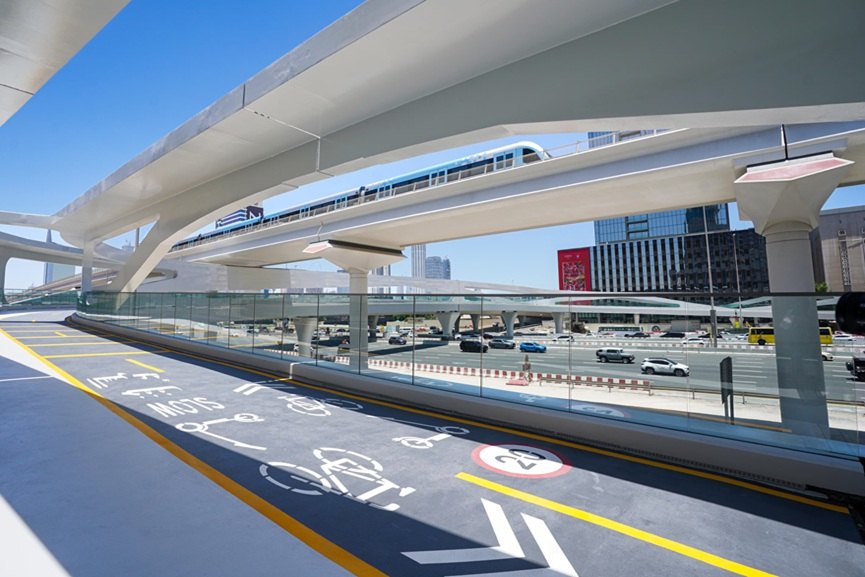
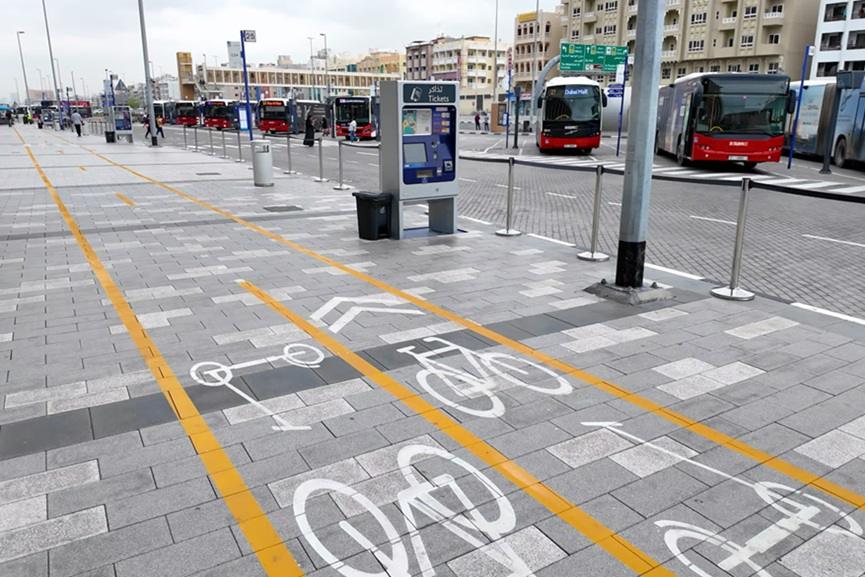
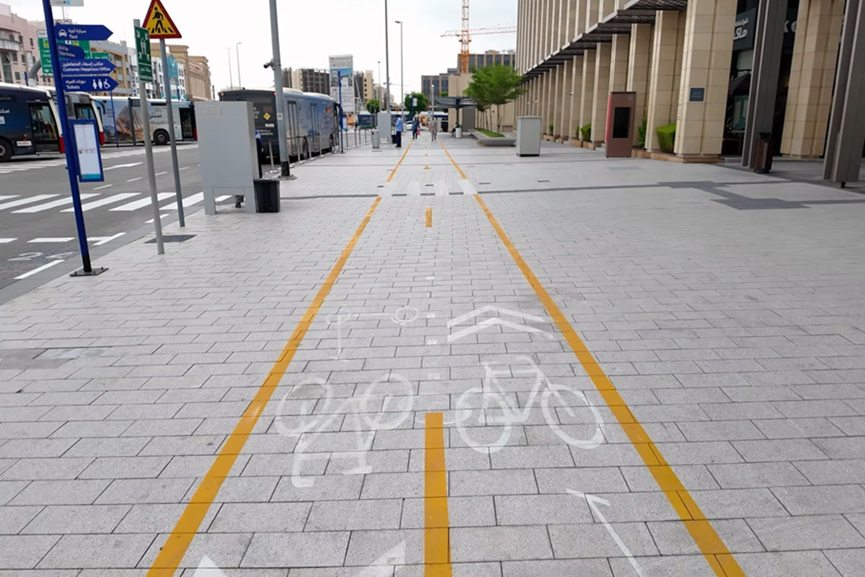
Dubai’s Roads and Transport Authority (RTA) has approved a five-year soft mobility plan to expand the emirate’s walking and cycling network through 2030, covering 25 residential areas and upgrading infrastructure around 63 public transport stations to improve first- and last-mile connectivity.
The plan aims to strengthen links between residential communities and metro and bus stations, creating an integrated urban mobility system that supports safer and more convenient travel while advancing the goals of the Dubai 2040 Urban Master Plan.
The targeted areas were selected based on public transport availability and usage, population density, land use, existing pedestrian and cycling infrastructure, and future urban development plans.
Dubai RTA considers upgrading the urban environment around public transport stations a strategic investment that enhances the value of transport infrastructure and increases the attractiveness of public transport.
The projects will include pedestrian and cycling tracks, safe crossings, facilities for People of Determination, shaded walkways, landscaping, bicycle parking and shared mobility facilities, including Careem Bike and e-scooter stations.
The next phase will focus on completing first- and last-mile links by connecting residential communities, business districts and key destinations with metro and bus stations, transforming stations into integrated mobility hubs.
5-year plan targets first- and last-mile connectivity
Under the five-year plan, RTA will expand soft mobility infrastructure to 25 residential areas, increasing the total number of targeted communities to 34 by 2030. Work is already underway in Dubai Marina, Al Murar, Naif, Al Rigga and Al Muraqqabat.
Image Credits: Dubai Media Office | Cropped by GBN
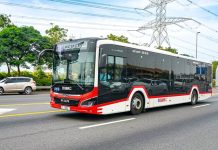
The authority will also upgrade infrastructure surrounding 63 public transport stations by 2030 to improve access to metro and bus services and strengthen Dubai’s integrated transport network.
The plan includes cycling tracks, pedestrian crossings, shaded pathways, rest areas, landscaping, parking facilities, passenger pick-up and drop-off zones, and bicycle parking to improve first- and last-mile connectivity.
HE Mattar Al Tayer Director General, Chairman of Board of Executive Directors Dubai RTA
“The plan forms part of RTA’s efforts to reinforce Dubai’s position as the best city in the world to live in, and to develop an integrated and sustainable transport system that keeps pace with urban and population growth while enhancing quality of life. Soft mobility has become one of the strategic enablers of the future mobility ecosystem and a key pillar in strengthening integration across transport modes. The global mobility sector is undergoing a fundamental shift in the philosophy of infrastructure development. Success is now measured by a mobility system’s ability to deliver an integrated, safe and seamless journey that allows residents and visitors to move between different transport modes with ease, efficiency and safety.”
Al Tayer added that, “Dubai has succeeded in building one of the world’s most advanced public transport systems by strengthening integration between the road network, public transport modes and individual mobility modes. Pedestrian journeys rose from 326 million in 2024 to 342 million in 2025, a growth of 5 percent, while the maturity of infrastructure surrounding public transport stations reached 87 percent and pedestrian satisfaction across Dubai rose to 89 percent. Cycling trips increased from 46.6 million in 2024 to 57.3 million in 2025, a growth of 23 percent, and e-scooter trips rose from 32.3 million in 2024 to 39.6 million in 2025, a growth of nearly 23 percent.”
Previous phases strengthened urban connectivity
RTA has already completed soft mobility projects in nine residential areas, including Al Mankhool, Al Qusais, Al Karama, Al Barsha 1, Al Barsha 2, Al Khawaneej 2, Hor Al Anz, Abu Hail and Al Souk Al Kabeer.
The authority has also upgraded the areas surrounding 37 Dubai Metro stations, including Mall of the Emirates, Burj Khalifa/Dubai Mall, ONPASSIVE, Gold Souq, BurJuman, Baniyas Square, Sharaf DG and Abu Hail, with new pedestrian and cycling infrastructure, mobility hubs, accessibility features and urban beautification works.
Image Credits: Dubai Media Office | Cropped by GBN
RTA said the initiative supports its long-term vision of creating an integrated mobility ecosystem that connects roads, the Dubai Metro, Dubai Tram, buses, marine transport, taxis and individual mobility options within a seamless, safe and sustainable transport network.
Strategy backed by emirate-wide mobility study
The authority added that the plan is based on a comprehensive study of non-motorized transport across Dubai and includes standards for transport integration, accessibility, cycling infrastructure, pedestrian facilities, traffic-calming measures and shared mobility services to improve connectivity and quality of life across the emirate.