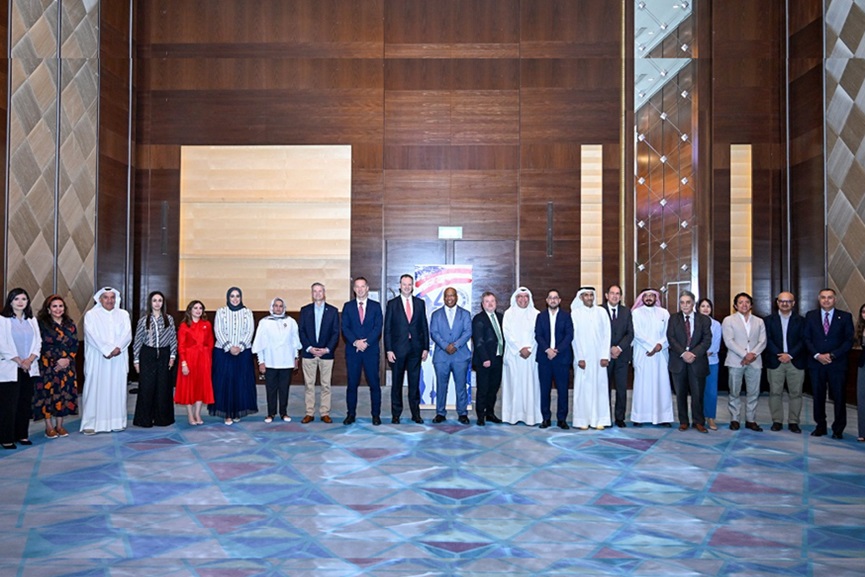
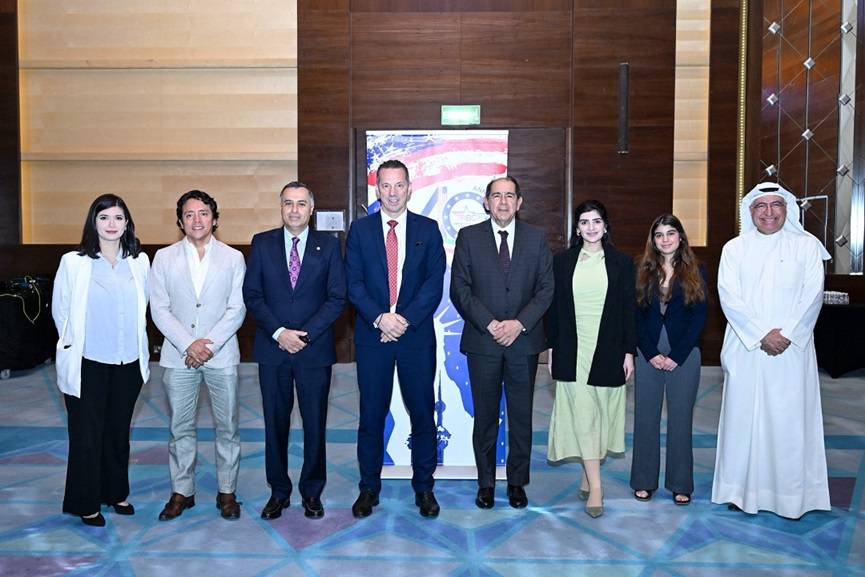
The American Business Council – AmCham Kuwait (ABCK-AmCham Kuwait), in partnership with the US Department of State, has hosted a high level Energy Roundtable Discussion focused on Kuwait’s evolving energy landscape.
The event brought together key industry leaders, policymakers, and financial institutions to examine critical energy challenges, policy reform needs, and investment opportunities in the country’s energy sector.
The roundtable addressed the urgent need for Kuwait to reform its energy policies amid rising domestic demand, increasing production costs, and a subsidy heavy system that impedes private sector involvement.
With Kuwait holding the highest per capita energy consumption globally, and electricity subsidized at only 1 cent per kilowatt hour despite a production cost of 12 cents, speakers emphasized the importance of developing a sustainable and market driven pricing structure.
Experts noted that Kuwait’s electricity demand is projected to triple by 2035, reaching up to 35 megawatts, necessitating substantial infrastructure investments. Currently, the country burns approximately 400,000 barrels of oil daily for electricity generation, accounting for 40 percent of the national energy mix, with the remainder largely dependent on imported natural gas from Qatar.
In addition to expanding oil production from under 3 million to 4 million barrels per day, Kuwait aims to achieve 15 percent of its energy from renewables by 2035, including 10 percent from nuclear energy.
The roundtable introduced Small Modular Reactors (SMRs) as a strategic solution for energy diversification. SMRs offer numerous advantages such as rapid deployment, smaller land footprint, longer operational lifespans, and suitability for offgrid applications including desalination and hydrogen production.
Justin Friedman, Senior Advisor for Commercial Competitiveness in Nuclear Energy at the US Department of State, emphasized the potential of nuclear energy to enhance Kuwait’s energy security. He highlighted its capacity to provide stable electricity for diverse sectors, including petrochemicals and water treatment.
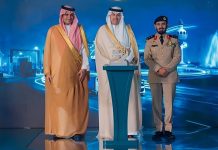
Image Courtesy: AmCham Kuwait | Cropped by GBN
Anwar Almutlaq, Vice President and Country Chairman at Shell Kuwait, and Alex Krunic, Senior Advisor to the Chairman at Commercial Bank of Kuwait (Tijari), also contributed insights. They discussed efforts to cut carbon emissions, expand green bond initiatives, and adopt scalable remote power technologies.
A key outcome of the session between AmCham Kuwait and US officials was a call for essential policy and regulatory reforms. These include implementing fixed offtake pricing mechanisms to attract private investment in renewables, gradually reducing energy subsidies to reflect actual production costs, and creating frameworks to facilitate the adoption of SMRs.
Participants underscored the growing global support for nuclear energy, noting the World Bank’s recent announcement of increased financing for nuclear initiatives. Such developments present an opportunity for Kuwait to diversify its energy portfolio while improving long term sustainability and energy security.
ABCK-AmCham Kuwait reaffirmed its commitment to supporting Kuwait’s energy transition through strategic public private collaboration and leveraging US expertise in clean energy technologies. Founded in 1985, ABCK-AmCham Kuwait continues to serve as a platform for dialogue between American and Kuwaiti business communities and promote innovation in the region’s energy ecosystem.