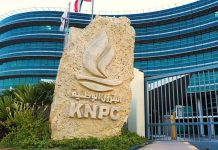
Kuwait Petroleum Corporation (KPC) has announced a precautionary reduction in crude oil production and refining operations and declared force majeure, citing increasing regional tensions and threats to shipping routes in the Strait of Hormuz.
The state-owned energy giant said that the decision forms part of its approved risk management strategy aimed at ensuring operational safety and business continuity.
The move follows the repeated attacks and explicit threats by Iran against the State of Kuwait, including warnings that could endanger the safe passage of vessels through the vital maritime corridor.
KPC stressed that the reduction in output and refining throughput is a purely precautionary measure that will be reviewed as the regional situation evolves. The company added that it remains fully prepared to restore production levels once conditions permit.
The company said that the domestic energy needs remain fully secured under existing contingency plans. It has implemented the reduction while declaring force majeure due to continued instability in the region and the ‘almost total absence’ of vessels in the Arabian Gulf available to transport crude oil and petroleum products.
The disruption comes amid an intensifying conflict involving the United States, Israel, and Iran, which has severely impacted energy shipments across the Middle East.
The crisis has effectively blocked shipments through the Strait of Hormuz. The narrow waterway is one of the world’s most critical energy arteries, responsible for transporting roughly 20 percent of the global oil and liquefied natural gas (LNG) supply.
Earlier disruptions had already forced production and gas supply reductions in Iraq and Qatar, further tightening energy markets.
KPC plays a significant role in global petroleum product markets, particularly as a major exporter of naphtha to Asia and jet fuel to Northwest Europe. Naphtha is a key feedstock used in petrochemical manufacturing.
Despite the production cut, the company reiterated its commitment to safeguarding the safety of workers and protecting Kuwait’s national energy assets while supporting stability in global energy markets.
The unfolding crisis has heightened concerns across global energy markets about the security of Middle Eastern oil supplies and the potential for prolonged disruptions to international trade flows.