A delegation comprising representatives from Hamad Bin Khalifa University’s (HBKU) College of Islamic Studies (CIS) and College of Public Policy (CPP), Earthna, the Ministry of Municipality, and Georgetown University in Qatar has visited Singapore to explore food security practices with academic, government, and industry experts.
The visit comes as part of the knowledge dissemination activities within a grant by Qatar Research Development and Innovation Council (QRDI) led by Dr. Dalal Aassouli, Assistant Professor of Islamic and Sustainable Finance, CIS.
HE Saoud bin Jassim Al-Jufairi, Ambassador of the State of Qatar to the Republic of Singapore, welcomed the delegation to discuss the significance of knowledge transfer between Qatar and Singapore.
The delegation then engaged in a two-day food security and crisis management workshop held at Nanyang Technological University (NTU) Singapore, where participants explored food security strategies and crisis management approaches in both countries.
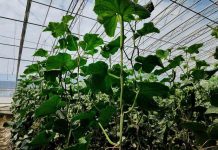
Qatar’s Representatives presented case studies, highlighting the country’s food security policies, supply chains, and sustainable water resource management efforts. Their NTU counterparts showcased several of Singapore’s food sustainability initiatives, including its support for hydroponic farming—a method of growing plants without soil using a nutrient-rich water solution—and its food waste policies.
The workshop then centered on sustainable agriculture finance, featuring a one day masterclass delivered by Dr. Aassouli that tackled various instruments available in the field along with global taxonomies and standards in the sector. The masterclass also engaged leading international organizations including the Green Climate Fund, Grow Asia, and Dalberg advisors.
Dr. Dalal Aassouli Assistant Professor of Islamic and Sustainable Finance – CIS
“This trip complemented the diverse knowledge exchange and initiatives that HBKU has been leading in the field of food security and sustainable finance to support national priorities. It is another example of how HBKU and Qatar Foundation foster dialogue that facilitates expertise and builds capacity in Qatar and beyond.”
Ambassador Al-Jufairi added that, “Qatar and Singapore share a commitment to strengthening food security through collaboration, innovation, and strategic partnerships. With Qatar’s National Food Security Strategy 2030 focusing on increasing local production and reducing import reliance, working with like-minded nations like Singapore allows both countries to exchange expertise, drive sustainability, and achieve greater resilience in global food systems.”
Dr. Abdul Jalil Abdul Kader, Assistant Chief Executive Officer (Operations), Singapore Food Agency, stressed that, “In an increasingly unpredictable world, no nation can tackle food security challenges in isolation. The collaboration between Singapore and Qatar is not just beneficial—it is essential. By sharing experiences, strategies, and innovations, we can build more resilient and adaptable food systems that serve our nations and contribute to global food security solutions.”
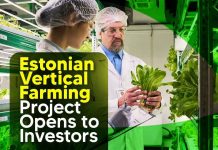
During the visit, the delegation also met experts at the Singapore Food Agency to explore the country’s innovative food security policies. Moreover, the visit included a tour of Growy Singapore’s vertical farm to gain an insight into contemporary approaches to sustainable agriculture.
CIS’ trip highlights its commitment to enhancing interdisciplinary research by forging meaningful collaborations with distinguished international partners. It will continue to enable its faculty and staff to pursue opportunities for transnational cooperation in service of impactful research of local and global relevance.