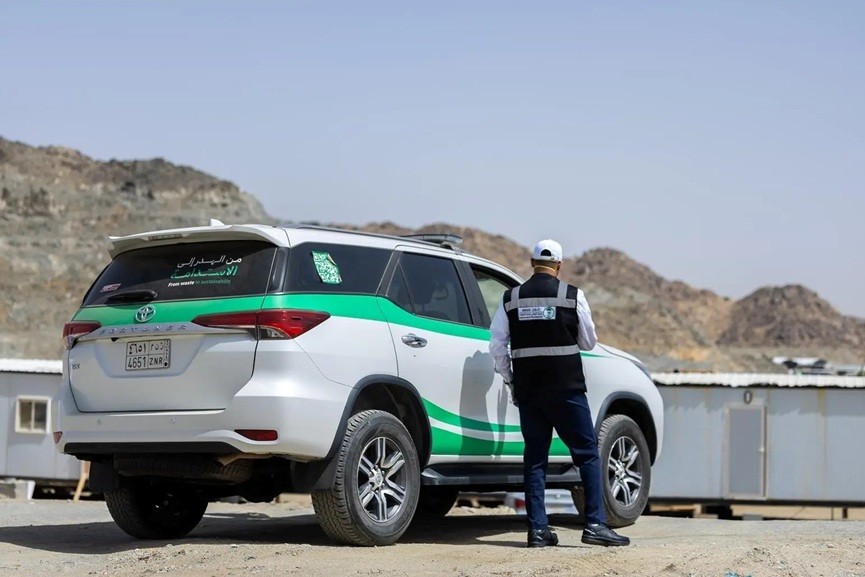
The National Center for Waste Management (MWAN) of Saudi Arabia has launched Makkah’s first model slaughterhouse equipped with advanced rendering technology to recycle 100 percent of organic waste generated during the 2026 (1447 AH) Hajj season, marking a major step toward sustainable waste management and circular economy practices in Saudi Arabia.
The new model livestock city project in Makkah is designed to completely divert slaughterhouse waste from landfills through an integrated operational system capable of processing carcasses and organic byproducts generated during Hajj. The initiative positions Makkah at the forefront of environmentally sustainable pilgrimage infrastructure as authorities prepare for the large influx of pilgrims expected during the annual season.
According to MWAN, the facility incorporates specialized processing units for blood, fat, and offal treatment, along with bone grinding systems and automated odor control technology. The slaughterhouse is capable of processing up to 2,500 tons of solid and liquid organic waste annually, significantly reducing the environmental impact associated with traditional livestock waste disposal methods.
The project was developed by MWAN, under a memorandum of cooperation with Oklin International, as part of efforts to encourage private sector participation and innovation in Saudi Arabia’s waste management sector. Officials said the collaboration reflects the Kingdom’s broader strategy to enhance sustainability initiatives while creating commercially viable environmental solutions.
Waste streams generated from slaughtered livestock, which account for nearly 45 percent of total animal mass, will be converted into market-ready products through advanced rendering processes at the facility. These products include organic liquid fertilizers, protein powders, and animal feed ingredients, creating additional economic value from materials that would otherwise be discarded.
MWAN described the project as a scalable model for future expansion across Saudi Arabia, supporting national goals to strengthen environmental sustainability, improve waste diversion rates, and promote circular economy solutions in line with the Kingdom’s long-term development objectives.
The launch of the facility also highlights growing efforts by Saudi authorities to modernize Hajj-related infrastructure through the adoption of environmentally responsible technologies aimed at improving operational efficiency and reducing landfill dependence during one of the world’s largest annual religious gatherings.
Editorial Disclaimer: This article was updated on 31 May 2026 to correct an editorial error in the original version. We regret the mistake and have updated the report to ensure accuracy. GCC Business News remains committed to editorial integrity, transparency, and trust.