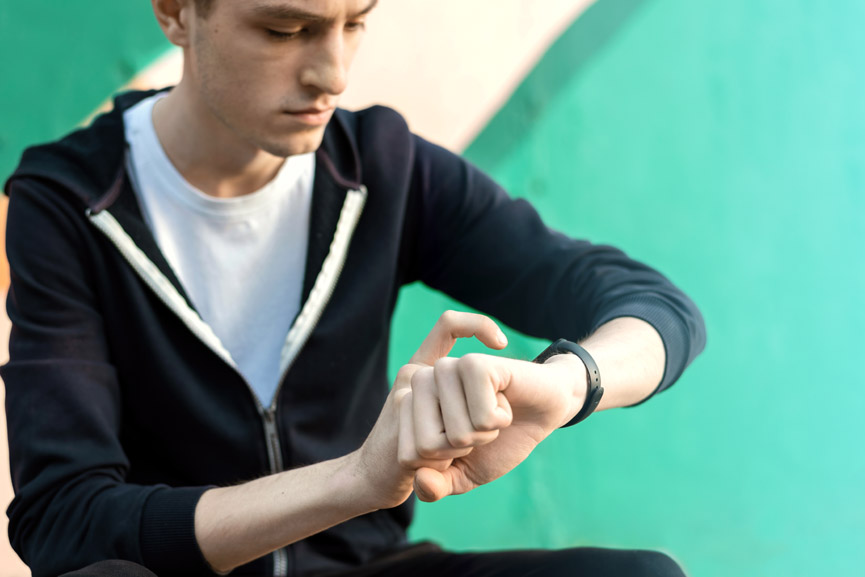
The Researchers at the Institute of Semiconductor Physics of the Siberian Branch of the Russian Academy of Sciences have developed and patented a wearable sensor that attaches to the arm and measures stress levels through the skin.
The device is sensitive to cortisol concentrations and other stress indicators found in sweat, as per the statement.
Monitoring stress is important for early detection of serious conditions, lifestyle adjustments, and maintaining mental health.
According to the researchers, existing solutions often lack sufficient sensitivity to cortisol and cannot accurately track real-time changes in psychological and emotional states. They also tend to be costly and rely on indirect indicators, such as skin conductivity or antibody-based methods, reducing their effectiveness.
The new device is designed to overcome the existing limitations, offering an affordable solution that is both cost-effective and easy to manufacture. It has been engineered with simplicity in mind, ensuring a user-friendly experience, while providing enhanced accuracy and more precise results.
The sensor achieves high sensitivity to cortisol using a flexible substrate coated with an ultra-thin, 20-nanometre layer of a conductive composite material made of graphene, an organic polymer, and ethylene glycol, which reduces electrical resistance and enhances sensitivity. The layer can be applied using two-dimensional printing or drop-casting techniques.
The researchers said that sweat consists of about 98 percent water and 2 percent chemical compounds, including salts, oxygen, glucose, adrenaline, cortisol, dopamine, and enzymes.
The sensing unit is worn on the wrist, allowing sweat to interact with the sensitive layer. This leads to charge accumulation and increased electrical conductivity of the sensor, as per the reports.