The Ministry of Commerce, Industry and Investment Promotion has announced that it will begin implementing a new regulatory framework for fuel stations from Wednesday (May 6) under Ministerial Decision No. (142/2025) to enhance service quality, improve sector efficiency, and strengthen the investment environment.
The updated framework introduces simplified procedures for licensing the establishment and operation of fuel stations while aligning regulatory standards with the Sultanate’s economic growth and urban development priorities.
Rising investment in fuel station sector
The ministry noted that Oman’s fuel station sector has recorded increased investment activity this year, with 16 applications submitted for new stations.
Authorities have already issued two operating licenses and six establishment permits, reflecting growing investor interest in the sector.
Nasra bint Sultan Al Habsi, Director General of Trade at the ministry, said that the regulatory updates are part of ongoing institutional efforts to improve service delivery and develop energy infrastructure.
Al Habsi added that the framework is designed to streamline licensing, introduce modern classification standards, and support sustainable investment growth.
Four-tier classification system
According to Engineer Ahmed bin Mubarak Al-Balushi, Head of the Oil Products Licensing Department, the new framework represents a significant step forward in regulating the sector in line with market developments and planning requirements.
Fuel stations will now be classified into four categories based on size and services:
Integrated stations (minimum 10,000 sqm)
Commercial stations (minimum 3,000 sqm)
Smart self-service stations (minimum 800 sqm)
Mobile stations operating via mobile units
The regulations also introduce specific distance requirements, mandating a minimum of 5 kilometers between stations on non-divided roads, with certain exceptions in key locations such as Muscat, Salalah, and Sohar.
Integrated stations must maintain a minimum distance of 50 kilometers, subject to technical review.
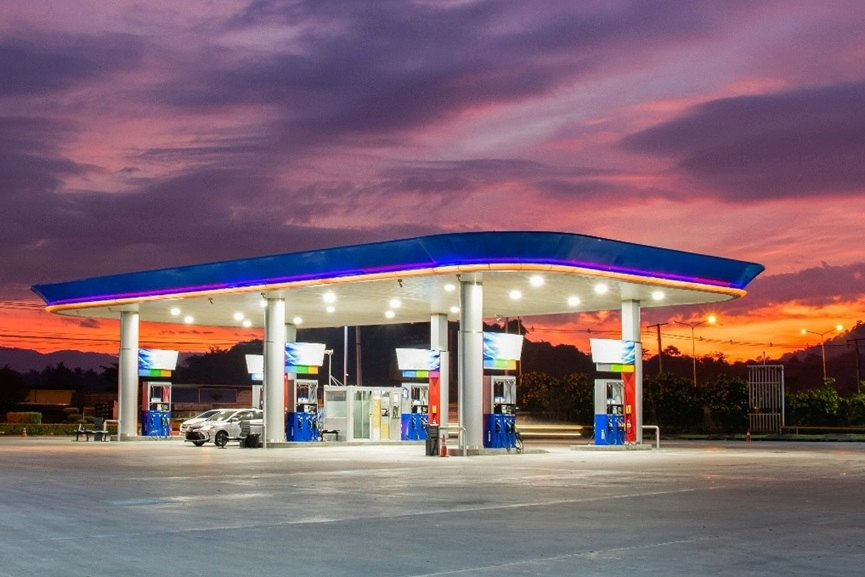
Rep Image | Credits: Magnific | Cropped by GBN
Focus on sustainability and advanced services
The framework requires station developers to meet strict technical, safety, and planning criteria, including proof of land ownership or lease rights and compliance with zoning requirements.
Integrated stations must provide a comprehensive range of services, including commercial facilities, parking areas, solar energy infrastructure, and electric vehicle charging points.
The framework also encourages the inclusion of hydrogen refueling capabilities in line with future mobility trends.
Efficient licensing and compliance measures
Under the new process, applications will be submitted through fuel marketing companies, which will assess proposed sites before forwarding them to relevant authorities.
Once all requirements are met, operating licenses will be issued within 30 days and will be valid for three years, with renewal options.
The regulations also introduce a structured penalty system, ranging from warnings and financial fines to license suspension or cancellation in severe cases.
The ministry emphasized that these measures are intended to enhance safety standards, ensure balanced geographic distribution, and maintain compliance across the sector.