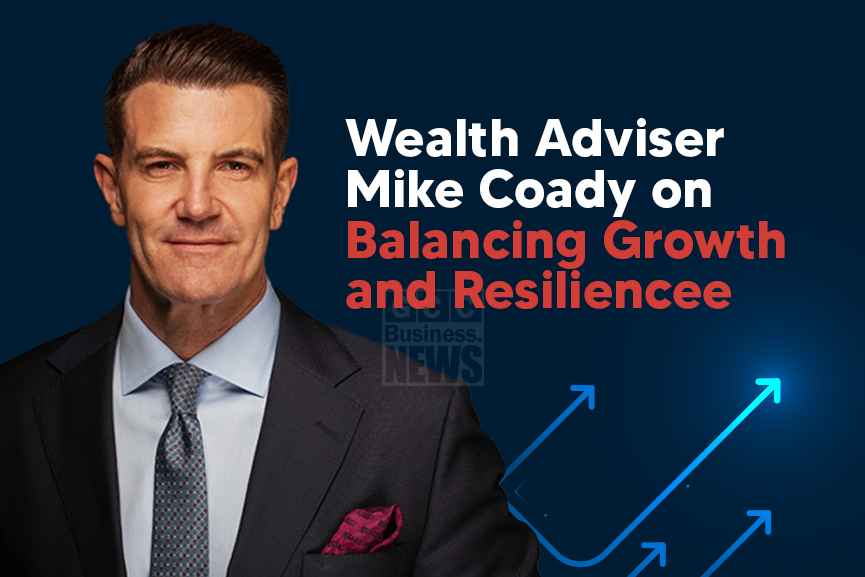
Mike Coady is one of the most recognized names in expatriate financial planning, trusted by professionals and families worldwide for over 25 years.
As CEO of Skybound Wealth Management, he has guided thousands across the Middle East, UK, and Europe in building, protecting, and enjoying their wealth. Combining technical expertise with personal insight, Mike delivers regulated cross-border advice tailored to every stage of the expatriate journey. In this article, “Balancing Growth and Resilience,” he outlines strategies that align fast-moving opportunities with long-term financial security.
Balancing Fast Money and Long-Term Stability
As global capital pours into fast-return themes like artificial intelligence, crypto, and property, the UAE finds itself at a crossroads. The risk is not that these sectors are “hot,” but that capital concentration creates fragility. When too much money chases the same trade, the economy loses the shock absorbers that healthcare, tourism, media, and events provide. These long-horizon sectors are vital to smoothing cycles and sustaining employment.
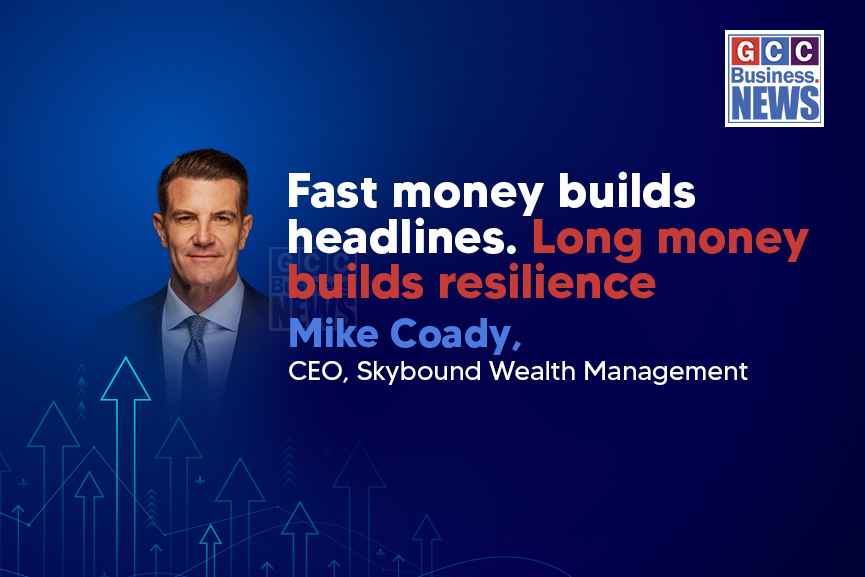
For investors, chasing momentum means portfolios rise quickly when a theme flies but fall just as fast when sentiment turns. For the country, it translates into higher volatility in tax receipts, jobs, and productivity. The Gulf’s long-term edge has always been planning — and portfolios should mirror that. A resilient allocation balances fast money with steady, compounding sectors. As the saying goes: “Fast money builds headlines. Long money builds resilience.”
The Property Market: Signals of Healthy Normalization
With supply expanding in Dubai, Abu Dhabi, and now Sharjah, the key to stability lies in balance. Healthy normalization means:
Absorption keeps pace with handovers.
Days-on-market stabilizing with narrower discounting.
Rent-to-income ratios are leveling rather than spiking.
Mortgage-to-rent parity is improving through income and inventory, not speculative leverage.
Developers are staggering launches, driven by more end-user demand than speculative flips.
Investors should avoid over-concentration in identical off-plan exit timelines. The real advantage comes from selectivity, quality leases, and disciplined time horizons.
Managing Rising Costs: A Framework for Families
Mike Coady | Supplied image | Edited and designed by Team GBN
As rents and school fees climb, families in Dubai, for example, must balance lifestyle with savings discipline. A practical 50-30-20 plus framework works well in the expat context:
50% essentials with a housing rule — no more than 20–25% of income on rent.
30% lifestyle spent by design, not drift.
20% future-self saved into investments and pensions.
Plus With 5–10% through schemes like DEWS or the federal Alternative End-of-Service Savings Scheme, where employer contributions accelerate compounding.
Two added protections matter: keeping a 12-month school fee reserve, for example, in money-market funds, and an annual inflation reset on savings. As one principle states: “Lifestyle is chosen at the shop, but wealth is chosen on the spreadsheet.”
The Power of Early Discipline
For an expat earning AED 120,000 annually, automated saving is the habit that transforms long-term wealth. At 7% annual returns over 25 years:
AED 1,000/month grows to ~AED 810,000.
AED 2,000/month grows to ~AED 1.62 million.
AED 3,000/month grows to ~AED 2.43 million.
Missing the first five years surrenders hundreds of thousands in compounding gains. Put simply: “Small monthly discipline buys big-ticket freedom.”
Diversification in a Non-Oil Economy
With non-oil sectors expanding, portfolios should run on three engines:
Global equities tilted to quality and cash flow, with a GCC satellite for regional upside.
Defensive income via investment-grade credit and short-duration bonds.
Real assets such as listed infrastructure or REITs as an inflation hedge.
Currency diversification and quarterly rebalancing remain essential. The UAE allocation should capture local growth momentum, but the global core ensures breadth when one region slows.
Retirement Planning: From Promises to Funded Plans
Rep. Image | Source: EM’s FP User ID: 140976548
The UAE is reshaping retirement security. In DIFC, DEWS has replaced gratuity with mandatory funded workplace savings — employer contributions of 5.83% rising to 8.33% after five years, with employees able to top up voluntarily. The federal Alternative End-of-Service Savings Scheme, though optional, invests gratuity contributions into regulated funds to protect workers and ease employer liabilities.
The direction is clear: “Move from promises to funded plans, and everyone sleeps better.”
Anchoring the Next Decade
Looking ahead, resilient portfolios will blend:
Global equities with durable margins and dividends.
Bonds for shock absorption.
Infrastructure and logistics aligned with GCC trade corridors.
Selective GCC exposure to banks, logistics, and consumer sectors.
Human capital investment through upskilling and entrepreneurship.
The anchor is breadth — no single city, theme, or sector should dominate an investor’s net worth.
Compliance and Advisor Quality
Cross-border investors must maintain robust records under CRS and FATCA. Strong compliance requires:
Accurate tax self-certification and residency documentation.
Clear source-of-funds trails for all transfers.
Consistent records across banks, brokers, and insurers.
Regulated platforms aligned with international reporting.
Equally, advisor quality is best judged by three filters: regulatory license and custody, plain-English fees, and a process-driven culture. “Good records are worth more than good excuses.”
Beyond the Peg: Currency Planning for GBP Goals
With the dirham pegged to the dollar, USD functions as the default investment base. For those with GBP liabilities, hedged share classes and GBP cash buckets provide security. Contingency planning for a peg shift requires tactical hedging, policy triggers, and liquidity discipline. As the rule goes: “Plan for GBP, invest in USD liquidity, and let rules, not headlines, drive hedging.”
The Future of New-Age Sectors
AI, digital infrastructure, and creator-economy platforms will keep drawing capital because they cut costs and improve productivity. But as one reminder puts it: “Innovation should disrupt your costs, not just inflate your valuation.”
Winding Up
The UAE’s growth story rests on balance — between fast-return themes and steady long-horizon sectors, between global diversification and regional opportunity, between lifestyle choices and disciplined saving. Expats and businesses that follow this approach can build not just portfolios that perform, but wealth that lasts.
In the words of wealth adviser Mike Coady, whose career spans 25 years of guiding expatriates: “Clarity, compounding, and compliance are the true foundations of lasting wealth.”
More About Mike Coady
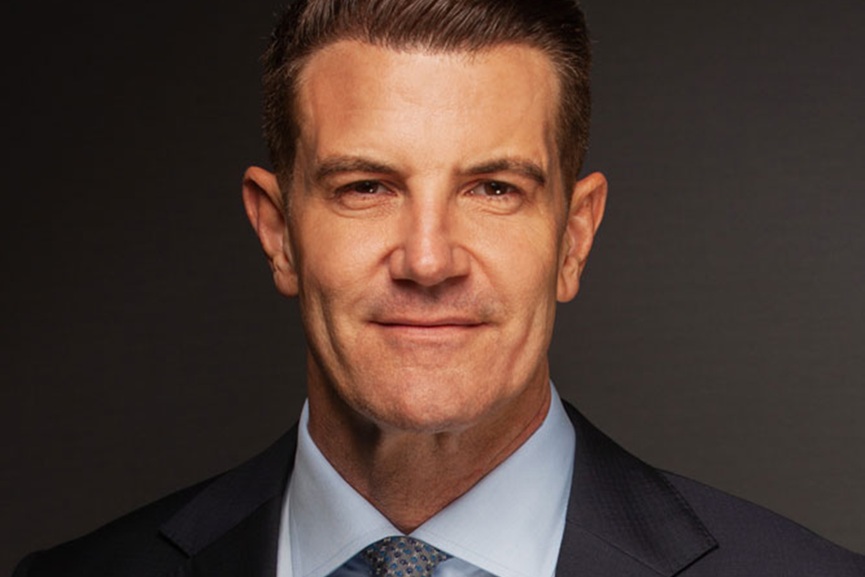
Mike Coady, CEO, Skybound Wealth Management | Supplied Image
Mike Coady is a UK- and EU-qualified financial advisor, registered with the UK Financial Conduct Authority (FCA) and licensed to provide both insurance and MiFID investment advice across the EU through CySEC passporting permissions. He also holds the European Financial Advisor (EFA) designation.
His professional accolades include being a Fellow of the Institute of Directors (FIoD), a Founding Fellow of the Institute of Sales Management (FFISM), and a member of the Chartered Insurance Institute (CII).
Raised in an expatriate family and having lived abroad for most of his life, Mike combines technical expertise with personal insight into the financial challenges faced by globally mobile clients. Based in Dubai, he delivers regulated cross-border advice tailored to every stage of the expatriate journey — from first overseas postings to retirement and repatriation.