Abdullah Showaib, responsible for Operations & Contracts at SnapFixNow™ FMC, explores why facility management is becoming a key driver of operational resilience, risk management, and business continuity across the UAE. As UAE organizations continue to invest in growth and digital transformation, many are re-evaluating how facility management is procured, governed, and measured.
For most business leaders, operational risk is associated with finance, cybersecurity, compliance, supply chains, and workforce management. Building operations rarely receive the same attention.
Yet when critical infrastructure fails, the consequences extend far beyond the facilities department. Air conditioning outages disrupt productivity. Electrical faults interrupt operations. Water ingress damages equipment and inventory. Compliance gaps can expose the business to significant risk.
As a result, the conversation is shifting from maintenance costs to a broader focus on operational risk, business continuity, and long-term performance.
From service procurement to risk management
Historically, outsourced facility management was viewed primarily as a procurement exercise. A contract was awarded. A provider attended when required. The facilities budget remained predictable.
The challenge with this model is that it often measures activity rather than outcomes.
A technician attendance record does not necessarily indicate that a recurring issue has been resolved. A completed work order does not automatically mean operational risk has been reduced. A low annual contract value does not guarantee the lowest total cost of ownership.
As commercial assets become increasingly dependent on interconnected systems, many organisations are beginning to assess facility management through a broader risk-management framework.
The question is no longer: “How much does the contract cost?” It is increasingly: “What operational risks does this contract help us avoid?”
The costs that rarely appear in the contract
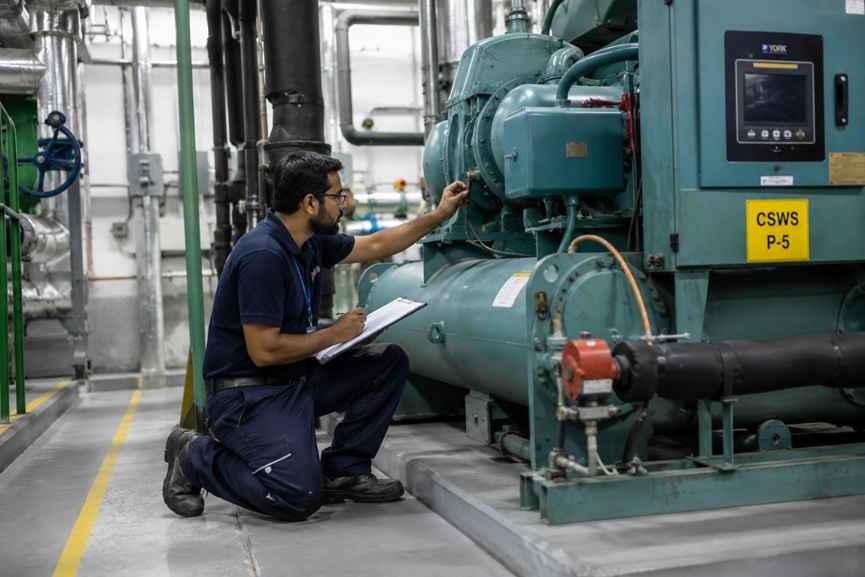
Image courtesy of SnapFixNow | Cropped by Team GBN.
One reason outsourced facility management is often undervalued at leadership level is because many of its most important outcomes are invisible.
When a building remains operational during peak summer demand, there is no headline. When a compliance inspection is completed successfully, it receives little attention. When preventive maintenance avoids a major equipment failure, there is no emergency to report.
The absence of disruption is difficult to measure, yet it often represents the greatest value created by a well-managed facility operation.
Conversely, the cost of poor oversight tends to emerge indirectly. Unplanned downtime, emergency contractor mobilisation, accelerated asset deterioration, avoidable capital expenditure, and operational disruption frequently originate from issues that could have been identified earlier through structured governance and proactive maintenance planning.
Many organisations are now adopting more structured and engineering-led facility managementapproaches to improve visibility into asset condition, system performance, and operational risk.
Why outsourcing alone is not enough
A common misconception is that outsourcing transfers responsibility.
In reality, it transfers execution. Accountability remains with the asset owner, operator, occupier, or business itself.
This distinction is becoming increasingly important as organisations face greater scrutiny regarding compliance, safety, sustainability, documentation, and operational performance.
Successful outsourcing relationships are therefore governed through visibility rather than assumption. A business should know how service levels are measured, how asset condition is reported, how compliance documentation is maintained, and how recurring faults are escalated for root-cause review.
The objective is not simply to confirm that work has been completed. It is to ensure that risk is being actively managed.
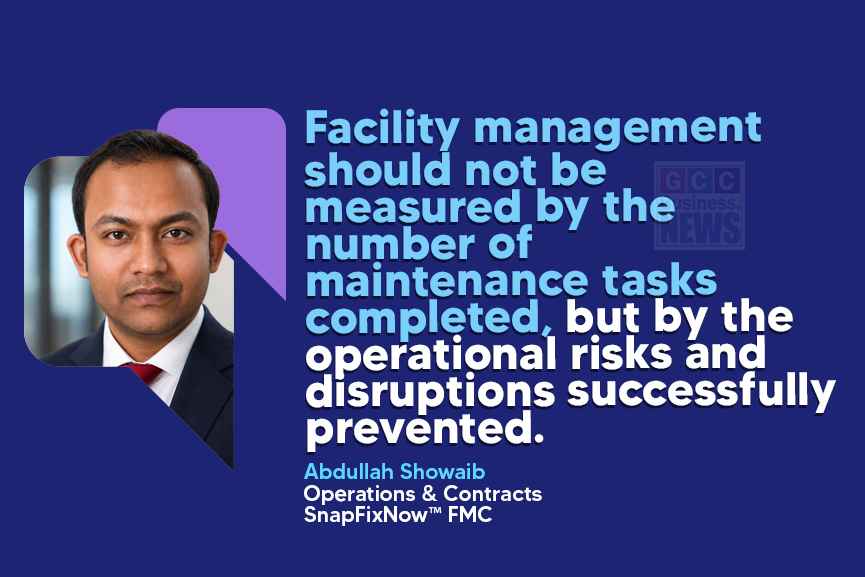
Image courtesy of SnapFixNow | Designed by Team GBN.
The rise of engineering-led oversight
One of the more significant developments within the UAE facilities sector is the shift toward engineering-led operating models.
Unlike traditional approaches focused primarily on reactive service delivery, engineering-led frameworks place greater emphasis on asset reliability, lifecycle planning, operational intelligence, and evidence-based decision-making.
The focus shifts from fixing faults to understanding why they occur.
For businesses operating offices, retail environments, logistics facilities, hospitality assets, healthcare facilities, and educational institutions, this provides a more meaningful understanding of operational performance.
Unexpected capital expenditure rarely arrives without warning. More often, the warning signs existed but were not documented, analysed, or escalated effectively. Structured operational oversight seeks to close that gap.
What business leaders should ask before signing an AMC
Image supplied by SnapFixNow | AI-generated image | Cropped by Team GBN
Before appointing an outsourced facility management provider, decision-makers should look beyond pricing and examine the governance behind the proposal. They should ask how recurring faults are investigated, what asset reporting is provided, how compliance records are maintained, and what evidence supports maintenance recommendations.
Most importantly, they should ask whether the provider can demonstrate how its service model reduces business risk rather than simply responding to maintenance requests.
The answer often reveals more than the contract value itself.
Conclusion
As UAE organizations continue investing in growth, resilience, and operational excellence, facility management is becoming a strategic business function rather than a background service.
The buildings that support business operations are no longer passive assets. They are operational platforms that directly influence productivity, compliance, customer experience, employee wellbeing, and financial performance.
The organisations that recognise this shift early will not treat outsourced facility management as a maintenance expense. They will treat it as a governance decision that protects continuity, controls risk, and supports long-term business performance.
About the Author
Abdullah Showaib is responsible for Operations & Contracts at SnapFixNow™ FMC, a Dubai-based engineering-led facilities maintenance company supporting commercial, residential, hospitality, and mixed-use properties across the UAE. His work focuses on operational reliability, asset protection, SLA governance, and evidence-based maintenance reporting. snapfixnow.com | [email protected] | +971 50 500 8186