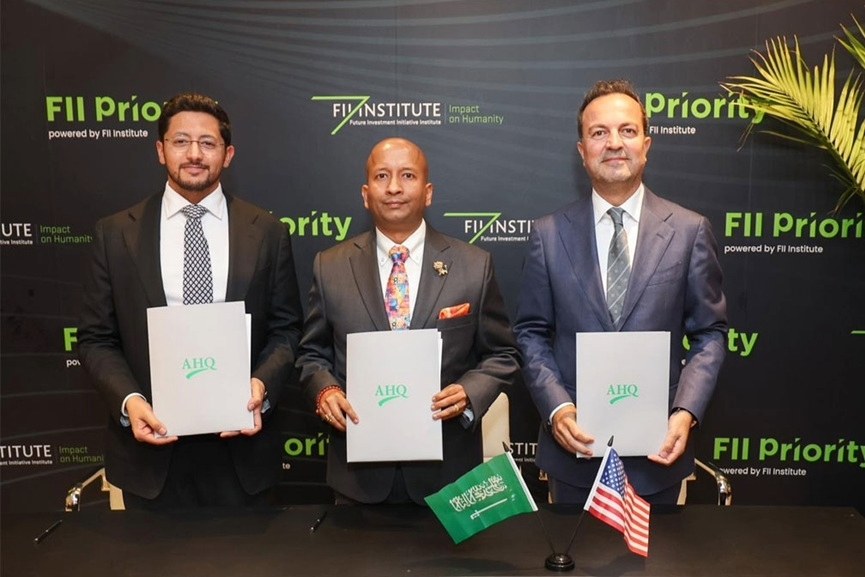
Patel Family Office, a US investment enterprise, and Abdel Hadi A Al-Qahtani & Sons (AHQ), a Saudi industrial conglomerate, have entered into a landmark $1 billion partnership to transform the mid-market hospitality landscape in Saudi Arabia through the launch of AYARA, a new vertically integrated platform.
Unveiled at the FII PRIORITY Summit Miami, the initiative aims to develop 50 branded business hotels across the Kingdom by 2029.
Bridging a growing supply gap
The AYARA platform has been structured to address a widening gap in Saudi Arabia’s hospitality pipeline. While large-scale investments have largely concentrated on luxury assets and giga-projects, demand for internationally branded, mid-market accommodation has continued to increase.
This demand is being fuelled by sustained growth in corporate travel, ongoing infrastructure expansion, and the relocation of multinational and regional headquarters to key Saudi cities.
As a result, the need for reliable, standardized, and efficiently delivered hotel offerings has become increasingly critical.
Integrated delivery model to enhance efficiency
Central to AYARA’s strategy is its vertically integrated operating model, which brings together land acquisition, modular construction, in-house manufacturing of furniture and fixtures, and hotel operations within a unified platform.
This approach is expected to streamline project execution, reduce development timelines, and ensure consistency in quality and operational standards across the portfolio.
Under the agreement, the Patel Family Office will lead hospitality strategy and oversee the management of the hotel network, while AHQ will provide development support with extensive domestic capabilities.
Its affiliate, Abdelmalik Tariq Al-Qahtani Company, will play a central role in launching and operating the platform, alongside anticipated partnerships with international hotel brands and specialist delivery firms.
By 2029, AYARA is projected to deliver between 5,000 and 7,000 rooms across major economic centers, including Riyadh, Jeddah, and Dammam, in addition to emerging destinations such as NEOM and the Red Sea region.
The geographic spread reflects a balanced strategy targeting both established commercial hubs and high-growth tourism corridors.
The initiative aligns closely with Saudi Vision 2030, which continues to drive investment into tourism, infrastructure, and private sector development. The Kingdom is targeting well over 150 million annual visitors by the end of the decade, with business travel forming a key pillar of this expansion.
Upcoming global events, including Expo 2030 and the FIFA World Cup 2034, are expected to further strengthen demand for hotel capacity across multiple segments.