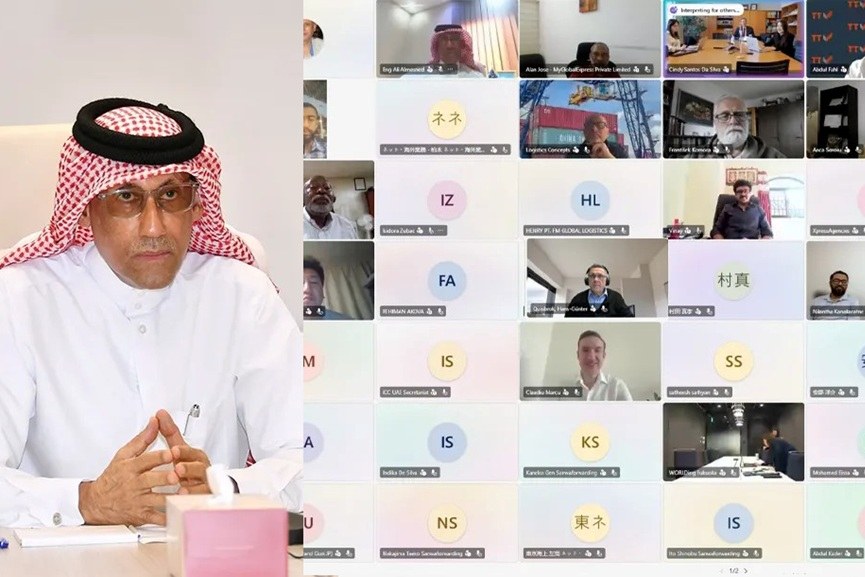
The International Federation of Freight Forwarders Associations (FIATA), at the initiative of the Qatar Chamber, has hosted a high-level webinar examining the impact of escalating Middle East tensions on global shipping, warning of rising costs, legal complexities, and operational disruptions across supply chains.
Titled ‘Middle East Security Situation: Managing Legal, Insurance, and Operational Risks in Times of Disruption‘, the session brought together more than 100 participants, including representatives from international shipping firms, insurance companies, and customs clearance agencies.
The webinar highlighted growing risks to key maritime routes, particularly concerns over potential disruptions in the Strait of Hormuz, a critical chokepoint for global trade. Participants noted that heightened geopolitical tensions are driving up freight rates and insurance premiums, while also increasing legal challenges for freight forwarders worldwide.
Ali bin Abdullatif Al Misnad, Board Member of Qatar Chamber and Regional President for Africa and the Middle East at FIATA, said the initiative aimed to address the direct and indirect consequences of the current regional situation. He emphasized that any closure or disruption of the Strait of Hormuz would significantly affect the flow of goods to GCC countries and further escalate shipping and insurance costs.
Al Misnad said the discussions focused on mitigating the surge in freight charges and preventing additional financial burdens on consumers. He stressed that a clear message was delivered to shipping companies against exploiting the crisis to impose unjustified rate increases.
The session also underscored efforts by GCC countries to strengthen land transport alternatives and streamline cross-border procedures through the TIR system. Ongoing coordination among government entities, chambers of commerce, and logistics committees has helped improve truck movement and customs efficiency across the region.
FIATA representatives acknowledged the challenges facing GCC markets, particularly rising shipping costs, and expressed support for measures aimed at stabilizing prices and ensuring supply chain continuity.
Expert insights were delivered by Andrea Tang and Yuntao Yang, who addressed key legal and operational issues. Discussions covered carrier rights such as rerouting and voyage suspension, as well as additional charges including war risk premiums and demurrage fees. The session also examined force majeure clauses, cargo insurance concerns, and risk management best practices, with an emphasis on proper documentation.
FIATA
Founded in 1926 and headquartered in Geneva, International Federation of Freight Forwarders Associations (FIATA) represents the global freight forwarding and logistics industry, with members in more than 150 countries. The organization works to standardize industry practices, enhance service quality, and support the development of international trade.