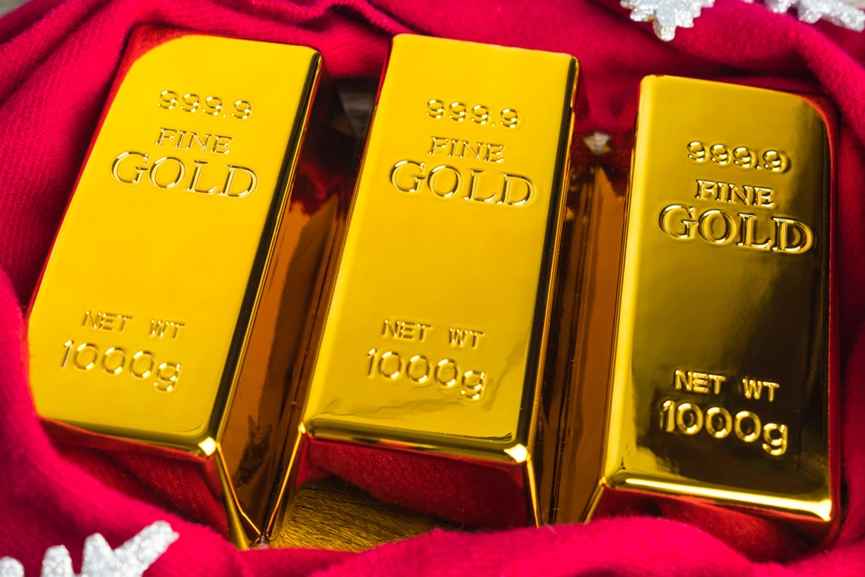
This article explores why gold in 2026 is seen less as a hedge and more as a macro signal shaped by inflation expectations, real yields, and shifting global risks.
Gold is the most transparent asset in the global financial system. It is not based on the growth in earnings, financial discipline, or the reputation of any particular issuer. Rather, it is an indication of market sentiment regarding stability and policy control. When confidence erodes, gold tends to respond early and decisively.
In 2026, gold cannot be considered as a defensive allocation. It acts as a macro signal, which takes in the change in inflation expectations and systemic risk. Gold does not have a tendency to respond to isolated events. It moves when multiple pressures begin to converge.
Gold’s link to inflation is less mechanical than often assumed. Inflation alone is not a driver of the higher gold price. It does not really matter whether markets believe that central banks can contain inflation without destabilising growth, credit markets, or financial plumbing.
Inflationary pressure on the structure remains unchanged against the backdrop of 2026. The long-run inflationary expectations are still affected by the energy transition costs and sustained fiscal growth. Consequently, gold responds more to breakeven rates and policy tone than to monthly CPI releases than to breakeven rates and policy tone.
In this setting, gold acts less as a simple inflation hedge and more as insurance against a gradual erosion of monetary credibility.
Rep. Image | Source: EM’s FP User ID: 140976548
Real yields and capital allocation
Nominal rates tell only part of the story. Real yields remain the critical variable shaping gold demand,as they define the true opportunity cost of holding a non-yielding asset. Periods of constrained or declining real yields have historically provided fertile ground for sustained gold strength.
In 2026, markets are increasingly focused on what central banks cannot do. High public debt levels and political constraints limit the ability to keep policy restrictive for extended periods. Gold often prices these limits well before they are acknowledged in official decisions.
For institutional participants engaged in XAU/USD CFD trading, this forward-looking behaviour is central. Gold tends to reprice on expectations, not confirmations. As gold increasingly reflects macro expectations, platforms like xChief have become part of the wider market infrastructure supporting access to metals within diversified trading environments.
The US dollar and stress transmission
The correlation between gold and the US dollar remains one of the key benchmarks, but it is not absolute. A strengthening dollar usually restricts international financial markets and puts pressure on gold by decreasing the non-USD demand. Yet during periods of systemic stress, both assets can rise together.
What ultimately drives the price of gold in such environments is global liquidity. When dollar liquidity tightens, risk assets reprice quickly, volatility rises, and capital searches for assets detached from credit risk. Gold benefits from its role as a reserve asset without balance sheet exposure.
In 2026, the dollar is influenced not only by interest rate differentials but also by capital flow volatility and geopolitical realignment.
Geopolitical fragmentation and strategic demand
Rep. Image | Source: EM’s FP User ID: 140976548
Gold’s geopolitical relevance has shifted from episodic to structural. Trade fragmentation and the politicisation of financial infrastructure have altered assumptions about reserve safety and capital mobility.
As a result, gold increasingly functions as a strategic neutral asset rather than a tactical hedge. Its appeal lies in insulation from political and legal risk that cannot be diversified away. This demand supports gold even outside periods of acute geopolitical escalation.
Central bank accumulation and reserve strategy
Central bank gold buying remains one of the most important long-term forces underpinning the market. These flows are gradual and driven by reserve diversification rather than return optimisation.
In an environment of rising sanctions risk and currency politicisation, gold offers an asset free from counterparty exposure. Although the demand does not cause short-term volatility, it provides a more lasting valuation floor and reduces downside sensitivity during broader risk-off periods.
Market structure and reflexivity
Gold’s modern price dynamics are increasingly shaped by market structure. The expansion of derivatives, ETFs,and systematic strategies has amplified momentum effects and positioning-driven moves. These flows can extend trends beyond what fundamentals alone might justify.
At the same time, gold often acts as an early warning signal. Changes in positioning frequently precede stress in equities and foreign exchange markets. In this sense, gold behaves less as a follower and more as a leading indicator of macro stress.
Interpreting gold’s role in 2026
Gold in 2026 reflects uncertainty rather than conviction. Doubts about the policy permanence and the stability of the global financial system are embodied in its price.
For institutional investors, the task is not to forecast gold in isolation, but to identify which macro regime is emerging. Real yield compression and geopolitical risk each shape gold differently. When several of these forces align, gold tends to respond with clarity.
In an increasingly fragmented global system, gold remains one of the few assets capable of translating macro instability into price with remarkable efficiency.