Across the Middle East and Africa (MEA), the startup economy has entered a new phase of maturity.
Over the last decade, the region has experienced rapid growth in entrepreneurship, venture activity, digital transformation, and innovation-led investment. Governments across MEA have accelerated efforts to diversify their economies, while founders continue to build solutions across fintech, logistics, AI, mobility, digital commerce, and infrastructure.
Yet despite increasing investment and startup creation, one challenge continues to limit long-term growth across the region: scaling remains significantly more difficult than launching.
Many businesses achieve early traction. Far fewer successfully expand across markets, sustain operational growth, or evolve into long-term regional platforms.
The reason is not a lack of innovation.
And increasingly, it is not a lack of capital.
The challenge lies in the absence of ecosystem infrastructure capable of supporting scalable growth across fragmented and complex markets.
MEA’s startup boom – and its structural gap
MEA has become one of the world’s most dynamic emerging innovation regions. However, unlike mature ecosystems with highly standardized business environments, MEA operates through a network of diverse jurisdictions, regulatory systems, financial structures, and operational realities.
This creates a structural disconnect between startup growth and regional scalability.
A company may succeed in one market while struggling to replicate that success elsewhere due to licensing barriers, infrastructure limitations, operational fragmentation, or lack of local integration.
As a result, many startups remain trapped in localized growth cycles instead of evolving into regional systems capable of scaling sustainably.
“The region does not lack startups. What it lacks is a coordinated infrastructure that enables those startups to scale efficiently across jurisdictions.”
– Vadim Mildov, Executive Chairman at Velex Group.
This challenge is becoming increasingly important as investors, governments, and institutions shift their focus from startup creation toward long-term economic impact.
From products to systems
The next phase of growth in MEA will likely be defined not by the number of startups entering the market, but by the strength of the systems surrounding them.
Historically, much of the startup conversation has focused on product development, funding rounds, and rapid growth metrics. While these elements remain important, they are no longer sufficient on their own.
Scalable businesses require:
regulatory alignment
operational infrastructure
regional partnerships
cross-border execution capability
institutional readiness
coordinated support systems
Without these layers, growth becomes fragmented and increasingly difficult to sustain.
This is why ecosystem infrastructure is emerging as one of the region’s most strategic priorities.
The rise of ecosystem infrastructure
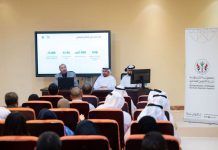
Representational Image | Delivered by Velex Group
Ecosystem infrastructure refers to the interconnected frameworks that enable companies to operate, expand, and scale efficiently across complex environments.
This includes:
advisory and legal structuring
strategic capital
operational enablement
infrastructure access
institutional relationships
execution support across jurisdictions
Rather than operating independently, these functions work together as part of a larger system designed to reduce friction and accelerate sustainable growth.
Across MEA, this model is becoming increasingly relevant as businesses move beyond local operations toward regional expansion.
One example of this ecosystem-driven approach is Velex Group, a privately held technology investment, advisory, and management consortium operating across the Middle East and Africa.
Velex Group’s structure integrates three interconnected verticals – Velex Advisory, Velex Investments, and Velex Hub – into a unified ecosystem designed to support venture growth across multiple dimensions simultaneously.
Why integration matters
Traditionally, companies rely on separate providers for investment, strategy, legal structuring, and infrastructure support.
While these functions individually provide value, their fragmentation often creates operational inefficiencies during scaling.
Integrated ecosystems address this challenge by aligning:
capital with execution
strategy with operational delivery
infrastructure with expansion goals
regulatory readiness with growth planning
This coordination becomes especially important in MEA, where scaling across borders often requires navigating multiple market realities simultaneously.
“The future of venture growth in MEA belongs to companies that can operate within integrated ecosystems, not isolated structures. Systems create resilience, scalability, and long-term strategic advantage.” – Artur Mildov, Chief Visionary Officer at Velex Group.
As regional markets become increasingly interconnected, ecosystem infrastructure is shifting from a competitive advantage to a growth necessity.
Beyond startup culture
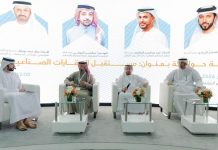
Representational Image | Delivered by Velex Group
The conversation around innovation in MEA is also evolving.
The focus is gradually moving away from startup culture alone and toward broader questions of sustainability, infrastructure, governance, and regional coordination.
Investors are becoming more selective. Governments are prioritizing long-term economic integration. Founders are increasingly building with cross-border scalability in mind from the outset.
This shift requires a more mature venture framework – one capable of supporting businesses beyond early-stage momentum.
“MEA is entering a stage where long-term growth will depend less on isolated innovation and more on the systems that connect markets, infrastructure, and execution across the region,” commented Vadim Mildov, Executive Chairman at Velex Group.
Building the next generation of regional growth
MEA’s future will not be shaped solely by the number of startups launched each year.
It will be shaped by the ecosystems capable of turning those startups into scalable regional platforms.
As the region continues to evolve into a globally significant innovation corridor, ecosystem infrastructure is becoming one of the defining foundations of sustainable growth.
The companies that succeed in the next decade will not simply be those with the strongest products or the fastest funding rounds. They will be the ones operating within systems designed to support resilience, coordination, and expansion across complex markets.
In MEA, the future belongs not only to startups – but to the systems that enable them to scale.