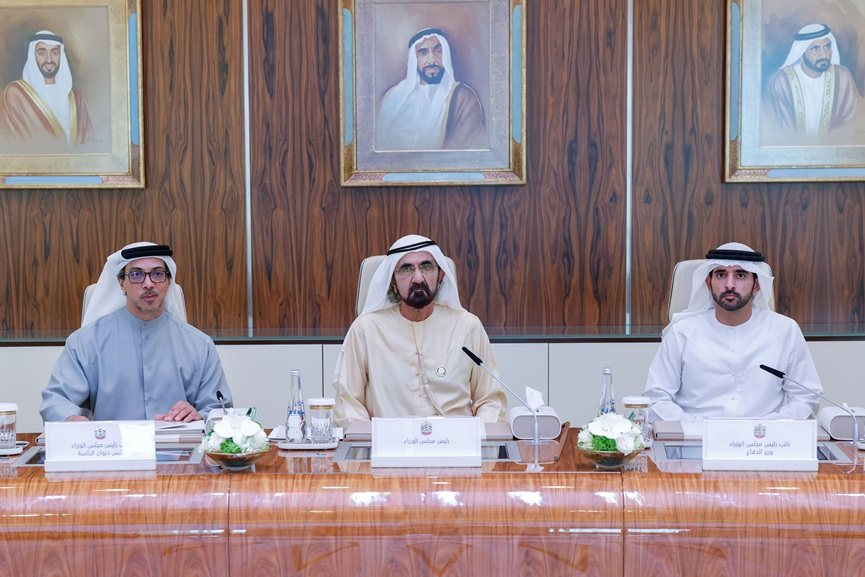
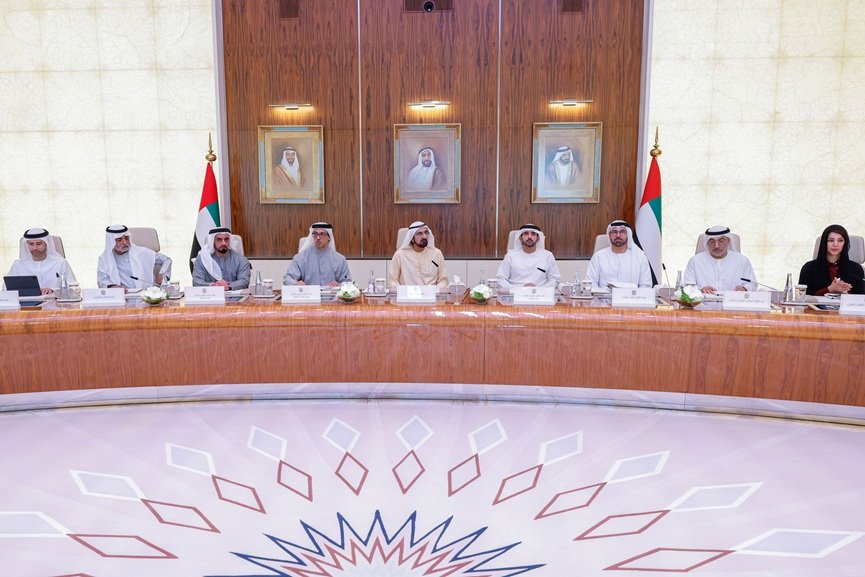
HH Sheikh Mohammed bin Rashid Al Maktoum, Vice President, Prime Minister of the UAE and Ruler of Dubai, has chaired a UAE Cabinet meeting that approved a governance framework outlining the roles and responsibilities of federal ministries and entities in implementing the national Agentic AI Project.
The meeting was attended by HH Sheikh Mansour bin Zayed Al Nahyan, Vice President, Deputy Prime Minister, and Chairman of the Presidential Court, HH Sheikh Hamdan bin Mohammed bin Rashid Al Maktoum, Crown Prince of Dubai, Deputy Prime Minister and Minister of Defense, and HH Lt. General Sheikh Saif bin Zayed Al Nahyan, Deputy Prime Minister and Minister of Interior.
UAE accelerates Agentic AI rollout
HH Sheikh Mohammed bin Rashid Al Maktoum stated that the UAE Cabinet had approved a national transformation strategy aimed at making the UAE the world’s first government to deploy Agentic AI across 50 percent of government services and operations.
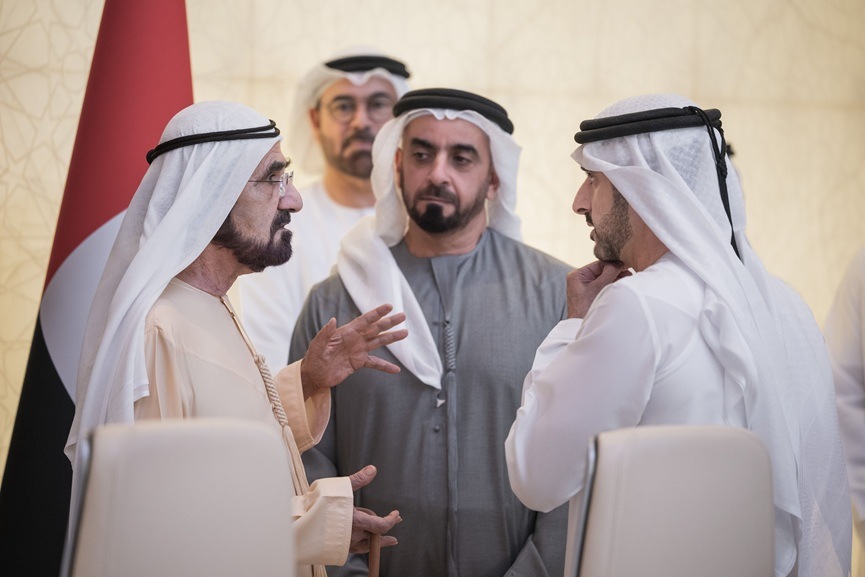
Speaking after the Cabinet meeting at Qasr Al Watan in Abu Dhabi, Sheikh Mohammed said the meeting also approved a governance framework defining the roles and responsibilities of ministries and federal entities in implementing the national project.
He added that the Cabinet launched the UAE Government’s largest-ever training program, which will equip 80,000 employees, from ministers and senior executives to new recruits, with Agentic AI skills and technologies. The Cabinet also approved the first package of government services powered by Agentic AI, including integrated service bundles for citizens, residents, businesses, and investors.
Phase One services approved
During the meeting, the Cabinet approved Phase One of the Agentic AI Project covering Citizens’ Services, Residents’ Services, Business Sector Services, and General Public Services.
The Cabinet also approved the Federal Government Employees’ Skills and Capabilities Development Program in Agentic AI, supporting the UAE Government’s plan to transition 50 per cent of government services and operations to Agentic AI models within two years.
Image credits: WAM | Cropped by GBN
Developed with national universities and global technology companies, the program will train 80,000 federal employees across leadership, technical, specialist, workforce, and train-the-trainers categories. A dedicated digital platform powered by Agentic AI tools will provide personalized and continuous learning pathways for federal employees.
Ministries to lead implementation
The Cabinet adopted a framework assigning implementation responsibilities to ministries and federal entities under the Agentic AI Project. The framework mandates specialized teams in each entity, led by the respective minister or head of entity and comprising officials responsible for services, operations, digital transformation, and AI.
The teams will oversee the rollout of Agentic AI operating systems aimed at transforming at least 50 per cent of federal services and operations. They will also establish performance indicators to measure efficiency and productivity gains.
AI healthcare policy and law
The Cabinet approved the National Policy for Advancing Digital Healthcare Services and Artificial Intelligence in the Healthcare Sector to support an integrated national AI-driven healthcare system.
HH Sheikh Mohammed bin Rashid Al Maktoum VP, PM – UAE ; Ruler of Dubai
“We also approved the National Policy for Advancing Digital Healthcare Services and Artificial Intelligence in the Health Sector, built on three foundations: developing a national AI-driven medical system, building an advanced digital health infrastructure, and equipping our healthcare workforce with the AI capabilities tomorrow’s healthcare demands… The journey to UAE Government 4.0 has begun. We will convene a national retreat to develop the full transformation strategy, and Sheikh Mansour will lead and oversee this journey. Our ambition is clear: to be the world’s leading government in adopting Agentic AI.”
The policy focuses on expanding AI applications across healthcare services, strengthening digital health infrastructure, developing AI capabilities among healthcare professionals, and ensuring data governance, ethics, and security standards.
The Cabinet also approved drafting a Federal Law regulating smart health applications and AI use in healthcare, covering licensing, operations, patient rights, safety standards, and health data governance.
Industrial, EV and global initiatives
The Cabinet reviewed the Industrial Technology Transformation Programme and the 2025 Industrial Technology Transformation Index under Operation 300bn, which assessed more than 620 industrial companies and introduced incentives for smart industrial transformation.
Image credits: WAM | Cropped by GBN
It also reviewed progress under the National Electric Vehicles Policy for 2025, which increased public EV charging stations nationwide from 360 in 2021 to 1,200 in 2025. The Cabinet further reviewed premarital genetic testing initiatives under the Emirati Genome Programme aimed at preventing genetic diseases and reducing healthcare costs.
Additionally, the Cabinet approved 15 international agreements and memoranda of understanding spanning trade, investment, diplomatic cooperation, financial regulation, and meteorological cooperation with several countries.
The Cabinet also approved the hosting of multiple international conferences and events in the UAE, including the Fourth World Congress of University Research and the Congress of the International Society for Photogrammetry and Remote Sensing.