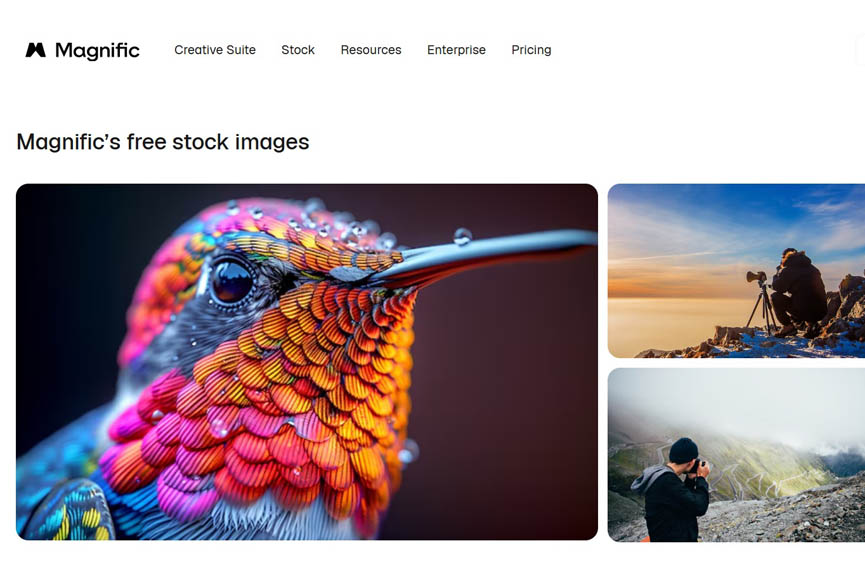
Freepik built its global audience from 2010, Magnific brought advanced AI in 2024, and the combined company is now positioning itself as a full AI creative platform under the Magnific name.
The creative economy is undergoing a structural transformation. What was once a content-driven industry is rapidly becoming an AI-driven ecosystem. In that shift, one of Europe’s most notable platforms, Freepik, has repositioned itself under a new identity: Magnific.
This is not a cosmetic rebrand. It is a strategic consolidation of products, technology, and market positioning into a single AI-first platform.
Freepik was founded in 2010 in Málaga, Spain, by Joaquín Cuenca and his brother Alejandro Cuenca, along with Pablo Blanes. The Freepik platform began as an internal tool to find high-quality graphic resources and evolved into a global content ecosystem used in more than 200 countries.
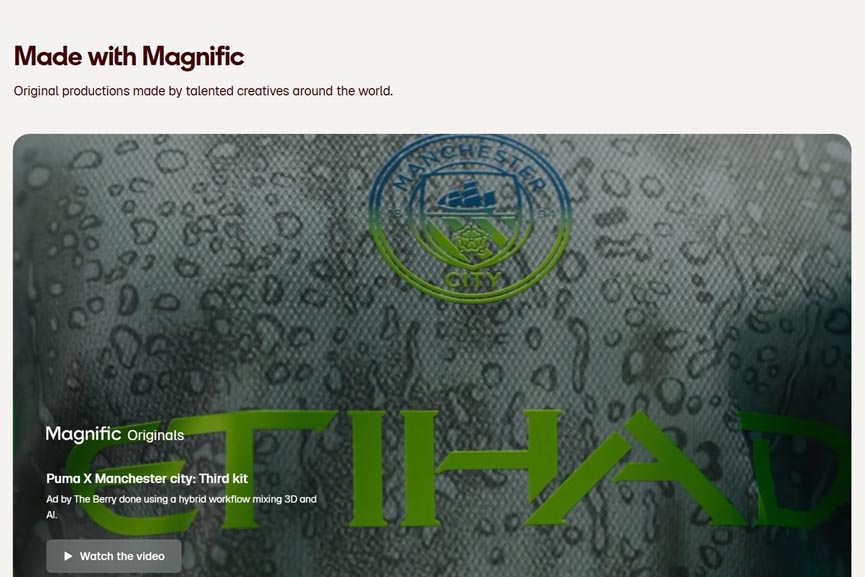
The company scaled without external venture capital, building a profitable business through product expansion, strong SEO positioning, and organic global reach. Today, the Freepik reports over one million paying subscribers and more than 250 enterprise customers, including BBC, Puma, and Amazon Prime Video.
The AI Disruption and Strategic Pivot
The rise of generative AI reshaped creative workflows. Users moved from downloading assets to generating them instantly, putting pressure on traditional stock-based platforms.
Freepik responded by accelerating its AI strategy through the acquisition of Magnific in May 2024. Magnific was founded in 2024 in Murcia, Spain, by Javi López and Emilio Nicolás. The product focused on AI image upscaling and enhancement, but its impact was immediate:
30,000 users within 24 hours
725,000 users without paid marketing
Both founders remained with the company after the acquisition, contributing directly to its AI development roadmap.
Image credits: Magnific | Edited and Cropped by GBN
Why the Rebrand Matters
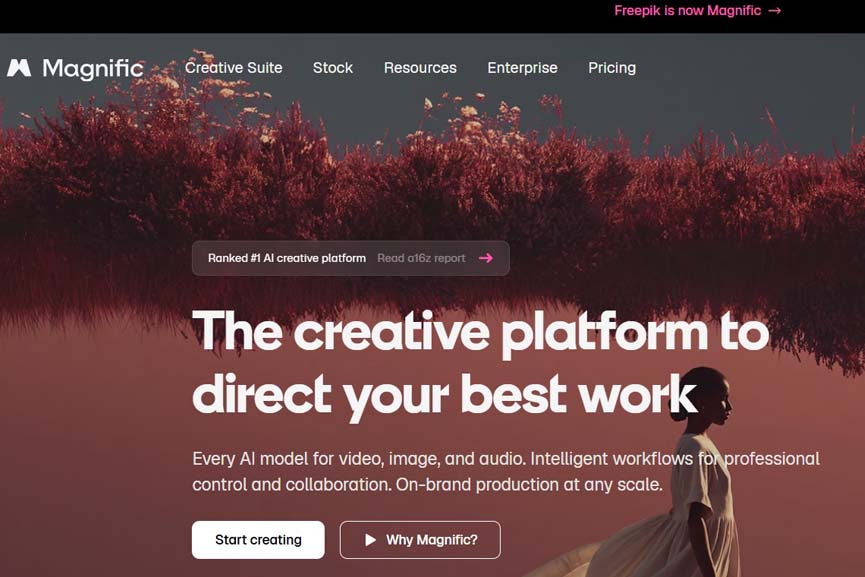
The decision to rebrand Freepik as Magnific reflects a deeper structural shift.
Previously, the company operated a fragmented portfolio:
Freepik for stock assets
Magnific for AI upscaling
Multiple AI tools under separate brands
The rebrand unifies all products under a single identity for the first time.
This matters at the enterprise level. Companies do not want fragmented tools. They want integrated workflows that reduce operational friction.
Image credits: Magnific | Edited and Cropped by GBN
Scale, Revenue, and Market Position
The numbers behind the transition are strong, especially for a company that has never raised external capital:
$230 million in annualised recurring revenue (ARR)
1 million+ paying subscribers
250+ enterprise customers
4 million images generated per day
CEO Joaquín Cuenca has stated that any future funding would be optional and strategic, not required for survival.
This positions Magnific differently from many AI competitors that rely heavily on venture capital funding cycles.
A Full-Stack AI Creative Platform
The unified Magnific platform now covers the full creative stack:
AI image and video generation, including 4K output with audio
Advanced image upscaling and enhancement
Real-time collaborative workspace
3D and virtual scene tools
AI assistant for creative workflows
Training through an integrated Academy
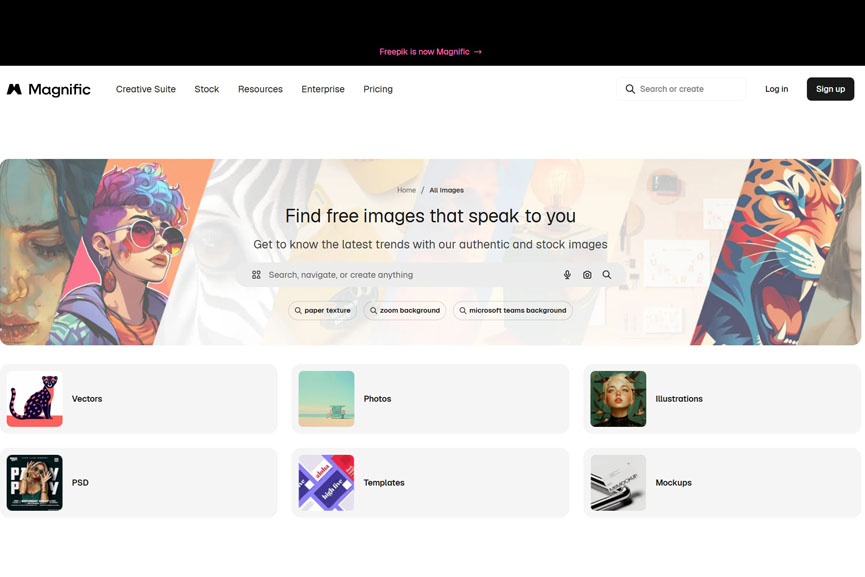
A library of more than 250 million creative assets
A key differentiator is its model-agnostic architecture, allowing users to integrate third-party AI models, including tools from Google and ByteDance, alongside Magnific’s own capabilities.
This orchestration layer reflects a broader enterprise trend, where flexibility and multi-model integration are more valuable than reliance on a single AI system.
Image credits: Magnific | Edited and Cropped by GBN
Enterprise Adoption and Competitive Context
Magnific is competing directly with major AI creative platforms such as Midjourney, Runway, Leonardo, and Adobe Firefly.
Its competitive advantage is not based on a single proprietary model. Instead, it focuses on:
Workflow integration
End-to-end creative capability
Reduced friction across tools
This positioning is gaining traction among enterprise clients, where efficiency and scalability are critical.
The ‘No-Collar Economy’ Vision
Joaquín Cuenca describes the platform’s broader ambition as enabling a “no-collar economy.”
The idea reflects a shift:
The Industrial era created blue-collar jobs
The digital era created white-collar jobs
The AI era enables creative work without traditional barriers
Supporting this trend, 72 percent of new creators on the platform identify as beginners, showing how AI is lowering entry barriers.
The Business plan launched in early 2026 has already surpassed 2,000 team subscriptions and continues to grow rapidly.
Image credits: Magnific | Edited and Cropped by GBN
Risks and Execution Challenges
Despite strong positioning, the transition involves real risks:
Competition from heavily funded global AI companies
Managing brand transition without losing existing users
Ensuring quality across AI-generated outputs
Addressing copyright and ethical concerns
Rebranding alone is not enough. Execution will determine long-term success.
Strategic Takeaway
This is not a case of late reaction. It is early repositioning.
Freepik built global distribution and audience scale over more than a decade. Magnific brought advanced AI capability with proven demand. The combined company is now presenting itself as a unified AI creative platform.
Its bootstrapped and profitable model adds resilience in a market where many competitors depend on external funding.
Rewriting the Rules of Creative Economy
The transition from Freepik to Magnific reflects a fundamental shift in the creative industry. The value is no longer in accessing content libraries. It is in generating content instantly and at scale.
With strong revenue, enterprise adoption, and a unified AI platform, Magnific is entering the next phase not as a stock platform, but as a serious global player in AI-driven creativity. The direction is clear. The execution will define the outcome.