Global Entrepreneur Roman Ziemian explores the importance of resilience in the GCC’s rapidly evolving business landscape, highlighting how visionary leadership, digital transformation, and strategic collaboration are key to thriving in an unpredictable economy.
The GCC: A Hub of Innovation and Opportunity
The GCC has long been an epicentre of rapid economic change, innovation, and opportunity. From its oil-based origins to the digital and knowledge economy that defines it today, the region has consistently embraced transformation. However, the pace at which this evolution is unfolding is faster than ever. As business owners, entrepreneurs, and investors, we need to not only adapt but build businesses that are resilient enough to thrive in this fast-changing economy.
Vision: The Spark That Drives Resilience
In any venture, the first step is vision. In the GCC, where ambition runs high and possibilities are endless, a clear vision is paramount. But having a vision isn’t enough—it must be a vision of adaptability. We are living in a time where technology, shifting global markets, and environmental considerations can change the landscape overnight. Entrepreneurs in the GCC must recognise that their businesses cannot be built on old models. The goal isn’t simply to ride the wave of opportunity but to anticipate the next wave and be prepared to surf it.
Take, for example, Noon, the UAE-based e-commerce giant. Founded by Mohamed Alabbar in 2016, Noon’s vision was simple: create a regional e-commerce platform that could rival global players. However, what set Noon apart was its ability to pivot in real-time, adjusting its business model to cater to the rapid shifts in consumer preferences, technological advancements, and even regional infrastructure. Noon’s resilient approach allowed it to not only withstand the challenges posed by the COVID-19 pandemic but to emerge as a leader in the GCC’s e-commerce space.
The Digital Transformation: A Game-Changer for Entrepreneurs
Digital transformation is no longer a buzzword in the GCC—it is a business imperative. This digital revolution has touched every industry from healthcare to finance, hospitality, and beyond. For entrepreneurs, the key to resilience lies in adopting and integrating new technologies while ensuring the human element remains at the core of their operations.
Rep. Image | Source: EM’s FP User ID: 140976548 | In House Rework
Consider the success of Careem, the ride-hailing service founded in 2012 in Dubai. At its core, Careem’s vision was to build a transportation network that would revolutionise how people move around the region. However, its real breakthrough came when it embraced technology in every aspect of its operations, from payment systems to driver-partner management. During the pandemic, Careem used its platform to launch delivery services, an innovative pivot that allowed it to survive and even expand. What’s remarkable is how Careem’s leadership understood that resilience was not about standing still—it was about proactively transforming in response to market demands.
But it isn’t just tech companies leading the charge. Even in traditional sectors, businesses are finding that embracing digital tools is key to long-term success. For instance, the Saudi Arabian Oil Group (Aramco), one of the world’s largest and most valuable companies, has doubled down on innovation, using technology to create more efficient operations, mitigate risks, and reduce carbon emissions. The ability to innovate and pivot, even in industries as established as oil and gas, has cemented Aramco’s place as a resilient leader in the global economy.
Building Resilience Through Collaboration
A critical element of building resilient businesses in the GCC is collaboration. Entrepreneurs no longer operate in silos. The landscape is too competitive, and the challenges are too large to be tackled alone. One of the most impressive aspects of the GCC economy is its vibrant and supportive ecosystem for startups, entrepreneurs, and SMEs.
The Oman Investment Fund is a prime example of how governmental bodies are working alongside private enterprises to build long-term resilience in the economy. By investing in key sectors like renewable energy, technology, and tourism, the fund is fostering innovation and building a diversified economy. This partnership between the public and private sectors is crucial for entrepreneurs who are looking to tap into growth opportunities and navigate the ever-changing GCC landscape.
Similarly, Dubai Silicon Oasis, a technology park that provides resources and a collaborative environment for tech startups, is helping foster innovation. It gives businesses access to world-class infrastructure, support services, and a network of investors—elements that allow even the most nascent businesses to scale up quickly.
Image: Roman Ziemian | In house artwork
The Importance of Agility and Flexibility
The key to business resilience in the GCC lies in agility. The rapid shifts in global oil prices, the COVID-19 pandemic, the rise of geopolitical challenges, and climate change have shown that businesses need to be nimble. Being able to pivot quickly—whether by adjusting your product offering, adopting a new business model, or shifting your target audience—is essential.
The Red Sea Project in Saudi Arabia is an excellent example of a project built with flexibility in mind. With sustainability at its core, this massive tourism and development project adapts not only to the region’s environmental needs but also to future shifts in global travel trends. The ability to think long-term while staying agile ensures that projects like these will remain relevant and resilient for decades to come.
Building Resilience is a Mindset, Not a Strategy
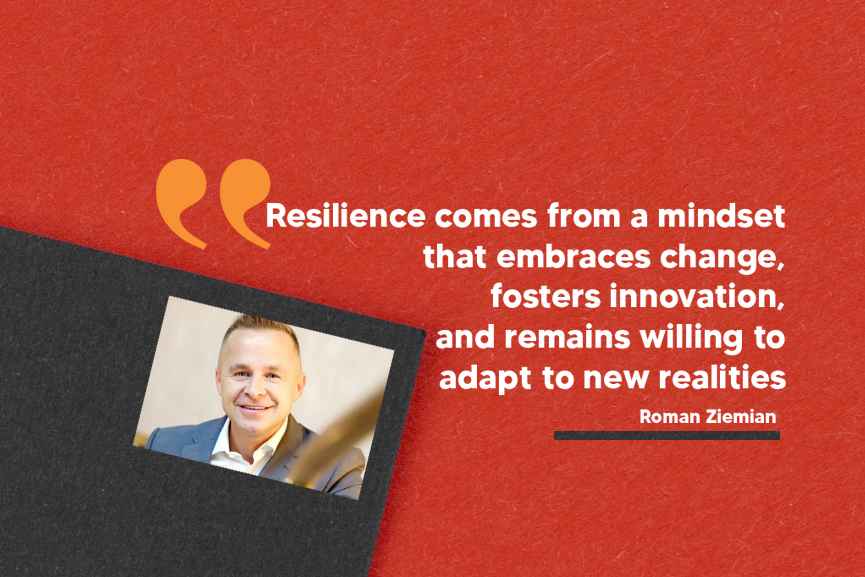
The GCC’s fast-changing economy is full of opportunities for businesses that are built on resilience. But resilience doesn’t just come from having a solid business plan or making the right investment choices. It comes from having a mindset that embraces change, innovation, and the willingness to adapt to new realities.
In the end, building a resilient business is not a one-off effort—it’s a continuous process. By cultivating a forward-thinking mindset, leveraging technology, building strategic collaborations, and staying agile, businesses in the GCC will be positioned to not just survive but thrive in the face of any challenge. For entrepreneurs in this region, the future is bright—but it requires foresight, vision, and a deep commitment to building a business that can stand the test of time.